How Are Veterinary Orthopedic Implants Supporting Advances in Small Animal Orthopedic Surgery?
The Growing Role of Orthopedic Implants in Veterinary Surgery
As veterinary medicine continues to develop, orthopedic surgery has become an important part of healthcare for companion animals, particularly dogs and cats. Bone fractures, joint disorders, and other musculoskeletal conditions may require surgical treatment based on the animal's condition and the veterinarian's clinical assessment.
Veterinary orthopedic implants, including bone plates, screws, and specialized fixation systems, are used to stabilize bone structures during selected surgical procedures. The choice of implant depends on several factors, including the type and location of the injury, the animal's anatomy, and the planned surgical technique.
For veterinary clinics, animal hospitals, and veterinary medical suppliers, understanding the available implant designs and their intended applications is an important part of product selection and procurement.
The Importance of Product Design and System Compatibility
Veterinary orthopedic implant systems may include multiple components designed to work together. Bone plates, compatible screws, and dedicated surgical instruments each serve a specific role within the overall fixation system.
Clear product specifications and compatibility information help veterinary professionals and purchasing teams identify suitable configurations. For manufacturers and distributors, providing consistent technical documentation can also support communication throughout the veterinary medical supply chain.
TPLO Plate Systems in Canine Orthopedic Surgery
Tibial Plateau Leveling Osteotomy (TPLO) is a surgical technique commonly used in dogs to address cranial cruciate ligament disease. The procedure involves changing the slope of the tibial plateau through a controlled osteotomy, followed by stabilization with an appropriate fixation system.
TPLO plates are designed for use in this specific surgical context. Their configuration, screw-hole arrangement, and available sizes may vary according to the product design and intended application. Veterinary professionals select an appropriate fixation system based on the surgical plan, the animal's anatomy, and the manufacturer's product specifications.
Veterinary TPLO product ranges may include different plate designs and size options to accommodate varying surgical requirements. These differences make accurate model identification and access to technical specifications important during product selection. Before purchasing a TPLO plate system, veterinary clinics and distributors should confirm the available models, compatible screws, relevant dimensions, and applicable product documentation.
Locking Bone Plates and Screws in Veterinary Orthopedics
Locking bone plates use a screw-to-plate locking mechanism in which compatible screw heads engage with the plate's threaded holes. Depending on the system design and clinical application, this mechanism can provide a fixed-angle relationship between the plate and screws.
Veterinary locking plate systems are available in different designs and sizes for selected orthopedic procedures. The appropriate system depends on the anatomical site, the fixation requirements, and the relevant product specifications. It is important to distinguish between locking and non-locking designs, as their screw compatibility and fixation characteristics differ.
Screw diameter, thread design, length, and compatibility with the selected plate are important considerations when choosing a veterinary orthopedic implant system. Using the correct components according to the manufacturer's specifications helps ensure that the system is assembled as intended. Veterinary professionals should consult the applicable product documentation when selecting plates and screws for a particular procedure.
For distributors and importers, clear model numbers and product references can simplify quotation preparation, order confirmation, and inventory management.
The Role of Dedicated Surgical Instrument Sets
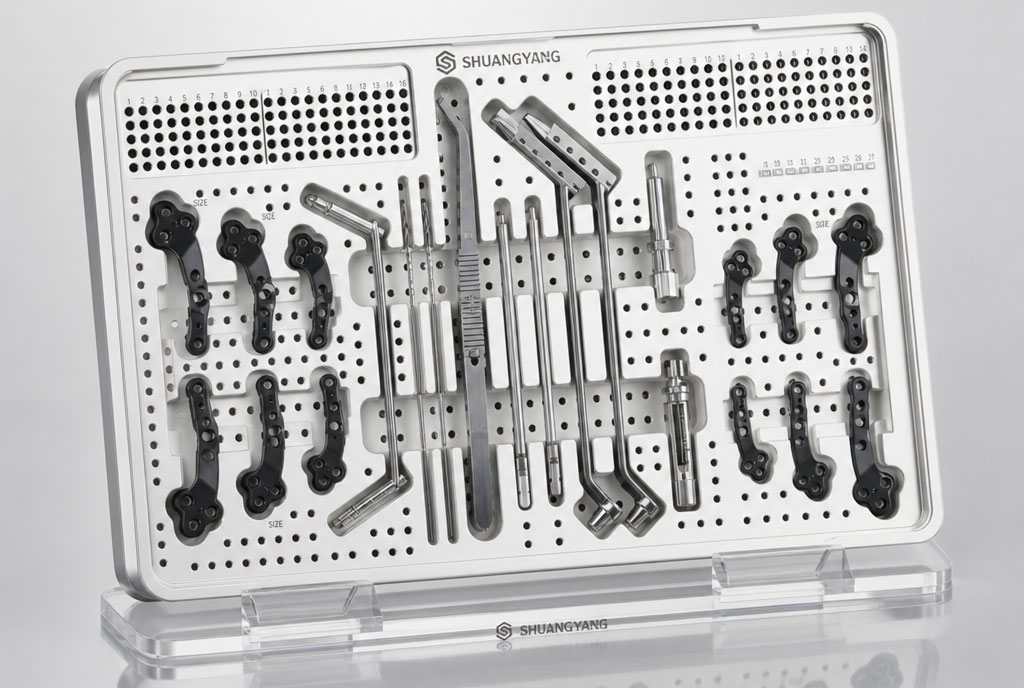
In addition to implant plates and screws, veterinary orthopedic procedures may require specialized surgical instruments. Depending on the system, an instrument set may contain tools designed to support specific steps of the procedure, together with a dedicated storage or organization case.
A clearly organized instrument set can help users identify the supplied components and review the configuration before use. Product images, component lists, and technical documentation can also help purchasing teams understand what is included in a set. The actual contents of each instrument set should be confirmed against the manufacturer's product specifications.
Why Complete Product Information Matters to Veterinary Buyers
When evaluating an orthopedic instrument set, veterinary clinics and distributors may consider the included instruments, compatible implant systems, packaging configuration, material information, and available documentation.
Manufacturers should communicate these details clearly and avoid presenting different sets as interchangeable unless their compatibility has been confirmed. Accurate product information supports more efficient communication between manufacturers, distributors, and veterinary professionals, particularly in international purchasing.
Key considerations when sourcing veterinary orthopedic implants
- Confirm model numbers, material specifications and batch identification with the manufacturer.
- Verify screw-to-plate compatibility before ordering a fixation system.
- Ask for product images, component lists and instrument set contents.
- Check quality management documentation and packaging configuration for your target market.
- Clarify MOQ, lead times and commercial terms before placing an order.
Key Considerations When Sourcing Veterinary Orthopedic Implants
Selecting a veterinary orthopedic supplier involves more than comparing product prices. Buyers may also review product specifications, manufacturing information, quality management procedures, packaging, and applicable regulatory documentation. Depending on the product and destination market, relevant information may include product identification, model or reference numbers, material specifications, batch identification, and instructions for use or handling where applicable.
Importers and distributors should verify the requirements of their target markets and confirm that the supplied documentation is appropriate for the products being purchased. For veterinary medical distributors and importers, consistent product information and responsive communication are important considerations when establishing long-term supplier relationships. Clear quotations, confirmed product configurations, realistic lead times, and well-organized documentation can help reduce purchasing misunderstandings and support ongoing cooperation.
Jiangsu Shuangyang Pet Medical: Veterinary Orthopedic Product Solutions
Jiangsu Shuangyang Pet Medical focuses on veterinary medical products for professional veterinary markets. Our product range includes veterinary orthopedic implants and related products designed for different veterinary medical applications. Our TPLO product range includes plate systems and supporting instrument sets. Product availability, configurations, and specifications should be confirmed with our team according to the customer's requirements.
We welcome inquiries from veterinary clinics, animal hospitals, veterinary medical distributors, and importers seeking product information and potential business cooperation.
Need veterinary orthopedic implant information?
Contact Jiangsu Shuangyang Pet Medical for product range, available models, technical specifications and ordering information.
Request a Quote