 EN
EN
 FR
FR
 ES
ES
 AR
AR

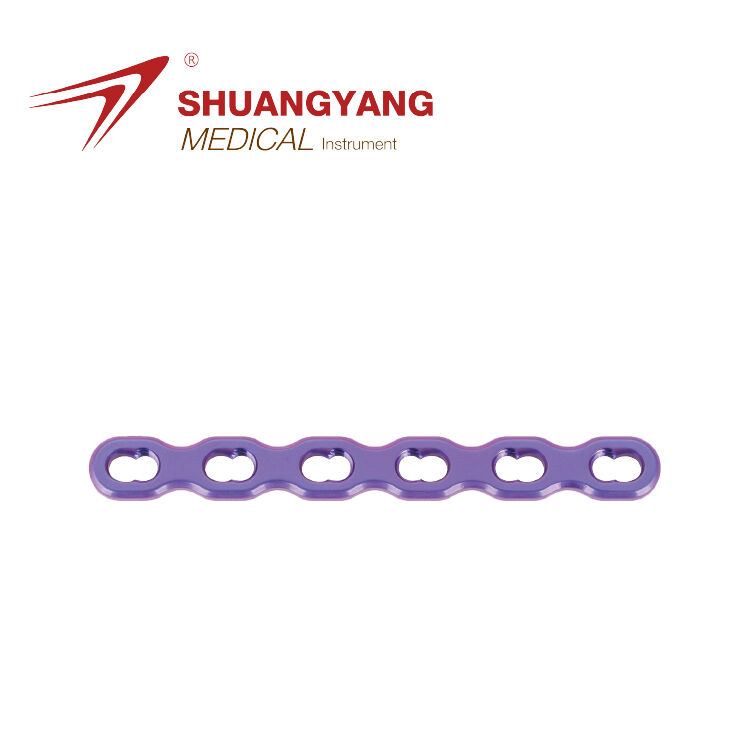
The Role of Additive Manufacturing in Advancing Volar Plate Design
From Standard to Patient-Specific: The Evolution of Distal Radius Fixation
Old fashioned distal radius volar plates needed constant bending during surgery to fit each patient's unique bone structure. Research published in JAAOS last year found that nearly a third (about 27%) of these standard implants had to be adjusted while under the knife. Additive manufacturing technology changes all that by creating custom made orthopedic devices straight from those pre-op CT scans doctors already take. Surgeons report fewer delays in the OR when using these AM implants, plus better control over screw placement especially important for tricky fracture patterns. The benefits are even more pronounced in patients with osteoporosis since their bones can be as thin as 0.3mm or up to 1.2mm thick across different areas of the wrist.
How Additive Manufacturing Enables Complex, Titanium-Based Lattice Structures
Additive manufacturing creates these amazing lattice structures made of titanium with just the right amount of holes (around 300 to 600 micrometers) when building volar plates. The result? These new designs weigh about 72 percent less than traditional solid implants but still hold up under serious stress, with a yield strength above 900 MPa. That kind of strength means they can handle all those twisting motions in the forearm without breaking down. And things have gotten even better with laser powder bed fusion technology which can now create features as small as 25 micrometers. This advancement leads to surface textures similar to natural bone trabeculae, improving how bones actually stick to implants by roughly 40 percent according to tests on cadavers. Pretty impressive stuff for something that started as layers printed one after another!
Integrating CT Imaging with AM Workflows for Anatomical Precision
The creation of modern 3D printed wrist plates starts with something called DICOM segmentation which helps map out important anatomical features like the distal radius volar tilt that typically ranges between 10 and 15 degrees, along with radial inclination measurements usually around 20 to 25 degrees. These measurements get incorporated straight into the computer aided design models for implants. Using artificial intelligence, engineers then optimize how thick the plates should be in areas where there's lots of stress, generally making them about 1.2 to 1.8 millimeters thick so they're strong enough but still flexible when needed. After printing, these plates go through electrochemical polishing that brings down their surface roughness below 0.8 micrometers. This smoother finish actually makes a difference because studies show around 18 percent of people who have traditional plates experience some kind of soft tissue irritation, according to recent ICUC research from 2024. Putting all these steps together creates an entirely digital workflow that cuts down on waiting periods dramatically, going from what used to take about six weeks down to just three days for those needing customized trauma solutions.
Precision and Biomechanical Performance of Customized Volar Plates
Additive manufacturing enables distal radius volar plate designs with unprecedented precision, achieving sub-millimeter accuracy through layer-by-layer fabrication guided by 3D anatomical models. In contrast, traditional plates requiring intraoperative bending are associated with malposition rates of 12–34% in distal radius fractures (Orthopedic Research Society 2023).
Achieving Sub-Millimeter Accuracy in 3D-Printed Orthopedic Implants
The laser powder bed fusion technology creates titanium alloy volar plates with around 0.1 to 0.3 mm accuracy in dimensions, which is actually better than what traditional machining methods can achieve. Before surgery happens, high resolution imaging brings important anatomical details into play for the implant design. These include things like radial tilt measuring about 22 degrees plus or minus 5, volar tilt at roughly 11 degrees plus or minus 4, and ulnar variance typically around 2.5 mm with some variation. When looking at actual clinical results, surgeons report needing to adjust these plates during operations about 73% less often than they do with regular implants. This kind of precision makes a real difference in surgical outcomes.
Enhanced Bone-Implant Integration Through Anatomical Contour Matching
Precision contouring ensures 92–96% surface contact between the implant and bone, significantly higher than the 68–74% achieved with manually bent plates. This improved fit:
- Distributes mechanical loads more physiologically, reducing peak stress concentrations by 17%
- Preserves periosteal blood flow by minimizing soft tissue compression
- Supports drug-eluting porous coatings with 62% faster antibiotic release kinetics
Collectively, these advantages contribute to a 25% improvement in early osseointegration rates, as seen in radiographic assessments at six-week follow-ups.
Clinical Benefits of Patient-Matched Distal Radius Volar Plates
Additive manufacturing (AM) enables surgeons to design patient-specific orthopedic implants that optimize outcomes for distal radius fractures, addressing key limitations of traditional volar plates—especially in complex cases involving metaphyseal comminution or volar rim instability.
Reduced Operative Time and Intraoperative Radiation Exposure
3D-printed wrist plates eliminate the need for intraoperative bending, reducing surgery duration by 25–35% compared to standard implants (Journal of Orthopaedic Trauma 2023). The precise anatomical fit also minimizes reliance on fluoroscopy, cutting radiation exposure by 50% during procedures requiring articular surface reconstruction.
Improved Functional Outcomes: Evidence from Clinical Case Studies
A 2024 review of 269 fracture cases found that patients receiving customized fracture fixation devices achieved:
- 92% restoration of radial inclination, versus 78% with off-the-shelf plates
- A 15% faster return to daily activities
- A 40% reduction in postoperative tendon irritation
These outcomes highlight the functional benefits of anatomically matched implants in real-world clinical settings.
Comparative Performance: 3D-Printed vs. Off-the-Shelf Volar Plates
While conventional plates often fail to adequately address dorsal ulnar corner fractures, AM-based solutions demonstrate:
- 0.2–0.5 mm accuracy in replicating volar rim contours
- 30% stronger bone-implant integration due to porous titanium lattice structures
- 67% lower revision rates at 12-month follow-up in comminuted fractures
This performance gap underscores the biomechanical superiority of additively manufactured plates in challenging fracture patterns.
Barriers to Widespread Adoption of Additive Manufacturing in Orthopedics
Regulatory Challenges and Certification of Patient-Specific Implants
The regulatory system we have in place works fine for standard implants that come off production lines, where getting FDA 510(k) clearance usually takes around a year or so. But these rules don't really fit when it comes to custom made devices tailored specifically for patients. Take those 3D printed plates used on broken wrists for example each one needs its own validation process, which can add about a third to half extra time before they're approved compared to regular stock items. Things get even trickier because there's no clear guidelines yet for checking out those titanium lattice designs or what happens after printing is done. This lack of standards creates real headaches for hospitals trying to bring additive manufacturing into their operations.
Cost and Reimbursement Limitations in Scaling 3D Printing for Trauma Care
The price tag on industrial scale metal additive manufacturing systems runs well above one million dollars, and let's not forget about the titanium powder which costs anywhere from four to six times what traditional implant materials set us back. Even though these advanced techniques have shown around fifteen to twenty percent fewer revision surgeries needed, most insurance companies still don't pay for patient matched volar plates in a way that actually considers how complicated their designs really are. According to some research published last year, just about twenty two percent of trauma centers across America get enough money back from insurers for those 3D printed orthopedic gadgets. No wonder then that many small hospitals and clinics are hesitant to invest in this technology when the numbers just don't add up financially speaking.
Key Economic Barriers
| Factor | Traditional Implants | AM-Based Implants |
|---|---|---|
| System Acquisition Cost | $200k | $1.2M+ |
| Material Cost per Plate | $80–$120 | $450–$700 |
| Insurance Coverage Rate | 94% | 34% |
Despite clear clinical advantages, this persistent cost-reimbursement mismatch remains a major obstacle to scaling additive manufacturing in routine trauma care.
FAQ
How does additive manufacturing improve volar plate design?
Additive manufacturing improves volar plate design by enabling the production of patient-specific implants that require less adjustment during surgery. This customization leads to better fit and control over screw placement, especially in complex fracture cases.
What are the main challenges to adopting additive manufacturing in orthopedics?
The main challenges include regulatory hurdles, which require extensive validation for each custom implant, and financial barriers, as the cost of additive manufacturing systems and materials can be prohibitively high for many hospitals.
How does the accuracy of 3D-printed implants compare to traditional methods?
3D-printed implants achieve sub-millimeter accuracy, significantly surpassing traditional methods, which often require intraoperative adjustments resulting in higher malposition rates.
What are the clinical benefits of customized volar plates?
Customized volar plates offer numerous clinical benefits, including reduced surgery duration, minimal reliance on fluoroscopy, faster patient recovery, and lower rates of postoperative complications.
Why is there a cost-reimbursement mismatch for 3D-printed implants?
Insurance reimbursement rates for 3D-printed implants fail to account for the complexity and clinical advantages they offer, making it financially challenging for healthcare providers to adopt the technology.
Table of Contents
- The Role of Additive Manufacturing in Advancing Volar Plate Design
- Precision and Biomechanical Performance of Customized Volar Plates
- Clinical Benefits of Patient-Matched Distal Radius Volar Plates
- Barriers to Widespread Adoption of Additive Manufacturing in Orthopedics
-
FAQ
- How does additive manufacturing improve volar plate design?
- What are the main challenges to adopting additive manufacturing in orthopedics?
- How does the accuracy of 3D-printed implants compare to traditional methods?
- What are the clinical benefits of customized volar plates?
- Why is there a cost-reimbursement mismatch for 3D-printed implants?