 EN
EN
 FR
FR
 ES
ES
 AR
AR

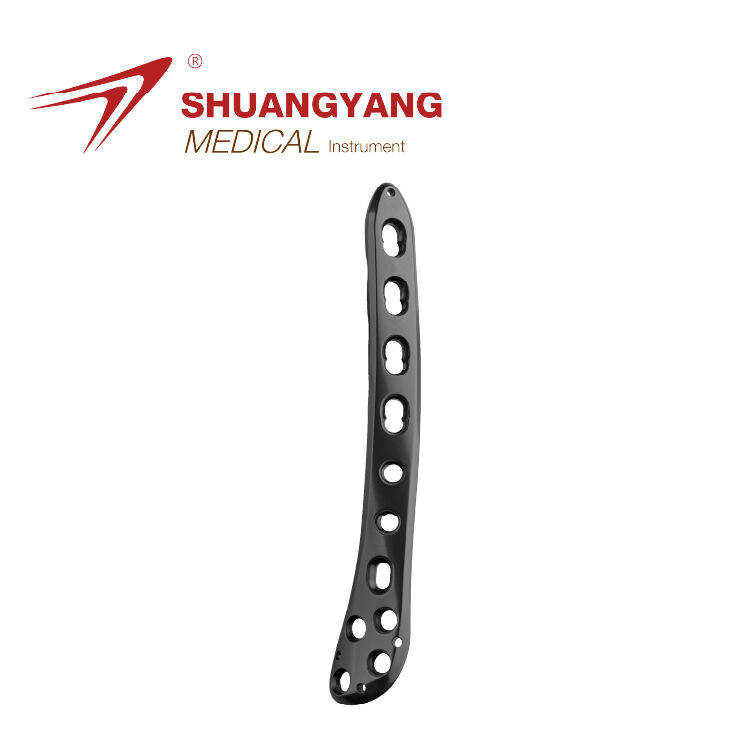
Understanding the FDA 510(k) Process and Substantial Equivalence for Distal Tibia Plates
Core requirements of the FDA 510(k) clearance process for orthopedic implants
Manufacturers wanting faster FDA 510(k) approval for distal tibia medial plates need to show their product is substantially equivalent to an existing device already on the market for similar trauma cases. The process demands thorough records covering mechanical tests, how well the device gets sterilized, and biocompatibility info following ISO 10993 guidelines. Looking at recent trends, a 2023 study showed around two thirds of delayed approvals had problems with fatigue testing data specifically for titanium plates. This highlights why proper fatigue testing remains so important during regulatory reviews these days.
Selecting an appropriate predicate device for distal tibia medial plates
When selecting a predicate device, look for one that addresses similar anatomical needs like fixing fractures in the lower part of the tibia, along with materials that have comparable characteristics. The latest FDA recommendations highlight several key factors worth considering including how the screw threads are designed, differences in plate thickness (ideally no more than half a millimeter variation), and whether the bending resistance matches what's expected. For companies working with nickel free cobalt chromium alloys specifically, it makes sense to consult more recent predicates as older ones might raise questions about how well they work together or if there could be issues related to body compatibility when going through regulatory reviews.
Leveraging foot and ankle plating systems as benchmarks for substantial equivalence
When looking at how well they handle weight along the axis, the FDA sees these distal tibia plates as functionally similar to ankle fusion systems. New locking mechanism designs benefit from comparing them through finite element analysis or FEA studies against existing polyaxial ankle plates. This comparison helps build stronger cases for substantial equivalence. According to recent FDA reports from last year, adopting this method cut down on review time for similar trauma devices by nearly a quarter. That's pretty significant considering how long medical device approvals typically take.
Early Regulatory Planning to Accelerate 510(k) Submission Readiness
Integrating Regulatory Strategy Early in Distal Tibia Plate Development
Embedding regulatory requirements early in development reduces submission delays by 28% compared to post-development compliance efforts, based on the 2024 Orthopedic Regulatory Report. To achieve accelerated FDA 510(k) clearance for distal tibia medial plates, manufacturers should:
- Involve quality assurance (QA) and regulatory affairs (RA) teams during initial prototype development
- Define material specifications aligned with predicate device biocompatibility standards
- Document design controls per ISO 13485:2016 and 21 CFR Part 820
Companies using phase-gate reviews with integrated regulatory checkpoints report a 94% first-pass acceptance rate for technical files, highlighting the value of structured oversight.
Aligning Labeling and Indications for Use With Predicate Devices
Misaligned labeling accounts for 34% of FDA requests for additional information (FDA 2023 Compliance Data). Ensure your device’s intended use statement precisely matches the predicate’s scope, including fracture types and anatomical coverage.
| Specification | Your Device | Predicate Device | Allowable Variance |
|---|---|---|---|
| Plate Thickness | 2.8 mm | 3.0 mm | ±0.2 mm |
| Screw Compatibility | 3.5 mm | 3.5 mm | None |
| Indications | Distal Tibia Fractures (Type 43-A to C) | Type 43-A to C | Exact Match Required |
Avoid implying off-label uses in surgical guides—72% of 510(k) hold letters cite promotional materials suggesting unapproved applications.
Using the FDA’s Refuse to Accept (RTA) Checklist to Prevent Submission Rejections
The FDA’s updated RTA checklist identifies 14 critical elements for orthopedic trauma device submissions. Common deficiencies include:
- Missing Predicate Comparison Matrix (21% of rejections)
- Incomplete Biocompatibility Data (18%)
- Unvalidated Sterilization Claims (15%)
Teams conducting internal audits using the RTA framework reduced submission rejections by 60% compared to standard reviews, according to a 2024 industry study. For distal tibia plates, prioritize verification of mechanical testing protocols—especially cyclical fatigue resistance under physiological loads.
Optimizing Bench and Performance Testing for Faster FDA Review
Key Performance Testing Requirements for Tibial Fixation Systems
Mechanical testing is essential to demonstrate safety under physiological conditions. ASTM International guidelines (2023) specify three core assessments: static compression (≥500 N), cyclic fatigue testing (5 million cycles at 75% ultimate load), and post-fatigue strength retention. Devices meeting ASTM F382 torsional stiffness thresholds reduced FDA review timelines by 18%, according to a 2022 agency analysis.
Conducting Comparative Bench Testing Against Predicate Distal Tibia Plates
Substantial equivalence must be demonstrated through head-to-head comparisons across key parameters:
- Plate bending stiffness (±10% of predicate)
- Screw pullout strength (≥90% of predicate performance)
- Corrosion resistance (per ASTM F2129)
- Surface roughness (Ra ≤ 0.8 μm)
Manufacturers using ISO 13485-aligned test protocols achieved 510(k) clearance 30% faster than those employing non-standardized methods, according to a 2023 Journal of Orthopedic Research study.
Managing Material or Design Changes That Impact Regulatory Timelines
Small tweaks to medical devices can cause big headaches during regulatory approval. Think about things like changing how screws fit together or adjusting the mix of titanium alloys used. These seemingly minor adjustments actually need complete revalidation through the updated 510(k) process according to FDA guidelines. Looking at recent data from 2024, around 4 out of 10 submission delays happen because companies didn't document their tests properly after making design changes. To avoid these problems, manufacturers should set up smart change management systems. When plates get thicker than previous models by more than five percent or when different materials are used, these systems should automatically prompt new biocompatibility testing and finite element analysis updates. This proactive approach saves time and money in the long run while keeping products compliant with safety standards.
Exploring Expedited FDA Pathways for Orthopedic Trauma Devices
Eligibility of Distal Tibia Medial Plates for Expedited Programs Like Priority Review
Companies looking to speed up their 510(k) approval process might save between 40 to 60 days according to recent FDA data from 2023 if they qualify for Priority Review. This special status is granted when medical devices offer better safety profiles or incorporate significant technological advances compared to what's already on the market. To get approved under this fast track, products need to demonstrate real world benefits. For instance, showing at least a fifteen percent improvement in how well fractures heal or cutting down on problems such as delayed bone healing would count as meaningful progress. Getting aligned with the FDA's Breakthrough Devices initiative could help push things along even faster, especially for innovations that tackle serious health issues affecting groups who don't have many treatment options right now. These approaches allow manufacturers to move quickly without sacrificing the requirement that new devices remain substantially equivalent to existing ones.
When Breakthrough Device or Safer Technology Designation May Apply
The Breakthrough Device Designation covers plates with new fixation designs that tackle long-standing issues doctors face in practice, like when bones with osteoporosis don't hold angles properly. For Safer Technology status, we're looking at devices that either cut down on infections through special coatings or fix the old problem where implants interfere with MRI scans. According to recent FDA guidelines, titanium plates featuring redesigned screws that pass both strength tests and safety checks got fast tracked in about two thirds of applications last year according to the Orthopedic Design Registry data from 2024. This shows how regulatory bodies are starting to recognize innovative approaches that balance performance with patient safety concerns.
Key acceleration strategies:
- Target <85-day FDA decision timelines through Early Feasibility Study agreements
- Conduct pre-submission meetings to align testing protocols with expedited pathway requirements
- Submit comprehensive predicate comparison matrices demonstrating clear safety and performance advantages
Top Submission Errors in Orthopedic Device 510(k)s and How to Avoid Them
Common FDA submission errors for distal tibia plates involve inadequate predicate alignment and missing performance data. A 2023 industry analysis revealed that 37% of delayed 510(k)s lacked comparable fatigue testing results to predicate devices. Frequent issues include:
- Mismatched indications for use: 22% of rejections occur when fixation ranges exceed labeled capabilities of the predicate
- Incomplete biocompatibility data: Missing ISO 10993-1 test results for surface-treated titanium alloys
- Poor sterilization validation: Incomplete dose audits for gamma-irradiated sterile-packed plates
Use the FDA’s Refuse to Accept (RTA) checklist during final documentation reviews to catch omissions such as detailed CAD comparisons or deviations in sterilization protocols.
Balancing Innovation With Substantial Equivalence in Plate Design Strategy
When introducing innovations like novel locking mechanisms or porous coatings, maintain at least 70% technological equivalence to predicate systems. For example:
- Material changes: Transitioning from Ti-6Al-4V to titanium-zirconium alloy requires full elemental toxicity profiling
- Design modifications: Reducing plate thickness by 15% necessitates new FEA modeling to compare stress distribution with the predicate
Leading manufacturers use modular testing—validating innovative features independently while preserving equivalent performance in core stability tests such as axial loading and torsion resistance. This dual-path strategy reduced development timelines by 6–8 months across three recent fracture fixation submissions.
Frequently Asked Questions
What is the FDA 510(k) process?
The FDA 510(k) process is a regulatory pathway that allows medical device manufacturers to demonstrate that their new device is substantially equivalent to a legally marketed predicate device. This is required for the device to be marketed in the United States.
Why is fatigue testing important in the FDA approval process for distal tibia plates?
Fatigue testing is crucial because it ensures the mechanical integrity of the device under repeated stress. This is important for patient safety and long-term performance of the implant.
What are the benefits of using the FDA’s Refuse to Accept (RTA) Checklist?
The FDA's RTA checklist helps manufacturers identify deficiencies in their submission, preventing rejections and speeding up the approval process.
How does the Breakthrough Device Designation help in speeding up FDA approval?
The Breakthrough Device Designation can expedite the regulatory process for devices offering significant technological advancements or addressing unmet healthcare needs, reducing review times significantly.
Table of Contents
- Understanding the FDA 510(k) Process and Substantial Equivalence for Distal Tibia Plates
- Early Regulatory Planning to Accelerate 510(k) Submission Readiness
- Optimizing Bench and Performance Testing for Faster FDA Review
- Exploring Expedited FDA Pathways for Orthopedic Trauma Devices
- Top Submission Errors in Orthopedic Device 510(k)s and How to Avoid Them
- Balancing Innovation With Substantial Equivalence in Plate Design Strategy
- Frequently Asked Questions