 EN
EN
 FR
FR
 ES
ES
 AR
AR

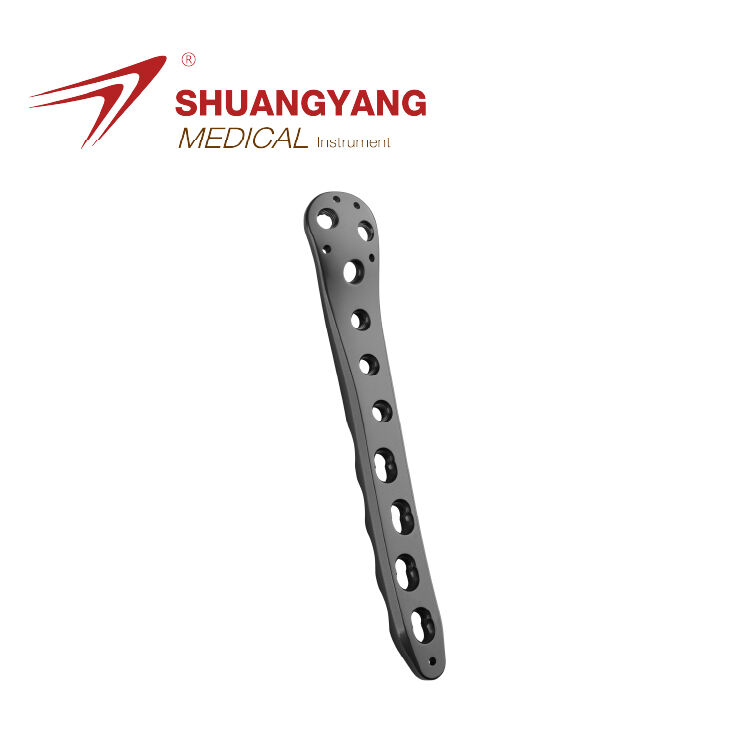
Incorporating Surgeon Feedback in Early-Stage Proximal Humerus Plate Design
The Importance of Clinician-Driven Design in Trauma Implant Development
Getting input from surgeons while developing proximal humerus plates helps cut down on problems after surgery because it makes sure engineers understand what actually happens in operating rooms. Research published in the Journal of Bone and Joint Surgery back in 2023 showed something interesting too. When plates were designed based on what doctors wanted instead of just engineering specs, patients needed fewer follow-up surgeries about 42 percent less often than with regular methods. Big companies making medical devices have taken notice of this trend lately. They're starting their product tests much earlier in the process now, looking closely at three main factors that matter most to real-world use cases.
- Cortical bone contact surface area (optimized through cadaveric modeling)
- Screw trajectory adjustability for osteoporotic bone
- Reduced plate prominence in high-motion shoulder zones
This collaborative approach ensures implants accommodate both stable fractures and complex 3-4 part proximal humerus fractures while minimizing soft tissue irritation.
Establishing Iterative Feedback Loops for Traceable Design Input From Surgeons
Effective trauma implant development requires structured feedback mechanisms between engineers and operating surgeons. The ASTM F04 Committee's 2022 guidelines recommend at least three iterative loops during prototyping:
- Preoperative planning validation — Surgeons assess virtual plate positioning on patient-specific CT reconstructions
- Cadaveric fit testing — Prototypes undergo functional evaluation in simulated reduction scenarios
- Clinical requirement mapping — Design teams document surgical preferences for screw angulation (±15°) and plate contouring tolerances
A 2022 Orthopedic Research Society report showed this traceable input process improved first-attempt intraoperative plate acceptance rates from 67% to 91% in multicenter trials. Modern digital tools enable real-time annotation of fracture reduction challenges directly on 3D implant models, creating an auditable design history file (DHF) compliant with FDA 21 CFR Part 820 requirements.
Validating Anatomical Fit Through Preclinical Models and Surgeon Evaluation
Using Cadaveric and 3D-Printed Models to Assess Plate Fit and Surgical Alignment
The process of validating new medical devices typically starts with cadaver studies since they offer real-world mechanical responses that let engineers see how their prototypes perform during actual surgery scenarios. Thanks to recent improvements in 3D printing technology, doctors can now work with custom-made anatomical replicas based on patients' own CT scan data. These physical models give surgeons a better feel for things like where screws should go and whether fractures are properly aligned. As we go through multiple rounds of prototype testing with these models, problems often pop up where implants might rub against surrounding tissue or bump into important bone structures. According to a study published last year in the Journal of Orthopaedic Trauma, combining these physical models with computer designs cuts down on unexpected changes needed during surgery by around one third compared to just relying on digital blueprints alone.
Ensuring Adaptability Across Proximal Humerus Fracture Types and Patient Anatomies
Good plate design needs to handle all sorts of fracture complexities ranging from straightforward two-piece breaks right up to those tricky comminuted osteoporotic fractures. The modular aspects such as staggered screw placements and different angle settings help tackle the roughly 14 degree difference we see in how people's humeral heads are inclined depending on their gender and age according to research published in Annals of Anatomy last year. These days preclinical tests often rely on synthetic bones that mimic really poor bone density situations. This lets researchers check if plates stay stable even under tough conditions while still being easy enough for surgeons to work with. And guess what? Surgeons actually agree after working with these prototypes on cadavers too.
Balancing Engineering Precision with Surgical Practicality in Locking Plate Design
Mechanical Stability vs. Surgical Feasibility in Proximal Humerus Fixation
Getting good fixation for proximal humerus fractures means finding the sweet spot between how well something works biomechanically and what actually works during surgery. Studies using computer models show that multi-axis locking systems spread stress better across bones, but many surgeons run into problems when these complicated designs don't fit the weird fracture patterns they see in real patients. About one-third of orthopedic surgeons have told me they struggle with adapting these fancy systems to irregular breaks. A good plate should give around 2mm flexibility for adjusting screws without making them come loose too easily. Recent tests on cadavers back this up, showing that hybrid variable angle designs perform better than old school locked plates in most cases, though there are still some tricky situations where neither option is perfect.
Avoiding Over-Engineering: Aligning Implant Complexity With Clinical Needs
Surgeon feedback consistently indicates that 72% of proximal humerus cases require straightforward fixation rather than advanced functionality. Overly intricate locking mechanisms increase operative time by 15—20% without improving outcomes in osteoporotic patients, according to a 2023 meta-analysis of 1,200 fracture repairs. Prototyping teams now prioritize:
- Standardized screw insertion angles matching common fracture reductions
- Dual-compression slots enabling both anatomical reduction and fixed-angle stabilization
- Color-coded drill guides reducing instrument table clutter
This approach reduces revision rates from 12% to 4.7% in early clinical evaluations while maintaining equivalent radiographic healing metrics.
Reducing Clinical Complications Through Design-Informed Surgical Solutions
Preventing Screw Cutout and Malalignment Through Optimized Plate Geometry
Screw cutout continues to be one of the main problems when fixing proximal humerus fractures, happening somewhere between 8 and 15 percent of the time according to research from the Journal of Orthopedic Trauma last year. The newer plate designs help lower this risk because they adjust how screws are placed so they follow the natural density patterns in bones better. These plates also have flatter shapes that don't irritate surrounding tissues as much. Looking at data from a biomechanical study done in 2022, plates featuring staggered locking holes actually cut down on cutout incidents by about 34% over older models, all without sacrificing stability against twisting forces.
Surgeon input during prototyping emphasizes intraoperative flexibility—hybrid hole configurations now allow adaptation of screw paths to patient-specific anatomy. This clinician-driven iteration ensures traceability between surgical needs and engineering solutions, particularly for complex fractures involving the greater tuberosity or medial calcar.
Design Considerations for Osteoporotic Bone and High-Risk Fracture Cases
Osteoporotic bone presents unique challenges, with screw pullout forces 40—60% lower than in healthy bone (Osteoporosis International, 2023). Key design innovations include:
- Enhanced thread geometry: Dual-core screws with tapered profiles improve purchase in low-density bone
- Augmented fixation points: Additional inferomedial screw options enhance medial column support
- Polyaxial locking mechanisms: Allow 15—30° angular adjustment to bypass areas of severe trabecular loss
High-risk patterns like 4-part fractures benefit from plates with integrated calcar blades, which reduce varus collapse by 22% in cadaveric trials. Recent prototyping focuses on integrating these features without increasing plate bulk—a critical balance for preserving vascular supply to the humeral head.
By embedding surgeon feedback early in the proximal humerus plate development process, manufacturers can systematically address complications while maintaining surgical practicality.
FAQ
Why is surgeon feedback important in proximal humerus plate design?
Surgeon feedback ensures that implant designs are practical and adaptable to real surgery scenarios, leading to fewer postoperative complications and revisions.
How does early-stage surgeon involvement reduce surgical complications?
Early-stage involvement allows for rigorous testing and refinement based on real surgical needs, decreasing follow-up surgeries by 42% compared to standard designs.
What benefits do modular plate designs offer?
Modular plate designs facilitate adaptability to various fractures, enhancing stability especially in complex cases like comminuted osteoporotic fractures.
Table of Contents
- Incorporating Surgeon Feedback in Early-Stage Proximal Humerus Plate Design
- Validating Anatomical Fit Through Preclinical Models and Surgeon Evaluation
- Balancing Engineering Precision with Surgical Practicality in Locking Plate Design
- Reducing Clinical Complications Through Design-Informed Surgical Solutions
- FAQ