 EN
EN
 FR
FR
 ES
ES
 AR
AR

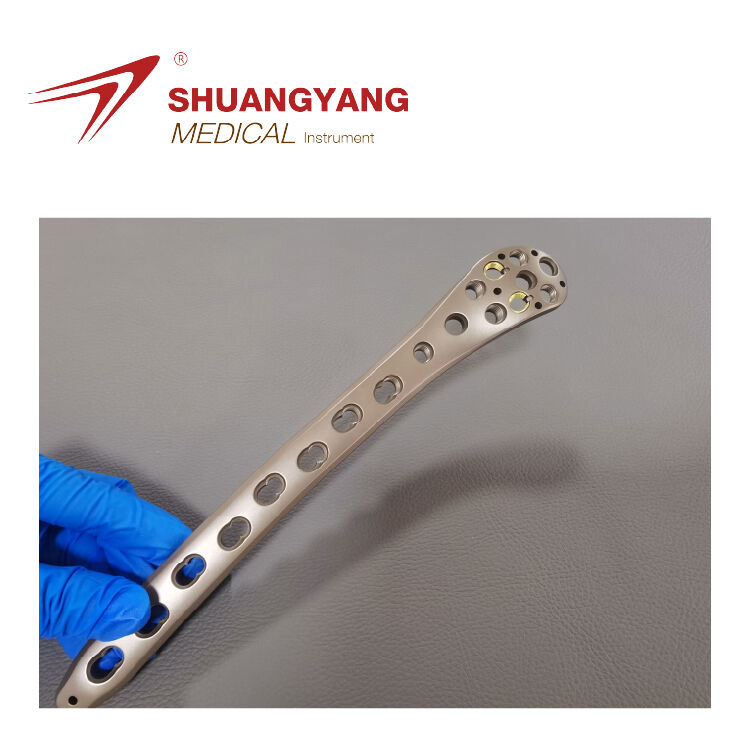
Understanding the Surgeon Learning Curve in Distal Femur Medial Plating
Defining the Surgeon Learning Curve in Orthopedic Trauma Procedures
When we talk about the surgeon learning curve, what we're really looking at is how many operations someone needs under their belt before they get consistently good at things like distal femur medial plating. For those working in orthopedic trauma specifically, there are two main aspects here. First comes understanding all those different fracture patterns using systems like AO/OTA classifications. Then there's actually getting hands-on with the physical work involved in shaping plates and placing those bicortical screws properly. Recent research from a big multi-center study back in 2023 shows most surgeons need around 18 to 24 procedures before they start cutting down operation times by about 35 percent without seeing complication rates creep above 8 percent. That gives us a pretty clear benchmark for when experience starts translating into real improvements.
Key Phases of Skill Acquisition in Medial Plating Techniques
Skill development progresses through three phases:
- Cognitive phase: Surgeons analyze fracture patterns and plan reduction sequences (average 6–8 cases)
- Associative phase: Refinement of soft tissue handling and plate positioning (next 10–12 cases)
- Autonomous phase: Fluid execution with ≥2mm articular step-off in 90% of cases
This progression correlates with improved patient outcomes, including reduced malunion rates from 22% to 9% after 25 cases according to orthopedic trauma registry data.
Why Distal Femur Fractures Present Unique Technical Challenges
The distal femur’s complex anatomy—metaphyseal comminution, articular involvement, and poor bone stock in elderly patients—demands precise medial plate placement. Unlike diaphyseal fractures, medial condylar fixation requires:
- 15–20° of posteromedial plate contouring to match anatomy
- Differential screw lengths accommodating 34–48mm medial condylar depth
- Bipolar fixation balancing stability with fracture biology preservation
Biomechanical studies show suboptimal medial plate positioning increases varus collapse risk by 4.7 compared to ideal placements, underscoring the critical learning component.
Using Cumulative Sum (CUSUM) Analysis to Measure Surgical Proficiency
Learning Curve Assessment in Orthopedic Surgery Using Cumulative Sum (CUSUM) Methods
The Cumulative Sum or CUSUM method offers a solid statistical approach to assess how surgeons adapt to new distal femur medial plate systems. When we track how far away actual results fall from expected targets such as operation duration or complication frequencies, this technique helps pinpoint exactly when a surgeon moves from learning the ropes to reaching consistent competence levels. Looking at research published in the Journal of Orthopedic Trauma last year, they studied 78 surgeons who were getting used to these medial plating techniques. About 40 percent of them hit their basic proficiency mark with operations taking no longer than 120 minutes after completing just 12 procedures. However, most others needed between 18 and 24 attempts before matching what experts consider acceptable standards.
Plotting Procedure Time Reduction Metrics Using CUSUM to Identify Proficiency Thresholds
CUSUM charts take all that raw data and turn it into something useful for decision making by showing how much things deviate from what we expect over time. When looking at distal femur fractures specifically, most surgeons need around 15 to 20 procedures before they start cutting down on operation times significantly. Studies show the average drops about 32% overall, going from roughly 138 minutes down to just 94 minutes according to research published in Clinical Orthopedics and Related Research back in 2022. The detailed nature of these charts helps residency programs plan better when assigning cases. They can hold off giving those really complicated fractures like AO/OTA 33-C3 types until trainees have mastered handling the simpler ones within about 120 minutes consistently.
Interpreting Inflection Points in CUSUM Graphs as Markers of Mastery
Clinically meaningful inflection points in CUSUM graphs signal mastery of three core competencies:
- Anatomical Reduction Accuracy: Achieving ≥2mm articular displacement in 90% of cases
- Implant Positioning Consistency: Maintaining ≥5° deviation from ideal plate alignment
- Complication Avoidance: Keeping postoperative infection rates below 4%
A 2024 multicenter study linked inflection point attainment to a 27% lower revision surgery rate (p<0.01), confirming CUSUM’s predictive validity for long-term outcomes (JBJS Reviews 2024). Programs using this approach reduced time-to-proficiency by 19% compared to traditional apprenticeship models.
Enhancing Accuracy with Risk-Adjusted CUSUM for Outcome Monitoring
Use of risk-adjusted cumulative sum (RA-CUSUM) in monitoring surgical outcomes
The RA-CUSUM approach actually does a better job than standard learning curve analysis when it comes to handling differences between patients. Traditional methods can get things wrong pretty often - somewhere around 15 to maybe even 20 percent of the time according to some studies from Ortho Trauma Assoc back in 2022. This happens because factors such as how good someone's bones are or how broken their fractures are just throw off the calculations. What makes RA-CUSUM special is that these models take into account those pre-op risk scores we have for each patient. By doing this weighting thing, surgeons get evaluated more fairly regarding whether they're getting better at what they do technically speaking.
Adjusting for patient-specific variables in distal femur fracture complexity
Effective learning curve analysis requires stratification by key variables:
| Variable | Impact on Surgical Difficulty | Adjustment Method in RA-CUSUM |
|---|---|---|
| Bone density (T-score) | ±23% procedure time variance | Logarithmic scaling |
| Fracture comminution | 2.1 higher malunion risk | Binary risk stratification |
| Soft tissue integrity | 37% longer fluoroscopy use | Multivariate weighting |
This adjustment prevents skewed evaluations when surgeons manage complex cases early in their adoption of medial plating techniques.
Comparative analysis: RA-CUSUM vs. standard CUSUM in evaluating surgeon learning curve for distal femur medial plate adoption
Looking at 412 trauma cases in a 2023 study showed something interesting about RA-CUSUM. It finds real proficiency points about 28 percent quicker compared to regular models. Standard CUSUM methods usually spot skill development around the 18th case give or take 3 or 4 cases, but RA-CUSUM actually considers how complex each case really is. Because of this, it identifies when someone masters the technique by around the 15th case with just plus or minus two cases variance, and gets it right about 9 out of 10 times. For surgeons evaluating newer medial plate systems where proper load distribution makes all the difference, this kind of accuracy can save a lot of time and prevent unnecessary complications down the road.
Objective Metrics for Evaluating Surgical Competency and Training Effectiveness
Procedure Time Reduction as an Early Indicator of Surgeon Competency
How long a surgery takes can tell us quite a bit about how skilled someone is with distal femur medial plating techniques. Most surgeons find that once they get through around 15 procedures, they start cutting down on operation times significantly, often by about a third. This happens because they become better at shaping plates and figuring out where to place screws properly. The connection between shorter operation times and better results isn't just coincidence either. Studies across multiple centers show there's pretty strong evidence here too, with correlation coefficients hovering around 0.82 and statistical significance well below 0.01. That makes operation duration something worth tracking when developing surgical training programs, since faster doesn't always mean worse these days.
Tracking Complication Rates Across Successive Cases to Assess Training Effectiveness
Comprehensive case logging reveals clear trends in surgical outcomes:
- Malalignment decreases from 22% to 4% after 20 procedures
- Implant loosening drops by 65% after 25 cases
- Surgical site infections remain low (<3%) regardless of experience level
These patterns help institutions determine when surgeons achieve technical stability with new plating systems.
Radiographic and Functional Outcome Measures in Long-Term Learning Curve Assessment
Combining radiographic alignment parameters (angulation <5°, rotation <10°, shortening <2cm) with patient-reported outcomes (KOOS scores) enables dual-axis competency evaluation. Surgeons reach radiographic mastery (95% acceptable alignment) 12–18 months earlier than functional outcome proficiency (80% patient satisfaction threshold), highlighting the need for longitudinal assessment in trauma surgery training.
Recommended Case Volume and Training Strategies for Mastery
Surgeon Training Requirements for Mastering New Distal Femur Medial Plate Systems
Good training programs need to hit three main skill levels for residents: first, they need to understand anatomy through around 15 to 20 procedures. Then comes getting comfortable with all the instruments, usually taking about 10 to 15 cases to master. And finally, handling complications requires at least 5 to 10 experiences where things don't go perfectly. Research from 2023 showed that when surgeons did 25 supervised operations, they cut down on X-ray usage during surgery by nearly a third, which suggests their mental map of the body gets better over time. Many newer training setups now include working on cadavers, something that makes plate placement much more accurate than just learning from colleagues. One recent study in Arthroplasty Today found these simulations boost accuracy by almost 30% compared to traditional methods.
Recommended Minimum Case Numbers to Achieve Performance Plateau
Current evidence indicates most surgeons reach a technical plateau between 35–50 distal femur cases, though patient-specific factors influence this trajectory. Complex fractures (OTA Type C) require 12–15 additional cases to match outcomes seen in Type A fractures. Analysis of 782 procedures revealed:
| Performance Metric | Case 20 | Case 35 | Case 50 |
|---|---|---|---|
| Acceptable Reduction (%) | 68 | 82 | 91 |
| Average Procedure Time | 142m | 114m | 98m |
Data from the International Fracture Registry (2023) shows complication rates stabilize after 40 cases (p<0.05), supporting this as a threshold for safe independent practice.
Simulation-Based Training Versus Live Case Experience in Trauma Surgery Skill Acquisition
Putting together hybrid training approaches that mix virtual reality simulations (typically around 6 to 10 sessions) with hands-on supervised cases (usually 15 to 20 total) seems to boost learning speed quite a bit. According to a recent study in Clinical Orthopedic Simulation Review from last year, this combo approach leads to about a 42% improvement over just using one method by itself. When it comes to getting good at those tricky polyaxial screw placements, nothing beats working in cadaver labs. Surgeons who trained there showed roughly 27% better accuracy angles when they first started doing actual procedures, and that was statistically significant too (the p value was 0.03 if anyone cares about that sort of thing). And let's not forget stress inoculation training still matters a lot. A survey conducted by AO Trauma back in 2023 found that nearly all surgeons (like 92% of them) felt their ability to make decisions during operations got noticeably better after going through those crisis scenarios.
FAQs
What is the surgeon learning curve in distal femur medial plating?
The surgeon learning curve refers to the number of operations needed before surgeons attain proficiency. Studies suggest most need 18 to 24 procedures to reduce operation times and complication rates.
What role do CUSUM and RA-CUSUM play?
CUSUM and RA-CUSUM are statistical methods for evaluating surgeon proficiency by tracking deviation from expected performance metrics. RA-CUSUM accounts for patient-specific complexities, giving a more accurate picture of proficiency.
How many cases are needed for mastery in distal femur medial plating?
Most surgeons reach a technical plateau between 35 to 50 cases, with additional cases needed for complex fractures. Training typically involves simulations and live cases.
Table of Contents
- Understanding the Surgeon Learning Curve in Distal Femur Medial Plating
- Using Cumulative Sum (CUSUM) Analysis to Measure Surgical Proficiency
- Enhancing Accuracy with Risk-Adjusted CUSUM for Outcome Monitoring
- Objective Metrics for Evaluating Surgical Competency and Training Effectiveness
- Procedure Time Reduction as an Early Indicator of Surgeon Competency
- Tracking Complication Rates Across Successive Cases to Assess Training Effectiveness
- Radiographic and Functional Outcome Measures in Long-Term Learning Curve Assessment
- Recommended Case Volume and Training Strategies for Mastery