 EN
EN
 FR
FR
 ES
ES
 AR
AR

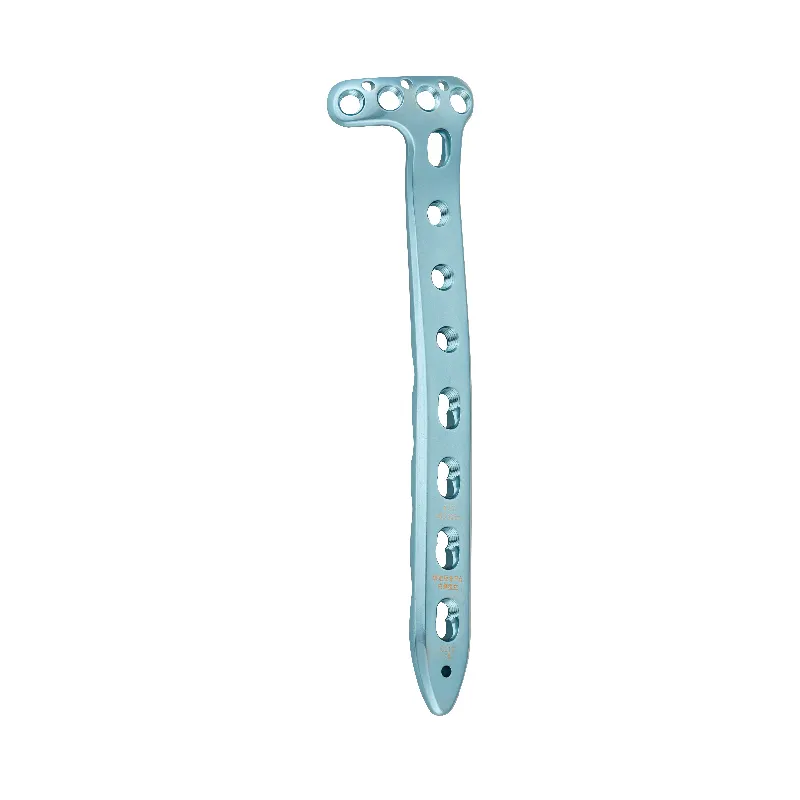
Understanding Equivalence Testing Requirements for Proximal Lateral Tibia Plates
Why Structural Identity Alone Fails Clinical Equivalence Validation
Just because two plates have exactly the same size and screw hole placement doesn't mean they'll perform equally well in actual medical situations. The materials can vary quite a bit too, sometimes by as much as 5% in their metal mix, and these small differences matter a lot when it comes to how long something lasts under stress and how weight gets distributed across the device. Recent research from last year looked at orthopedic implants and discovered something interesting. Plates that looked completely alike on paper but had different surface finishes actually lasted 18% longer before breaking down after being tested for half a million cycles. To really know if implants work the same way biomechanically, doctors need more than just looking at shapes. They should run tests following ISO standards that check for things most people never think about, like tiny variations in how the metal grains form or how surfaces get treated. These microscopic details make all the difference in whether the implant stays stable where it meets the bone. If manufacturers skip checking these mechanical properties, even plates that look identical might fail sooner than expected once inside someone's body dealing with normal daily activities.
Regulatory Foundations: ISO 14242-1, ASTM F3069, and FDA/EMA Guidance Alignment
Regulatory pathways for generic trauma plate validation require alignment among ISO 14242-1 (wear testing), ASTM F3069 (trauma implant standards), and FDA/EMA guidance. Key harmonization principles include:
| Requirement | ISO Standard | FDA/EMA Threshold |
|---|---|---|
| Static Bending Stiffness | ±10% tolerance | Clinical justification |
| Fatigue Life Validation | 2 million cycles | Risk-based analysis |
In its 2024 guidance, the FDA is pushing for DHF documentation that tracks design history files showing actual functional equivalence rather than just matching dimensions through proper testing methods. Over in Europe, the EMA wants proof that these devices maintain similar safety standards too, specifically looking at mechanical performance within about plus or minus 15 percent strength when subjected to extreme anatomical stresses. When regulators agree on what counts as equivalent, it saves companies from doing unnecessary tests again and again. At the same time, patients still get protected because safety remains front and center throughout the approval process for medical devices that claim to be functionally similar to existing ones.
Design-Controlled Equivalence Testing Under ISO 13485 and EU MDR
Transitioning from Identical Design to Functional Equivalence in DHF Documentation
Regulatory approaches these days are moving away from requiring exact copies when it comes to proximal lateral tibia plates. Instead, they focus more on whether devices perform similarly rather than looking exactly alike. Most regulatory agencies have started accepting proof of similar mechanical behavior as enough to get products onto the market. This actually cuts down on development expenses while still keeping patients safe. The FDA has been working closely with ISO standards, specifically ISO 13485:2016, through their Quality Management System Regulation which kicks in around February 2026. This new framework basically codifies what many companies were already doing informally. Medical device manufacturers can point to this regulatory agreement when developing their equivalence claims, especially when trying to show that controlled design changes don't affect clinical outcomes.
The DHF needs to show that mechanical performance actually lines up with what predicate devices can do, based on clinically meaningful benchmarks rather than just copying shapes. When it comes down to numbers, there are key metrics worth focusing on. Static bending stiffness matters a lot, typically within about 10% variance. Fatigue resistance is another critical factor, usually allowing for around 15% flexibility. Taking this practical angle makes equivalence testing much smoother while cutting out extra design limitations that don't really contribute anything. Plus, this method fits right into what the EU MDR requires regarding performance validation backed by solid technical docs throughout the process.
Mechanical Performance Matching: Key Metrics and Acceptance Criteria for Equivalence Testing
Stiffness, Strength, and Fatigue Life: Defining Clinically Justified Tolerances (±10% vs. ±15%)
To get biomechanical equivalence right, we need clear tolerance limits based on what actually happens in patients. For stiffness, most guidelines stick around ±10%. Go beyond that range and there's real risk of changing how forces move through surrounding bones, which can lead to problems like stress shielding. When looking at strength measurements both yield and ultimate strength have about ±15% wiggle room since small differences usually don't affect whether fractures stay stable. But fatigue life needs much stricter controls at ±5% because repeated stress failures make up nearly half (42%) of all implant revision cases according to Ponemon's 2023 report. The numbers come from computer models of walking patterns combined with research on cadavers showing how mechanical mismatches translate into bad outcomes for patients.
| Metric | Tolerance | Clinical Rationale | Failure Consequence |
|---|---|---|---|
| Stiffness | ±10% | Prevents bone resorption/stress shielding | Aseptic loosening ($740k avg. revision cost) |
| Strength | ±15% | Maintains fracture stabilization capacity | Early construct failure |
| Fatigue | ±5% | Ensures longevity under repetitive loading | Catastrophic in-vivo fracture |
Validating Test Methods: 3-Point Bending, Cyclic Fatigue, and Load-to-Failure Protocols
When validating tests, we stick to ASTM and ISO standards with tight control over both environment and procedures. For three point bending tests, the distance between supports matters a lot - around 40mm works well for tibial plates, and the loading speed should be about 5mm per minute to match how real bones behave under stress. Fatigue testing needs at least five million cycles happening between 2 to 5 times per second, which actually represents roughly two years worth of walking activity. These tests need to happen in specific conditions too, typically around room temperature (about 23 degrees Celsius give or take 2 degrees) with humidity kept steady at 50%. When assessing failure loads, strain control is key because it helps us see exactly when materials start deforming permanently. The fixtures used for testing have to be calibrated regularly against those official NIST standards. Even small misalignments matter - anything over half a degree throws off the whole stress pattern and makes the results unreliable. Every protocol also needs proper statistical backing, usually looking at six sample pieces and making sure results are significant with a p value below 0.05.
Case Evidence: Real-World Equivalence Testing Leading to FDA 510(k) Clearance
Getting FDA 510(k) approval for those proximal lateral tibia plates really hinges on showing biomechanical equivalence rather than just copying the structure of existing devices. Companies need to prove their products match up pretty closely in terms of stiffness (within about 10%) and how long they last under stress (around 15% difference is acceptable). The FDA released some stats back in 2023 indicating that nearly nine out of ten orthopedic implants got cleared because they passed these standard fatigue tests. A company actually managed to get approval recently by demonstrating similar load distribution patterns in synthetic bone models after running them through over 5,000 loading cycles, which saved them from having to do expensive clinical trials. What they submitted contained comparisons from three point bending tests where the yield strength varied no more than 5%, plus the failure modes were exactly the same when tested for fracture fixation. All this concrete evidence turns equivalence testing from something abstract into a must-have requirement for getting products to market faster without compromising on safety for patients.
FAQ
What is the significance of testing equivalence in tibia plates?
The equivalence testing ensures that tibia plates not only look alike but perform similarly under stress, preventing premature failure in medical applications.
How does regulator alignment impact equivalence testing?
Alignment among regulatory standards like ISO and FDA/EMA ensures a streamlined testing process while maintaining safety and efficacy standards.
Why is fatigue life validation important?
Fatigue life validation is crucial as it assures the longevity and reliability of implants under repetitive stress, minimizing the risk of implant revision.
What role do mechanical performance metrics play?
These metrics define strict tolerance levels for stiffness, strength, and fatigue life, ensuring implants function safely and effectively within clinical limits.