 EN
EN
 FR
FR
 ES
ES
 AR
AR

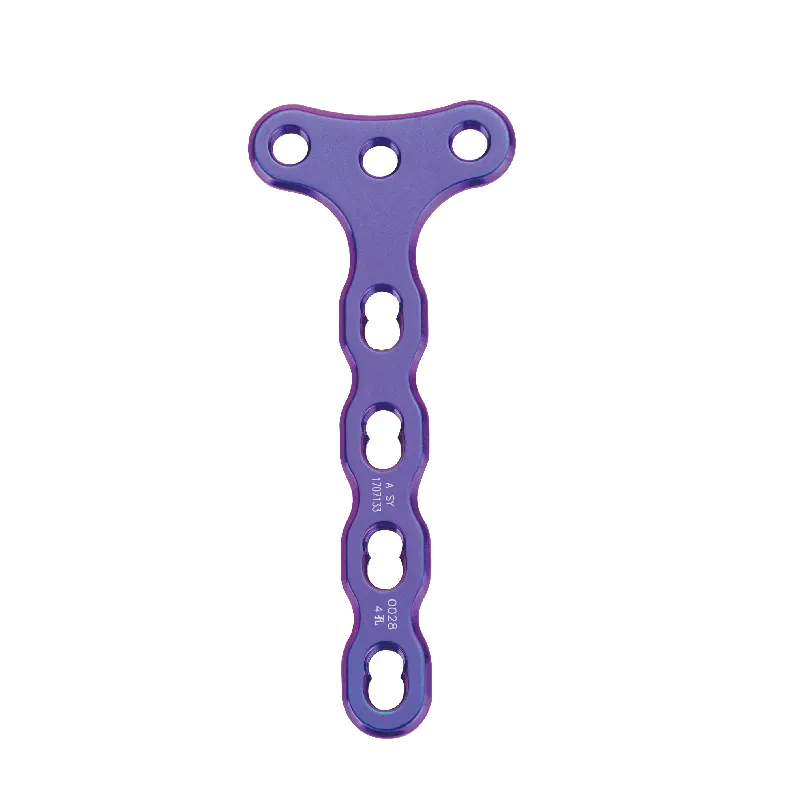
Why Component Obsolescence Threatens Long-Term Serviceability of Proximal Tibia Plates
The Lifecycle Mismatch: Medical Device Longevity vs. Electronics & Material Supply Chains
Most proximal tibia locking plates should last patients well over two decades in clinical settings, yet the electronic parts inside them like RFID trackers and those special alloy materials typically only stay viable commercially between five to ten years. The problem comes down to how fast semiconductors evolve plus all the ups and downs in raw material pricing. Manufacturers run into real headaches when suppliers stop making essential screws, connectors, or specific alloys because nobody buys enough of them anymore, new regulations kick in, or companies merge. When this happens, doctors either have to pay through the nose for product redesigns or settle for suboptimal solutions for their patients. Bills of materials that rely heavily on proprietary connections or components from just one supplier make things worse. Even small changes to these parts can trigger complete mechanical testing again, which means longer waits for patients needing treatment and higher chances of running afoul of regulatory agencies.
Real-World Impact: Clinical, Regulatory, and Commercial Risks of Unmanaged Obsolescence
Unmitigated obsolescence cascades across three interdependent domains:
- Clinical: Backordered implants delay surgeries, jeopardizing patient outcomes; unvalidated substitutes may lack long-term biocompatibility data, raising risks of inflammation or implant failure.
- Regulatory: Introducing replacement parts triggers FDA/ISO 13485 revalidation—including sterilization, mechanical testing, and biocompatibility assessments—a process that typically takes 12–18 months and costs over $500k (regulatory consultancy data, 2023).
- Commercial: Inventory write-offs for legacy systems average $740k annually (Ponemon Institute, 2023), while full plate-system redesigns exceed $2M. Patient and surgeon trust erodes when devices are withdrawn without viable alternatives.
Proactive Component Obsolescence Management for Proximal Tibia Plates
Proactively managing component obsolescence in proximal tibia locking plates prevents supply chain disruptions and ensures continued clinical availability of these life-sustaining devices.
Early Detection: Monitoring Supplier EOL Notices and BOM Risk Scoring
Keeping track of when suppliers announce their End-of-Life (EOL) status helps spot parts that might disappear from the market as much as two years ahead of time. Our Bill of Materials (BOM) risk assessment looks at different factors for every component. We give some weight to how long a supplier has been around (about 15% importance), then check if there are other places to get similar parts (this counts for roughly 30%), and finally look at past reliability issues (around 20% weight). Parts that score poorly on this system trigger automatic warnings in our system. We regularly go through our BOM lists using predictive tools to find potential problems before they become real issues. This approach lets us take action well before supply chain disruptions start affecting our ability to maintain equipment over the long haul.
Strategic Mitigation: Last-Time Buy, Dual Sourcing, and Obsolescence-Resistant Design Principles
When obsolescence threats emerge, three integrated strategies preserve continuity:
- Last-Time Buys: Securing 18–36 months of inventory for critical single-source components
- Dual Sourcing: Qualifying secondary suppliers during initial design—ideally before first production release
- Obsolescence-Resistant Design: Standardizing screw interfaces, specifying materials with ¥15-year proven supply stability, and designing for modularity
Modular architecture enables isolated component swaps without full plate redesign, reducing requalification effort by up to 40% while sustaining legacy system support, per 2023 medical device lifecycle management studies.
Redesign, Requalification, and Regulatory Pathways for Obsolete Components
When Replacement Isn’t Enough: Navigating FDA/ISO 13485 Requirements for Design Changes
When it comes to replacing old parts in proximal tibia plates, this isn't just about swapping one piece for another. The whole thing kicks off what we call a formal design change process that has to follow strict FDA quality system rules plus meet ISO 13485 standards. If any changes might affect how safe, effective, or compatible with the body these devices are, then there's a bunch of validation work needed. We're talking about doing those ISO 10993-1 tests for biocompatibility, checking mechanical strength when loaded like real bones would be, and making sure all labels and instructions get updated properly. Take something like changing a locking mechanism as an example. That would need fatigue testing where we apply around 2,500 Newtons repeatedly and run comparisons through finite element analysis software. Not having proper documentation can lead to problems with the FDA sending out Form 483 notices or even pulling products off the market entirely. Smart companies build these regulatory considerations right into their product development from day one instead of treating them as an afterthought later on down the road. This approach helps avoid those frustrating delays and unexpected costs that come from rushing through compliance at the last minute.
Case Insight: Successful Requalification of a Critical Locking Screw Interface in a Legacy Plate System
When a titanium alloy screw became obsolete, a major orthopedic manufacturer redesigned the interface using additive manufacturing and executed a streamlined requalification pathway:
- Accelerated aging per ASTM F1980
- Comparative finite element analysis under 2,500N cyclic loads
- Clinical validation using retrieval data from 142 explanted devices
When submitting to the FDA, the company provided all necessary 510(k) documentation showing substantial equivalence plus updated information on sterilization processes. After getting approval, they redesigned the plate system which actually made it last about eight years longer than before. The numbers look good too - according to a recent 2025 joint registry report, there was a 19% drop in revision surgeries needed. What this shows is that when manufacturers take the time to properly requalify their products using actual patient data and keep ahead of regulatory changes, older implants can stay relevant even as parts become obsolete faster these days in medical device manufacturing.
FAQ
What are proximal tibia locking plates?
Proximal tibia locking plates are medical devices used in orthopedic surgery to stabilize fractures in the proximal region of the tibia bone.
How does component obsolescence affect these devices?
Component obsolescence can lead to supply chain disruptions, forcing redesigns or suboptimal solutions, potentially delaying surgeries and increasing costs.
What strategies can prevent obsolescence-related issues?
Proactive management strategies such as monitoring supplier End-of-Life (EOL) notices, last-time buys, dual sourcing, and obsolescence-resistant design principles can help mitigate these issues.