 EN
EN
 FR
FR
 ES
ES
 AR
AR

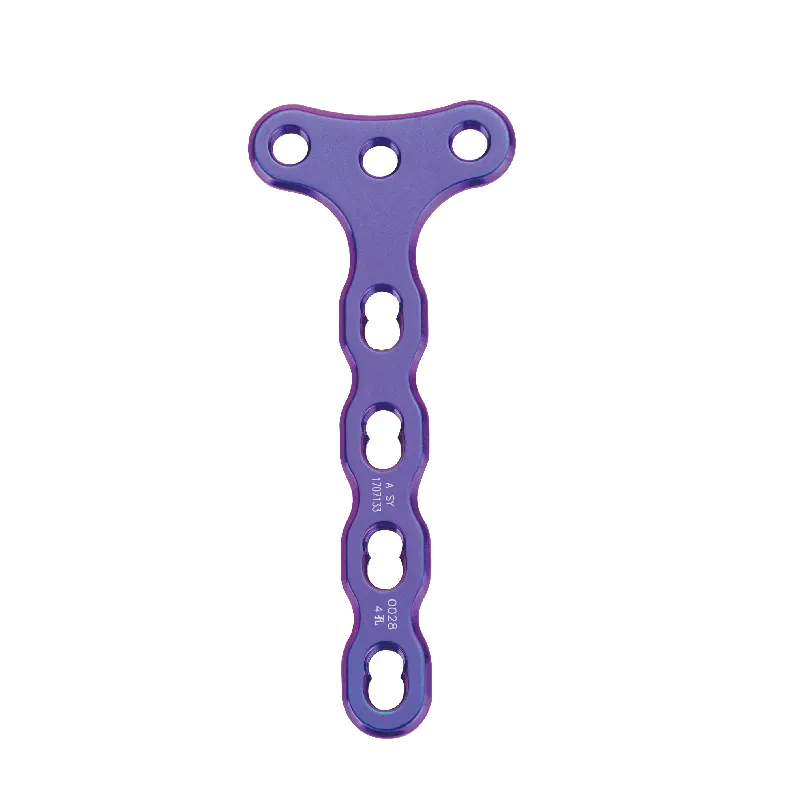
Why Packaging Integrity Validation Is Critical for Distal Radius Locking Plates
The distal radius locking plates need to be completely sterile when they go into patients. If the packaging gets damaged somehow, these orthopedic implants become vulnerable to bacteria, which raises the chances of getting a surgical site infection. When infections happen because of contaminated equipment, patients end up staying in the hospital for around 7 to 10 extra days. Often times, doctors have to do another surgery altogether, and each case costs roughly $740,000 according to the Ponemon Institute report from last year. That's why we run all sorts of tests on packaging integrity before shipping. The sterile barriers need to hold up against pretty much anything thrown at them during transport - think drops, vibrations from trucks, even being squished accidentally. Small parts with sharp corners on distal radius plates create particular problems for keeping seals intact when things get bumped around in transit. Testing makes sure everything works as intended when stressed. Hospitals that skip this step risk not just bad outcomes for patients but also running afoul of regulations and losing credibility with their communities. Remember, ISO 11607 requires proof that these barriers actually work under pressure. Proper validation isn't some bureaucratic checkbox item; it's about keeping patients safe first and foremost.
Drop Testing as the Cornerstone of Packaging Integrity Validation
Simulating real-world transit hazards with ASTM D5276 and ISTA 3/6 protocols
Drop tests are essential for checking if packaging holds up during shipping. They mimic what happens when packages fall or hit corners and edges during transport. The ASTM D5276 standard measures how durable containers are by dropping them from set heights. Meanwhile, ISTA 3/6 looks at what happens during actual shipping conditions including things like rotation impacts and vibrations that occur naturally in transit. These tests show exactly how different forces during transportation can break down sterile packaging. This matters a lot for medical devices like distal radius locking plates because even tiny leaks might lead to serious contamination issues. According to research published by the Medical Packaging Consortium in 2022, companies that skip the ISTA 3 test see about 35% more failures in their packaging barriers. For orthopedic implants specifically, these kinds of tests make sure that the rigid packaging can survive all sorts of rough handling that occurs in real world shipping situations.
Applying MIL-STD-810 and ASTM D4169 for rigid, high-value orthopedic device packaging
The standards MIL-STD-810 and ASTM D4169 offer specific ways to test expensive medical device packaging such as those used for distal radius plates. Method 516 from MIL-STD-810 focuses on how well packages withstand shocks from different directions, which matters a lot when implants get tossed around during airplane transport or accidentally dropped in warehouses. On the other side of things, Distribution Cycle 13 under ASTM D4169 requires running through a series of tests that mimic what happens during shipping. These include squeezing the package, shaking it like it would be on a truck ride, and dropping it from various angles to see if anything breaks inside.
| Standard | Key Focus | Drop Test Parameters |
|---|---|---|
| MIL-STD-810 | Multi-axis shock resistance | 26 drops from 1.2 m across 12 orientations |
| ASTM D4169 | End-to-end transit simulation | 10+ drops per ASTM D5276 at critical angles |
This dual-standard approach addresses the unique fragility of sterile-packed implants, where post-impact seal strength degradation (per ASTM F88) directly correlates with clinical contamination risks. Integrating these protocols ensures packaging integrity validation meets ISO 11607 requirements for life-critical devices.
Post-Drop Evaluation of Sterile Barrier Integrity
Following simulated transit hazards, rigorous post-drop evaluation confirms sterile barrier integrity for distal radius locking plates. Micro-leaks pose significant contamination risks, making advanced assessment essential.
Bubble leak and dye penetration testing to detect micro-leaks after impact
The bubble leak test works by putting packages underwater while building up pressure inside them, so any air escaping shows up as bubbles on the surface. When dealing with tricky shapes such as plate and screw assemblies, manufacturers often turn to dye penetration tests instead. These involve drawing colored liquid through the system under vacuum conditions to spot flaws in sealing channels. Both approaches can catch openings down to around 10 microns in size something absolutely necessary when making sure no microbes get into orthopedic implants. Research indicates that even just one tiny leak could ruin the sterile environment inside these devices within a day if they come into contact with outside elements.
Seal strength assessment under post-impact conditions per ASTM F88
The ASTM F88 standard looks at how strong seals remain after being hit by measuring tension during tests that tell us exactly how much force it takes to pull apart those sealed layers. When talking about distal radius plates specifically, keeping a seal strength of at least 3.5 Newtons per 15 millimeters after impact has been proven across the industry as necessary for maintaining that all important sterile barrier. These kinds of mechanical tests work alongside simple visual checks but offer something extra too objective numbers that help validate whether packaging meets requirements set out in standards like ISO 11607-2. Basically, they give manufacturers concrete evidence instead of just guesswork when ensuring their products stay properly protected throughout shipping and storage.
Building a Compliant, Repeatable Validation Protocol for Distal Radius Plates
Establishing a standardized validation protocol ensures consistent packaging integrity validation for distal radius plates across production batches minimizing variability while meeting regulatory benchmarks for sterile medical devices.
Defining drop test parameters: orientation, height, sample size, and pass/fail criteria
Critical parameters must mirror real-world transit hazards. ASTM D4169 recommends:
- Orientation: Six package faces (flat, edge, corner)
- Height: 30 48 inches based on distribution channels
-
Sample size: Minimum 12 units per test configuration
Pass/fail criteria require zero breaches in sterile barrier integrity after impact, validated through dye penetration tests.
Integrating ISO 11607-1 & -2 requirements into validation documentation and traceability
ISO 11607 mandates comprehensive documentation covering material specifications, sterilization compatibility, statistical justification for sample sizes, and traceable records of all test iterations. This ensures audit-ready compliance and enables root-cause analysis of failures. Facilities using structured protocols reduced validation errors by 67% versus ad-hoc approaches (2023 industry benchmark study).
FAQ
Why is packaging integrity validation necessary for distal radius locking plates?
Packaging integrity validation ensures that distal radius locking plates remain sterile and are protected against contamination during transport, thus preventing surgical site infections.
What standards are used for drop testing?
Standards such as ASTM D5276, ISTA 3/6, MIL-STD-810, and ASTM D4169 are used to simulate real-world hazards and assess packaging durability.
How do tests like the bubble leak and dye penetration work?
These tests detect micro-leaks by using pressure and colored liquids to identify tiny openings that could compromise the sterile barrier.