 EN
EN
 FR
FR
 ES
ES
 AR
AR

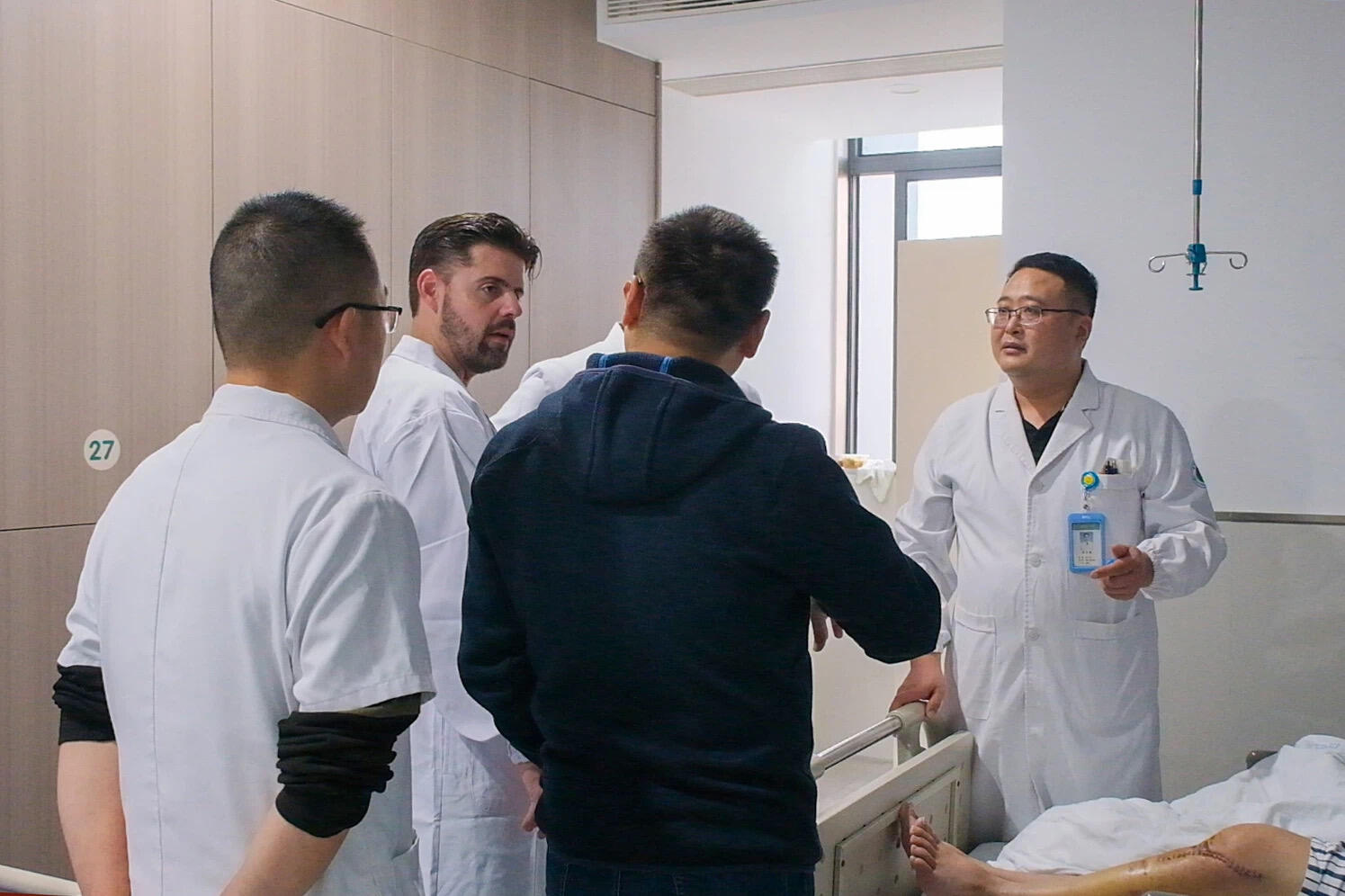
Patient-Centered Clinical Endpoints: Pain Relief and Functional Improvement
VAS Back, VAS Leg, and ODI as Core Patient-Reported Outcome Measures
For evaluating outcomes after posterior lumbar interbody fusion surgery, doctors commonly rely on two main tools: the Visual Analog Scale (VAS) for measuring back and leg pain, and the Oswestry Disability Index (ODI). The VAS lets patients rate their pain from 0 to 10, giving a straightforward number that reflects how bad things feel. Meanwhile, the ODI looks at ten different aspects of daily life to gauge how much someone's mobility has been affected by their condition. These measurements give real insight into what patients actually experience day to day rather than just what clinicians think they see during exams. Research shows something interesting too – when patients improve by at least 15 points on the ODI scale, about 8 out of 10 people report significant improvements in their ability to move around normally again.
Minimal Clinically Important Difference (MCID) Thresholds for Interpretation
Just because something shows statistical significance doesn't mean it matters clinically. What really counts is what patients actually feel, which brings us to the concept of Minimal Clinically Important Difference or MCID. When looking at Posterior Lumbar Interbody Fusion (PLIF), research suggests around 2.1 points drop on the Visual Analog Scale for pain relief qualifies as meaningful improvement, while over 12.3 point gain on the Oswestry Disability Index indicates real progress. These numbers help separate genuine changes from random fluctuations and guide important decisions regarding whether treatments worked, how fast someone should recover, and when they might go back to work. Around two thirds of those who hit these MCID targets find themselves back at work full time or almost full time within half a year. The beauty of understanding MCID lies in closing the often frustrating gap between what X-rays show and what people actually experience. It reminds everyone involved that we shouldn't celebrate bone fusion unless it translates into better quality of life for the patient.
Radiographic Endpoints: Assessing Fusion Success and Structural Stability
CT-Based Arthrodesis Criteria vs. Dynamic Radiography in Clinical Practice
For confirming whether bones have successfully fused after posterior lumbar interbody fusion (PLIF), computed tomography still stands out as the best method available. The technique looks specifically at how new bone forms bridges between vertebrae and checks if trabeculae connect properly across the fused area. Dynamic flexion extension x rays serve as another tool that works alongside CT scans. These images help evaluate how stable the spine segment actually is during movement. When there's less than five degrees of motion observed, doctors usually consider the stabilization successful. But both approaches come with their own challenges. CT scans expose patients to significantly more radiation compared to regular x rays about six millisieverts versus just point seven. Metal implants can also create confusing artifacts on these images making interpretation tricky sometimes. On the flip side, dynamic radiography might miss signs of instability in patients who are either very stiff or carry extra weight around their midsection. Most busy spinal surgery centers tend to rely on CT scans around the twelve month mark to confirm fusion status definitively. They save dynamic imaging tests for checking function earlier on or when they suspect something went wrong with the healing process.
The Clinical Relevance Gap: When Radiographic Fusion Symptom Resolution
Even though most PLIF surgeries show good fusion rates between 85% and 92% on X-rays, about one third of patients still deal with ongoing pain or limited mobility after treatment. What's going on here? There are several factors beyond just whether bones have fused properly. Things like leftover nerve pressure, wear and tear at nearby spinal segments, weakened muscles, or even changes in how the brain processes pain signals can all contribute. Looking at CT scans alone doesn't tell the whole story either. Studies actually find only a weak link between confirmed bone fusion and real improvements in disability scores or pain levels. Just because imaging looks good doesn't mean everything works well for the person living with it. That's why doctors need to look at these images alongside what patients actually experience day to day. Imaging results shouldn't stand alone as proof of successful recovery when someone is still struggling with daily activities.
Safety and Durability Endpoints in Posterior Lumbar Interbody Fusion
Adverse Events, Cage Subsidence, and Adjacent Segment Disease
The procedural risks for PLIF surgery can be categorized around three main safety concerns. First, surgical complications like infections or nerve injuries happen in about 5 to 10 percent of procedures. Then there's cage subsidence, which means when the implant settles more than 3 mm into the vertebrae's endplate bone. This occurs in roughly 10 to 20% of cases and tends to happen more often in patients with weak bones or poor implant placement. Lastly, adjacent segment disease (ASD) affects between 15 and 20% of patients within five years after surgery. This condition involves faster wear and tear either above or below where the spine was fused. These issues all affect how long the procedure lasts. When implants sink into the bone, it weakens the spine's stability and makes another operation more likely. Meanwhile, ASD might require surgeons to extend the original fusion area during follow-up treatments.
Reoperation Rates and Long-Term Device Performance
About 8 to 12 percent of people who have had posterior lumbar interbody fusion surgery end up needing another operation within five years. The main reasons include nonunion (pseudarthrosis), problems with the hardware used during surgery, or worsening adjacent segment disease. Even when CT scans show successful bone fusion, around 20 to 30% of these cases don't result in complete relief from pain symptoms. Looking at long-term results tells another story though. Patients without serious complications tend to keep their gains in function over time. Studies suggest that between 70 and 80% continue showing good improvement on standard outcome measures like ODI and VAS scores even after 5 or 10 years post-surgery. What really matters isn't just whether bones fuse together on X-rays, but whether patients actually feel better and stay better over the long haul.
Functional and Societal Outcomes: Return-to-Work and Quality-of-Life Impact
To really understand if PLIF works, we need to look past what happens in the OR and radiology department and see how things play out in everyday life. When people get back to work, especially returning to their regular duties within about six months, that tells us something important about their overall recovery. It shows they're physically capable again, thinking clearly, and contributing economically. The same goes for those quality of life questionnaires everyone talks about, like the SF-36 and EQ-5D. These tools actually tell us about different aspects of healing: how well someone moves around, handles emotions, connects socially, and feels in control of their own life. The numbers don't just show if someone can walk longer distances after surgery; they indicate if patients are truly living better lives. We know from experience that getting back into society takes longer than hitting those medical checkmarks on time. That's why following up on these outcomes over months and years, while still keeping an eye on pain scales, disability indexes, and MRI results, gives us the clearest view of what PLIF really delivers.
FAQ
What is the purpose of using VAS and ODI in PLIF surgery?
The Visual Analog Scale (VAS) is used to measure patients' pain levels, while the Oswestry Disability Index (ODI) assesses the impact of mobility impairment on daily life, giving doctors insight into the patient's subjective recovery experience.
What does MCID represent in clinical outcomes?
Minimal Clinically Important Difference (MCID) signifies the smallest change in scores that patients perceive as beneficial, guiding treatment effectiveness and recovery assessments post-surgery.
How is fusion success evaluated after PLIF surgery?
Fusion success is primarily assessed using CT scans to observe bone bridge formation between vertebrae and dynamic radiography that checks spinal stability in motion.
What are the common safety risks associated with PLIF surgery?
Safety risks include surgical complications, cage subsidence, and adjacent segment disease, impacting recovery duration and possibly necessitating further surgery.
Do imaging results reliably indicate PLIF recovery?
Imaging can confirm fusion success but does not always reflect the patient's actual functional recovery or pain relief, necessitating evaluation alongside patient-reported outcomes.