 EN
EN
 FR
FR
 ES
ES
 AR
AR

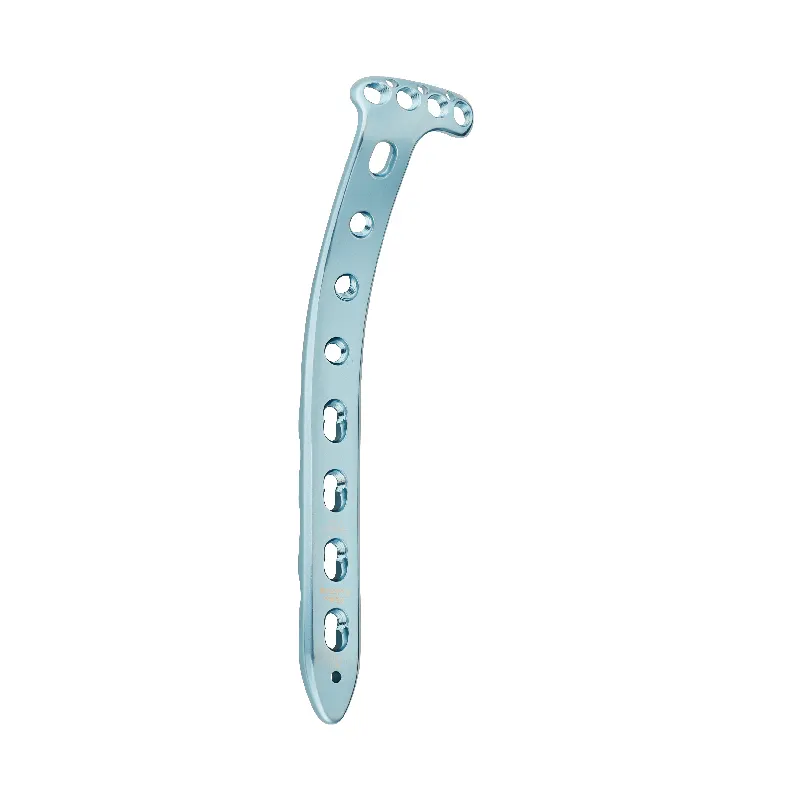
ISO 13485 Design Controls Framework for Distal Tibia Locking Plates
Implementing ISO 13485 design controls for distal tibia locking plates ensures systematic development of these critical orthopedic devices. The framework mandates rigorous processes to address anatomical complexities and biomechanical demands of lower limb stabilization, reducing clinical risks while meeting regulatory requirements.
Clause 7.3 Requirements: Planning, Phased Development, and Cross-Functional Accountability
ISO 13485 Clause 7.3 demands that developers create detailed plans for distal tibia locking plates through specific stages like concept development, prototype testing, verification checks, and final validation. Different departments including engineering staff, quality assurance folks, and regulatory experts all need to sign off on progress at every stage. Take the phase gate reviews for instance they check if the screw hole designs actually work during surgery before locking down the final design specifications. According to the Medical Device Quality Benchmark report from 2023, companies that keep good records of these planning phases tend to face about 30 percent fewer project delays. The whole staged process helps avoid expensive redesigns later on, plus it makes sure the product meets what trauma surgeons really want when operating minimally invasive procedures and managing bone load distribution effectively.
Core Design Control Activities: Inputs, Outputs, Reviews, Verification, Validation, Transfer, and Change Management
Seven interconnected activities form the backbone of compliant design controls:
| Activity | Critical Outputs for Tibial Plates | Risk Mitigation Focus |
|---|---|---|
| Design Inputs | Anatomical fit specs, fatigue resistance thresholds | Screw cut-out prevention |
| Design Outputs | CAD models, material certifications (Ti-6Al-4V) | Galvanic corrosion avoidance |
| Design Reviews | Cross-functional approval of locking mechanisms | Nonunion risk reduction |
| Verification | Finite element analysis (FEA) stress reports | Plate fatigue failure prevention |
| Validation | Cadaver trials simulating weight-bearing | Malreduction safety margins |
| Transfer | Manufacturing process validations | Dimensional consistency |
| Change Management | Impact assessments for screw-thread modifications | Unintended biomechanical consequences |
Change management failures contribute to 22% of implant recalls (Orthopedic Regulatory Review 2023), underscoring the need for traceability between inputs and outputs. Each activity requires documented evidence, ensuring biomechanical requirements like 500N axial load capacity are maintained through production.
Traceable Design Inputs Grounded in Clinical and Biomechanical Realities
Converting Surgeon Needs (Anatomical Fit, Minimally Invasive Delivery, Load Distribution) into Testable Design Inputs
Good design control starts with turning what surgeons say works into actual specs we can test. The real world stuff matters most here things like making sure implants fit properly so they don't irritate surrounding tissue, work well with minimally invasive techniques, and spread forces evenly to avoid bone weakening. Take anatomical fit for example. Instead of just saying it should fit well, we might define it specifically as no more than 2mm between the implant and bone over at least 90% of the area when tested on standard tibia models from ASTM F-1839. Getting this level of detail right transforms vague requirements into concrete measurements that actually guide product development and quality checks throughout the process.
End-to-End Traceability: From User Needs ‘ Biomechanical Specs ‘ CAD Geometry ‘ Material Selection (Ti-6Al-4V/316L)
Traceability matrices are non-negotiable for ISO 13485 compliance. They explicitly link each clinical need (e.g., “withstand 1,500N cyclical loading post-unionâ€) to:
- Biomechanical requirements (e.g., “fatigue strength ≥800MPa @ 10⪠cycles per ASTM F382â€)
- CAD geometry decisions (e.g., locking screw hole angulation tolerances)
- Material choices like Ti-6Al-4V ELI (for strength/weight ratio) or 316L stainless steel (for cost-sensitive applications)
This end-to-end documentation proves that every design output—including finite element analysis (FEA) validation reports—stems from validated inputs. A Jama Connect study (2023) found that such traceability reduces design errors by 40% in orthopedic trauma device development.
Risk-Informed Design Controls: Integrating ISO 14971 for Orthopedic Trauma Devices
Hazard Analysis Specific to Distal Tibia Locking Plates: Screw Cut-Out, Nonunion, Fatigue Failure, and Malreduction
When companies put ISO 14971 into practice, they turn basic design controls into real safety measures backed by clinical evidence. The standard requires identifying all possible failure points during development. Common issues include screws cutting out of osteoporotic bone which happens about 12 to 25 percent of the time in older patients. Other problems range from bones not healing properly because of poor fixation stability to plates breaking down over time from repeated stress. And then there's the issue when bones aren't properly aligned after surgery, messing up how everything functions mechanically. For each potential problem, engineers run calculations looking at how bad the consequences would be versus how likely they are to happen. This helps focus efforts on fixing the biggest threats first. Take screw placement for example – using computer models lets designers tweak where screws go to minimize those dangerous cut-outs. Choosing better materials also plays a big role in preventing failures caused by constant movement and pressure.
How Risk Controls Define Verification Protocols and Validation Acceptance Criteria
The way we manage risks has a direct impact on what gets tested and how we verify things work properly. When dealing with screws coming loose, we need to do strict torque tests that check if they hold at least 5 Newton meters after going through about ten thousand steps. For problems where bones don't heal together, we have to make sure the device can handle compression forces when subjected to eight hundred Newtons along the axis (this follows ASTM standard F382). Testing for fatigue means running accelerated life tests that simulate around one million walking cycles at two and a half times normal body weight. What matters most is making sure our acceptance standards match up with what kind of risks remain. For instance, we might allow up to five degrees of angle change in cases where reduction isn't perfect, but only once we've demonstrated that there are backup stability mechanisms in place. Putting all these elements together helps ensure that products meet the requirements set out in ISO 13485 standards and actually provide safe performance from a biomechanical standpoint.
Documentation Integrity: DHF, DMR, and DHR Alignment for Regulatory Readiness
Getting ready for regulatory approval means making sure three key documents line up properly: the Design History File (DHF), Device Master Record (DMR), and Device History Record (DHR). The DHF serves as proof of everything that goes into designing and developing a medical device. It includes things like what the design requirements were, how we tested them, what happened during validation, and any changes made along the way, especially when talking about orthopedic trauma implants. What makes this file so important is that it connects real world clinical needs such as proper fit within the body and ability to withstand repeated stress over time with actual technical specs for materials used in manufacturing, including alloys like Ti-6Al-4V which are commonly found in these types of devices.
The DMR then translates these approved designs into executable manufacturing instructions, including:
- Bill of materials
- Sterilization parameters
- Dimensional tolerances
- Acceptance criteria
When manufacturing medical devices, each batch produces a Device History Record (DHR) that shows how well the product meets Design Master Records (DMRs). These records include things like who signed off on operations, where materials came from, and what inspections were done. Together, these three documents form a paper trail that connects the initial biomechanical specs all the way to the final implantable product. Companies that keep their Device History File (DHF), DMR, and DHR properly aligned tend to have fewer issues during FDA audits, cutting problems down by around 60% according to MedTech Quality's 2023 report. Plus, their regulatory submissions get processed faster. When manufacturers incorporate ISO 14971 risk management practices, they create stronger documentation by connecting actual safety measures, like preventing screws from coming loose, directly to the design tests documented in the DHF. Keeping all these records consistent makes life much easier for inspectors who need to check compliance throughout different stages of production.
FAQ
What are ISO 13485 design controls?
ISO 13485 design controls are systematic processes and frameworks that ensure the safe and efficient development of medical devices while meeting regulatory requirements.
Why are detailed plans necessary for distal tibia locking plates?
Detailed plans are necessary to ensure that all departments involved in the development sign off on progress at every stage, reducing the likelihood of redesigns and meeting surgical requirements.
What are the key activities in core design control?
The key activities include design inputs, outputs, reviews, verification, validation, transfer, and change management, which ensure compliance and risk mitigation.
How does traceability work in design inputs?
Traceability works by linking surgeon needs with design specifications, ensuring that design outputs stem from validated inputs and reduce design errors.
Why is documentation integrity important for regulatory readiness?
Documentation integrity ensures that critical documents like DHF, DMR, and DHR are aligned, facilitating a smoother FDA audit and regulatory submission process.
Table of Contents
-
ISO 13485 Design Controls Framework for Distal Tibia Locking Plates
- Clause 7.3 Requirements: Planning, Phased Development, and Cross-Functional Accountability
- Core Design Control Activities: Inputs, Outputs, Reviews, Verification, Validation, Transfer, and Change Management
- Traceable Design Inputs Grounded in Clinical and Biomechanical Realities
- Risk-Informed Design Controls: Integrating ISO 14971 for Orthopedic Trauma Devices
- Documentation Integrity: DHF, DMR, and DHR Alignment for Regulatory Readiness
- FAQ