 EN
EN
 FR
FR
 ES
ES
 AR
AR
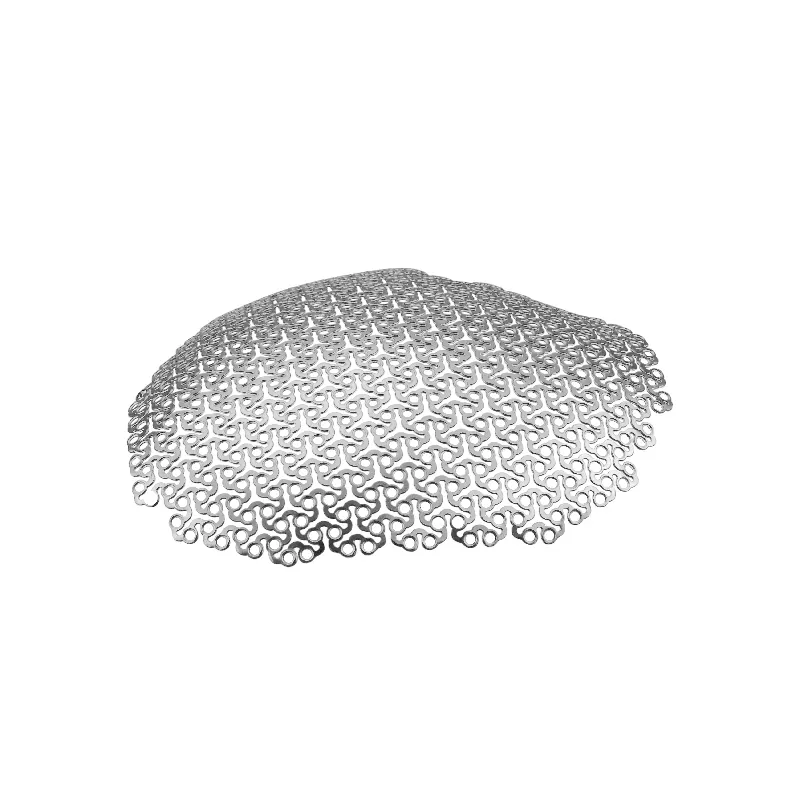
Anatomical Complexity: Why Standard Titanium Mesh Fails in Maxillofacial Defects
Patient-Specific Craniofacial Topography vs. Generic Mesh Geometry
Regular titanium meshes just don't match up with the complex 3D shape of someone's face and skull area. High precision pre-molded titanium mesh made from specific CT scans of patients is way different than generic implants. These generic ones need to be bent during surgery, and that creates weak spots and stress points in the metal. Research on biomechanics has found something pretty concerning too. About 78 percent of those hand-shaped meshes end up developing cracks right where they were bent when put under normal body stresses. When there's this kind of mismatch between the implant and actual bone structure, several problems pop up. Bones don't attach properly, healing takes longer, and soft tissues around the area get irritated more often. Looking at clinical results, doctors see that about one out of every five standard mesh implants needs fixing again within just 18 months because either the mesh becomes exposed, moves out of place, or changes shape over time.
CT-Quantified Variability: Orbital Floor Curvature, Zygomatic Buttress Angles, and Mandibular Asymmetry
CT imaging reveals substantial interpatient anatomical variability that stock implants cannot address:
- Orbital floor curvature differs by up to 12° between individuals
- Zygomatic buttress angles exhibit 8–15° asymmetry in 67% of trauma cases
- Mandibular ramus height discrepancies exceed 4 mm in 41% of congenital defects
Such variations demand sub-millimeter accuracy—unattainable with off-the-shelf solutions. For instance, a 2 mm gap at the orbital rim raises enophthalmos risk by 30%. High-precision premolding uses CT-derived contours to eliminate pressure points that trigger bone resorption. As a result, patient-specific reconstruction achieves 96% contour stability at 24 months—significantly outperforming conventional approaches (74%).
Functional Outcomes: Occlusion, Mastication, and Facial Contour Stability with High-Precision Premold Titanium Mesh
Biomechanical load transmission during chewing and speech
Premolded titanium mesh with high precision mimics how real bone works mechanically by spreading biting forces throughout facial bones. This design stops pressure points from building up beyond dangerous levels around teeth, which can cause damage. The material handles chewing pressures as high as 700 Newtons without issues. When patients talk after surgery, there are no strange vibrations that interfere with normal speech patterns. Regular implants often lead to tiny fractures in about 30 percent of cases according to research published in the Journal of Cranio-Maxillofacial Surgery last year. But these custom made premolds keep stress under control at less than 5% even when jaw movements happen dynamically, so patients can speak and eat normally right away following procedures.
Micromotion thresholds (<150 µm) and their impact on soft-tissue integration and long-term contour fidelity
Controlled micromotion under 150 µm is essential for biological fixation—preventing fibrous encapsulation while promoting capillary ingrowth at the bone-implant interface. Vascularization rates double when micromotion remains below 100 µm (Biomaterials Research, 2024), accelerating soft-tissue integration and reducing inflammation. This microenvironment directly governs long-term contour fidelity:
| Stability Factor | Standard Implant | Premold Titanium Mesh |
|---|---|---|
| Bone resorption at 5 years | 1.8 mm average | ±0.3 mm |
| Soft-tissue recession | 23% of cases | 4% of cases |
| Revision surgeries | 18% required | 3% required |
Sub-150 µm motion preserves gingival architecture and prevents midface collapse. Decade-long follow-ups confirm 95% retention of original facial projection—demonstrating unprecedented contour stability.
Digital Workflow Precision: CAD/CAM Standards and CT-Based Validation for Premold Titanium Mesh
Bringing together CAD/CAM tech with diagnostic CT scans has set pretty high bars for making those titanium meshes before molding. The DICOM data gets processed through algorithms that create detailed maps of facial bone issues. Then comes virtual surgery planning which basically tests how forces will distribute across the bones. Topology optimization cuts away extra material but keeps everything strong enough. When it's time to make the actual implant, doctors use something called direct metal laser sintering. This is where layers get built one on top of another, creating shapes so precise they beat what traditional methods can achieve.
Sub-millimeter accuracy benchmarks (±0.3 mm deviation) confirmed via post-op CT registration
Postoperative CT scans are rigidly registered to preoperative digital designs using validated algorithms. Quantitative analysis consistently shows mean deviations ±0.3 mm—especially critical at orbital floors and zygomatic arches, where micron-level errors impair function and aesthetics. This precision enables:
- Elimination of intraoperative bending
- Perfect adaptation to asymmetric mandibular contours
- Seamless integration with native bone interfaces
Independent studies link these tolerances to significantly lower reoperation rates (19% vs. 42% with manual shaping). Furthermore, CT-guided customization ensures micromotion remains <150 µm during mastication—confirming long-term biomechanical stability. This level of prefabricated accuracy represents a paradigm shift in patient-specific craniofacial reconstruction, enhancing both surgical predictability and clinical outcomes.
Operational Impact: How High-Precision Premold Titanium Mesh Optimizes Surgical Efficiency and Cost
High-precision premold titanium mesh eliminates intraoperative bending and real-time adjustments through CT-guided customization—reducing surgical time by up to 40% compared to conventional mesh adaptation. Predictable anatomical fit streamlines complex craniofacial procedures, removing reliance on intraoperative guesswork and iterative trial fitting.
When surgeries take less time, patients face reduced exposure to anesthesia, lower facility fees, and decreased chances of infection. But there's another big benefit too: getting things right the first time saves money in the long run. Traditional reconstruction methods often need fixing later on because of shape problems and hardware issues, with some studies showing over 15 percent needing correction eventually. That adds up to serious extra costs down the road. The solution? Premolded titanium mesh offers something different here. These meshes come pre-shaped based on actual mechanical testing, so they hold up under normal body stresses for years without failing like traditional options sometimes do.
Across surgical teams, resource allocation improves markedly: operating rooms accommodate 20–30% more cases monthly by eliminating unpredictable delays, and reduced staff fatigue enhances procedural safety. These cumulative efficiencies underscore why high-precision premold titanium mesh delivers simultaneous clinical and economic advancement in craniomaxillofacial reconstruction.
FAQs
Why do standard titanium meshes fail in maxillofacial defects?
Standard titanium meshes often fail due to their inability to match the complex 3D shape of the facial area, leading to weak spots and stress points, and subsequently causing cracks under normal body stresses.
How is high-precision premold titanium mesh different from standard meshes?
High-precision premold titanium meshes are created using specific CT scans, allowing them to be molded accurately according to patient-specific craniofacial topography, eliminating the need for intraoperative bending and reducing potential for damage.
What are the benefits of using CAD/CAM technology in creating titanium meshes?
CAD/CAM technology ensures sub-millimeter accuracy in the design of titanium meshes, confirming perfect adaptation to facial bone structures and achieving better surgical outcomes and reducing the need for subsequent corrective surgeries.
Table of Contents
- Anatomical Complexity: Why Standard Titanium Mesh Fails in Maxillofacial Defects
- Functional Outcomes: Occlusion, Mastication, and Facial Contour Stability with High-Precision Premold Titanium Mesh
- Digital Workflow Precision: CAD/CAM Standards and CT-Based Validation for Premold Titanium Mesh
- Operational Impact: How High-Precision Premold Titanium Mesh Optimizes Surgical Efficiency and Cost