 EN
EN
 FR
FR
 ES
ES
 AR
AR

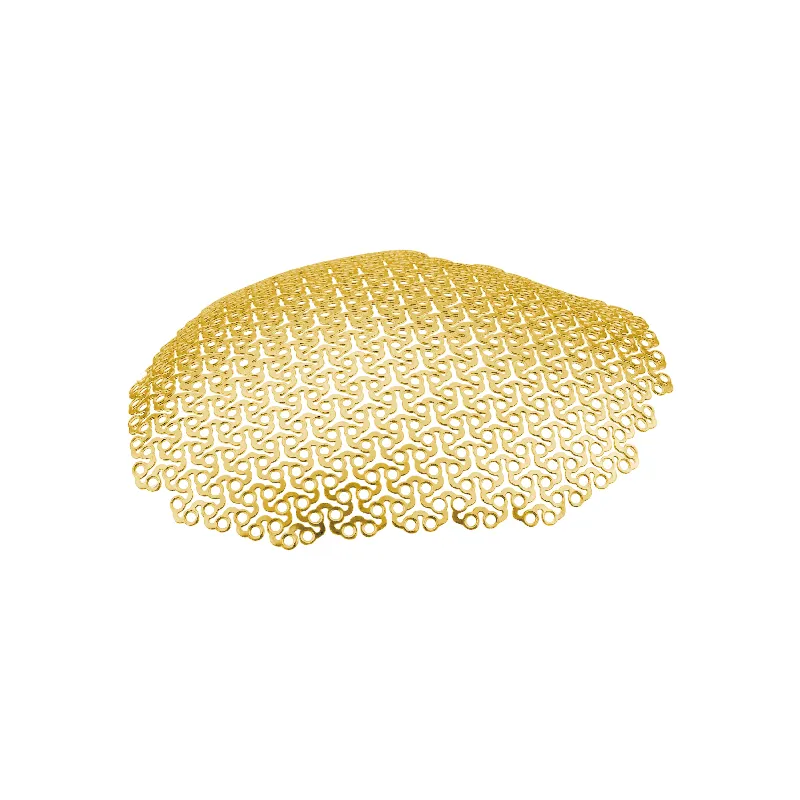
ASTM F2503: The Core Standard for MRI Compatibility Labeling of Titanium Mesh
Why titanium mesh requires standardized MRI safety labeling
The need for standardized MRI safety labels on titanium mesh implants has nothing to do with them flying around during scans since titanium isn't magnetic at all. What matters most is something called RF-induced heating, which can cause real problems for patients. Some studies show temperatures rising as much as 15 degrees Celsius under specific scan settings according to recent FDA findings from last year. When there's no clear labeling system in place, doctors might accidentally push past safe limits, leading to burns or blurry images that don't help anyone. That's where ASTM F2503 comes into play. This standard sets out specific language rules and testing protocols so everyone involved knows exactly what they're looking at. Surgeons reading charts in one hospital should get the same message as technicians working late shifts at another facility, regardless of which manufacturer made the implant.
Understanding MR Safe, MR Conditional, and MR Unsafe classifications under ASTM F2503
ASTM F2503 defines three mutually exclusive MRI safety classifications:
- MR Safe: Devices posing no known hazards in any MRI environment (e.g., non-metallic polymers)
- MR Conditional: Devices safe only when used within defined scanning parameters—this applies to virtually all titanium mesh implants
- MR Unsafe: Ferromagnetic items that present unacceptable risks of movement or heating
The MR Conditional status for titanium mesh basically tells us how it behaves electromagnetically during scans. It doesn't react to magnetic fields but does interact with those radio frequency signals and the gradients that switch on and off inside MRI machines. According to ASTM F2503 guidelines, manufacturers need to clearly mark these safety parameters on their products. That includes things like the maximum static field strength usually capped at around 3 Tesla, whole body SAR levels no higher than 4 watts per kilogram, spatial gradients limited to about 5 Tesla per meter, plus any special positioning requirements for patients. These detailed specifications matter because they stop people from making dangerous assumptions or trying out scans outside what's been tested and approved, which could really mess up diagnostic results or even harm patients.
MR Conditional Labeling Parameters Specific to Titanium Mesh Implants
Precise labeling for titanium mesh must translate laboratory-tested boundaries into actionable clinical guidance. Three interdependent parameters form the core of MR Conditional claims:
Field strength, SAR limits, and spatial gradient constraints
Titanium mesh implants are routinely labeled MR Conditional for static magnetic fields up to 3T—but only when paired with strict ancillary limits:
- SAR limit: ≤2.0 W/kg averaged over any 10g of tissue (to prevent localized thermal injury)
- Spatial gradient limit: ≤5 T/m (not 200 T/m/s—gradient slew rate is distinct from spatial gradient; the latter governs magnetic torque per ASTM F2503)
- Static field limit: Confirmed safety up to 3T, with testing validating torque and heating at that threshold
These values derive directly from ASTM F2503’s standardized test methods—not manufacturer discretion—and deviations require scanner-specific revalidation and labeling.
Configuration-specific warnings: orientation, fixation, and tissue depth
MRI safety is not intrinsic to the material alone—it depends on how the implant is deployed. Labels must therefore specify:
- Optimal orientation relative to the B₀ field (e.g., “implant plane perpendicular to B₀ minimizes heating”)
- Minimum soft-tissue coverage (e.g., “≥5 mm overlying tissue required for adequate thermal dissipation”)
- Fixation method constraints (e.g., “screw fixation reduces torque susceptibility vs. adhesive-only placement”)
Omitting such context renders labeling incomplete—and violates ASTM F2503’s requirement that MR Conditional statements reflect actual clinical use conditions.
Essential Safety Testing Supporting MRI Compatibility Claims
Validating MRI compatibility for titanium mesh hinges on three ASTM F2503–mandated test domains—each addressing a distinct physical interaction mechanism:
RF-induced heating, magnetic force/torque, and image artifact evaluation
Testing must simulate realistic MRI exposure using phantoms and anatomically representative setups:
- RF-induced heating: Measured via fiber-optic thermometry; acceptable rise is ≤2.0°C above baseline (per ASTM F2503 Annex A1)
- Magnetic force and torque: Quantified using calibrated torsion balances; torque must remain <0.1 Nm at 3T to rule out clinically relevant displacement
- Image artifact: Assessed across standard sequences (T1, T2, GRE); artifact volume should occupy <15% of the implant’s footprint to preserve diagnostic utility near critical anatomy
| Test Parameter | Acceptable Threshold | Clinical Rationale |
|---|---|---|
| RF Heating | ≤2.0°C above baseline | Prevents thermal damage to adjacent tissue |
| Magnetic Torque | <0.1 Nm at 3T | Ensures mechanical stability in-field |
| Artifact Volume | <15% of implant footprint | Maintains visibility of surrounding brain structures |
These tests basically tell us that properly made titanium mesh doesn't generate much RF heating at all, creates almost no torque issues, and only causes minor artifacts around the implant site. This means patients stay safe during procedures and doctors still get good diagnostic images. According to some recent research published in the Journal of Neurosurgical Imaging back in 2023, these kinds of implants actually block important brain structures in just about 8 out of 100 cases. That's pretty impressive considering what we're dealing with here. The fact that they pass muster in so many situations makes them reliable for clinical use as long as they come with proper labeling and are handled according to those ASTM F2503 guidelines everyone keeps talking about.
Regulatory Documentation and Labeling Implementation for Market Clearance
Achieving regulatory clearance for titanium mesh requires more than passing ASTM F2503 tests—it demands traceable, auditable documentation that links every label claim to validated data. Manufacturers must submit a technical file including:
- Full test reports for RF heating, torque, and artifact—referencing specific ASTM F2503 sections and test conditions
- MR Conditional labeling statements that mirror test results exactly, including field strength, SAR, gradient, and configuration requirements
- ISO 15223-1–compliant symbols (e.g., the MR Conditional diamond) placed permanently on packaging and device labels
- Traceability records mapping each label variant to its supporting risk analysis and test batch
Mistakes in product labeling continue to be one of the main reasons companies face post market actions these days. Looking at numbers from 2023, about 10% of all FDA medical device recalls were actually due to labeling issues. Good electronic document management systems or eDMS as they're often called play a big role here. These systems keep track of different versions, maintain proper audit trails, and ensure that everything related to product labeling matches up with testing results and risk assessments. The end result? Shorter review times and better credibility when it comes to showing Experience, Expertise, Authoritativeness, and Trustworthiness factors that matter so much to both regulatory bodies and healthcare professionals who rely on accurate information.
FAQ Section
What is ASTM F2503?
ASTM F2503 is a standard that sets guidelines for MRI compatibility labeling, particularly focusing on devices like titanium mesh implants, ensuring safety through established testing protocols and clear labeling.
Why is RF-induced heating a concern for titanium mesh implants during MRI?
RF-induced heating is a concern because, although titanium isn't magnetic, it can still interact with radio frequency signals in MRI machines, potentially causing dangerous temperature increases in patients and affecting image quality.
What is meant by MR Conditional labeling for titanium mesh?
MR Conditional indicates that the titanium mesh is safe under specific MRI scan conditions, such as defined magnetic field strengths and spatial gradients, but not under all possible MRI environments.
Why is it important to have clear labeling on titanium mesh implants?
Clear labeling helps prevent accidents like burns during scans and ensures accurate diagnostic imaging by informing medical personnel of the safe operational parameters for using titanium mesh implants in MRIs.
Table of Contents
-
ASTM F2503: The Core Standard for MRI Compatibility Labeling of Titanium Mesh
- Why titanium mesh requires standardized MRI safety labeling
- Understanding MR Safe, MR Conditional, and MR Unsafe classifications under ASTM F2503
- MR Conditional Labeling Parameters Specific to Titanium Mesh Implants
- Essential Safety Testing Supporting MRI Compatibility Claims
- Regulatory Documentation and Labeling Implementation for Market Clearance
- FAQ Section