 EN
EN
 FR
FR
 ES
ES
 AR
AR

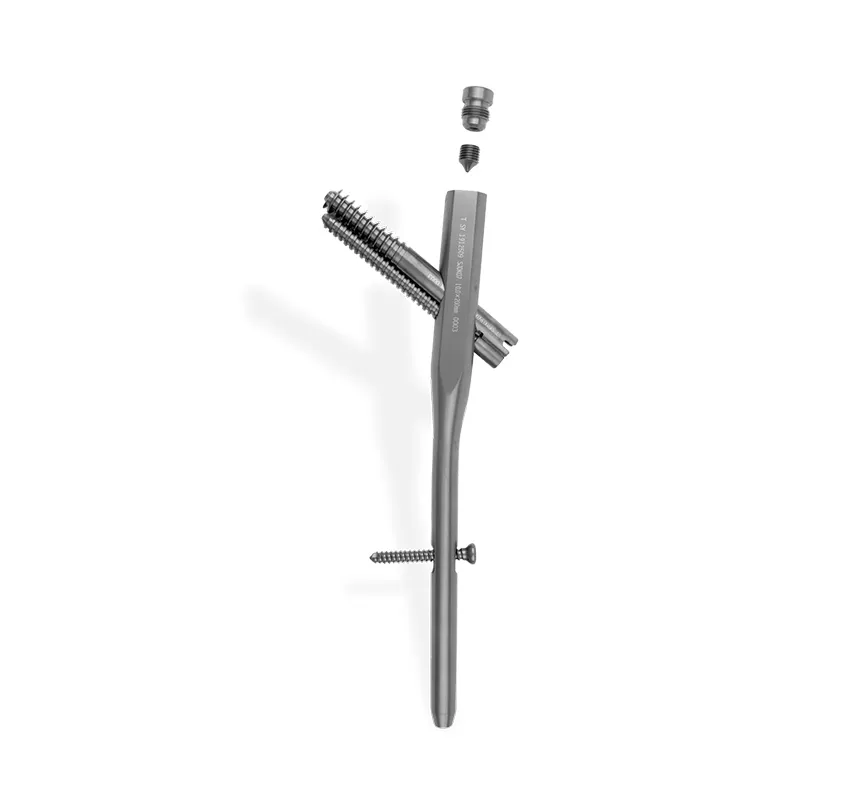
Clinical Imperative: High Failure Rates Drive Biomechanical Scrutiny
Nonunion and hardware failure as red flags in unstable olecranon fractures
The complication rates ranging between 15 to 30 percent for unstable olecranon fractures really highlight why we need to take a closer look at how well our fixation systems actually work biomechanically. When it comes to nonunion issues, about 5 to 10 percent of these cases happen because the fixation just isn't stable enough. And then there's the problem of hardware sticking out too much, which happens in roughly 12 to 25 percent of patients and often means going back in for another operation, according to findings published in the Journal of Orthopaedic Trauma last year. Looking at what goes wrong, most problems seem to come down to three main things: plates that can't hold up against movement when the triceps muscle pulls on them, not enough strength to stay put in bones weakened by osteoporosis, and uneven distribution of stress across the broken bone areas. All this data makes it pretty clear that surgeons shouldn't just rely on what manufacturers say about their plates. Instead, they need to think about real-world joint mechanics and how strong or weak the patient's specific bone actually is before making any decisions about treatment.
Biomechanical mismatch: How native ulnar loading patterns expose implant limitations
The elbow’s unique kinematics generate complex, multiplanar force vectors that challenge fixation integrity. During functional flexion, the olecranon endures:
- Compressive loads exceeding 1.5– body weight during daily activities
- Tensile stresses from triceps contraction (peak ~450 N)
- Torsional forces during pronation-supination (40–60 N·m)
Standard implants frequently fail at the bone-implant interface where cyclic bending exceeds material endurance limits. Fatigue testing reveals 90% of mechanical failures initiate at stress concentration points unaddressed by conventional designs (Biomaterials 2023). Anatomical fit alone is therefore insufficient—long-term stability requires implants engineered to harmonize with in vivo loading patterns.
Core Biomechanical Principles: Toggle Resistance, Pullout Thresholds, and Load Sharing
Screw trajectory and interface stability in osteoporotic bone: Cortical vs. locking fixation trade-offs
The way locking compression plates (LCPs) work changes how forces are distributed when fixing fractures of the olecranon. When dealing with osteoporotic bone, regular cortical screws can fail pretty badly. The pullout resistance in these weak bones is actually about 40% lower than what we see in normal bone density. What makes LCPs different is their locking mechanism that stops the usual toggling between screws and plate at fixed angles. This spreads out the load over several points instead of putting all the pressure on single screw-bone connections. Of course there are some downsides to consider clinically as well.
- Cortical fixation: Requires precise anatomical compression but fails at 60% lower cyclic loads in osteoporotic simulations
- Locking systems: Maintain reduction without direct bone contact—preserving periosteal blood flow while increasing pullout thresholds by 3.2–
Cyclic bending performance under physiologic elbow loads (50–250 N·m, 10k cycles)
Physiologic elbow loading subjects implants to demanding bending moments. During simulated 10,000 flexion-extension cycles (50–250 N·m), conventional plating systems demonstrate progressive mechanical compromise:
- Screw loosening initiates at ~1,200 cycles due to toggle-induced micromotion
- Progressive displacement exceeding 5 mm occurs by 7,000 cycles
In contrast, locking plate technology sustains stability through load-sharing mechanics. Finite element analysis shows 71% lower stress concentrations at screw holes versus non-locking designs. Clinically, this translates to <2 mm displacement throughout testing—enabling safe early rehabilitation even in compromised bone stock.
Implant Selection Under Scrutiny: Locking Compression Plates vs. Alternatives
Anatomical fit versus mechanical fidelity: Radiographic templating vs. finite element—predicted stress hotspots
The challenge for surgeons lies in finding the right balance between how well implants fit anatomically (which can be optimized using X-ray templates) and their actual mechanical performance that regular X-rays just can't show. Contour matched plates definitely help cut down on soft tissue irritation and prevent hardware from sticking out too much, but they don't tell us anything about how stresses spread when the body moves around normally. This is where finite element analysis comes in handy. The technique models repeated bending forces ranging from 50 to 250 Newton meters over approximately 10 thousand movement cycles. What these computer simulations reveal are problem spots near screw holes where stress builds up past dangerous levels around 120 megapascals, which we know leads to implant failure over time. Studies have shown that locking compression plates perform better than other options because they combine resistance against toggling with better distribution of weight across multiple points. When dealing with osteoporotic bone, where screws tend to come loose depending on their angle of insertion, having detailed stress maps before surgery becomes absolutely critical for spotting potential weaknesses in implant designs ahead of time.
Evidence-Based Fixation Strategy: Why LCP Dominates in Unstable Olecranon Fractures
Meta-analytic superiority: 32% lower reoperation risk with LCP vs. tension-band wiring
For those dealing with unstable olecranon fractures, Locking Compression Plates (LCPs) have pretty much become the go-to solution these days. What makes them stand out is how they handle those tricky forces during elbow movement that tend to break other methods like tension band wiring, which just can't hold up against all that repeated pressure on the ulna. Looking at the research, there's actually about a 30 something percent drop in needing another operation when using LCP systems. This seems to come down to better weight distribution in bones that aren't so strong anymore and fewer issues with screws pulling out. Surgeons appreciate how the combination of locking screws and plates shaped to fit the elbow naturally spreads out the stress points. This matters a lot for older folks since their bones don't heal as well, and we see nonunion rates creeping above 20% otherwise. When faced with complex fractures that need implants working with how the elbow actually moves, LCPs really show their worth in lasting results, cutting down problems like loose screws or hardware causing pain that needs fixing later on.
FAQ
What are the common complications associated with unstable olecranon fractures?
Common complications include nonunion issues due to insufficient fixation stability, and hardware protrusion which often requires additional operations.
Why do standard implants frequently fail?
Standard implants often fail at the bone-implant interface where cyclic bending exceeds material endurance limits, leading to mechanical failure.
What advantages do Locking Compression Plates (LCPs) offer?
LCPs offer improved distribution of stress across multiple points, reducing reoperation risk by 32% compared to tension-band wiring.
How do biomechanical principles influence implant performance?
Biomechanical principles like toggle resistance, pullout thresholds, and load sharing are crucial for enhanced implant stability and performance.
What role does finite element analysis play in implant selection?
Finite element analysis helps predict stress hotspots, enabling surgeons to select implants based on mechanical fidelity rather than just anatomical fit.
Table of Contents
- Clinical Imperative: High Failure Rates Drive Biomechanical Scrutiny
- Core Biomechanical Principles: Toggle Resistance, Pullout Thresholds, and Load Sharing
- Implant Selection Under Scrutiny: Locking Compression Plates vs. Alternatives
- Evidence-Based Fixation Strategy: Why LCP Dominates in Unstable Olecranon Fractures
-
FAQ
- What are the common complications associated with unstable olecranon fractures?
- Why do standard implants frequently fail?
- What advantages do Locking Compression Plates (LCPs) offer?
- How do biomechanical principles influence implant performance?
- What role does finite element analysis play in implant selection?