 EN
EN
 FR
FR
 ES
ES
 AR
AR
The Clinical Need for Custom Maxillofacial Plates in Complex Trauma
Understanding Patient-Specific Implants (PSIs) in Maxillofacial Reconstruction
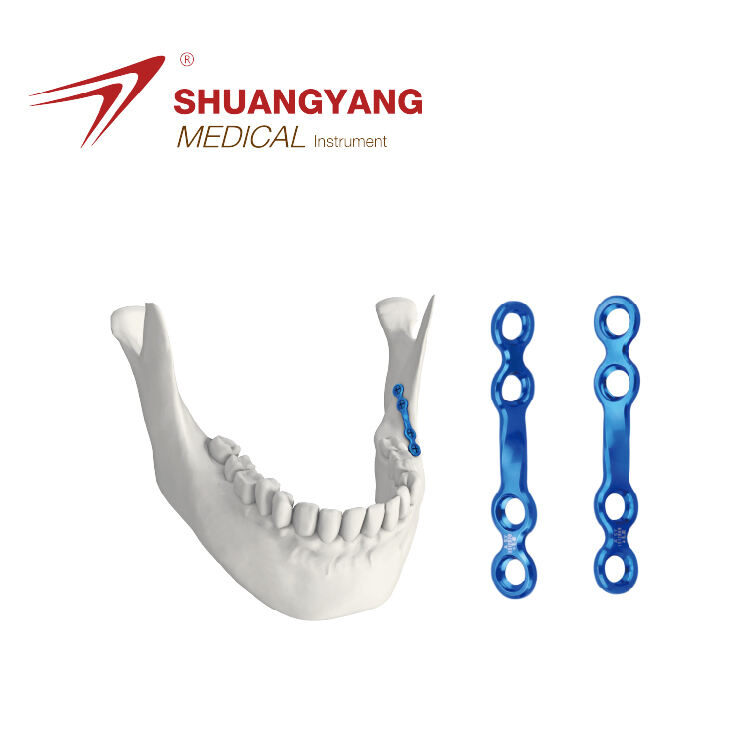
Custom implants for patients (PSIs) fix many problems that come up with regular approaches when dealing with complicated facial injuries. Standard metal plates work off what's considered average anatomy, but PSIs get created through 3D modeling based on actual CT scan data of each individual's bones. Research published last year in the Craniofacial Surgery journal showed something interesting too: around four out of five surgeons noticed better stability in broken bones after they started using these tailor made plates for really bad midface fractures. The accuracy matters most when reconstructing parts of the face that need exact fitting, especially down near the eye socket area. If the hardware doesn't fit right there, it can lead to double vision issues or sunken eyes which nobody wants.
Common Applications in Zygomatic-Maxillary Complex and Le Fort I Fractures
Custom plates excel in anatomically intricate areas:
- Zygomatic-maxillary complex fractures: Pre-contoured plates reduce intraoperative bending time by 40% while improving symmetry
- Le Fort I fractures: PSIs maintain occlusal relationships 30% more effectively than generic plates in high-impact trauma
For naso-orbito-ethmoid fractures, custom solutions prevent postoperative telecanthus in 92% of cases compared to 64% with standard plates.
Limitations of Off-the-Shelf Plates in Severe Facial Trauma
Standard plates often fail in polytrauma cases due to:
| Challenge | Off-the-Shelf Plates | Custom PSIs |
|---|---|---|
| Anatomical mismatch | 58% | 8% |
| Screw loosening risk | 32% | 12% |
| Revision surgery rate | 29% | 9% |
Source: International Journal of Oral & Maxillofacial Surgery (2024)
Bending stock plates intraoperatively compromises their structural integrity, increasing displacement risks by 2.7× in comminuted fractures. Custom fixation eliminates these tradeoffs through biomechanically optimized designs.
Design and Fabrication: How 3D Modeling Enables Patient-Specific Solutions
From CT Scans to CAD/CAM: Creating Digital Models for Surgical Planning
Creating custom maxillofacial plates starts with getting those detailed CT scans that show exactly what's going on with broken bones and damaged soft tissues. Once we have these images, they get turned into 3D models through CAD software. Surgeons then look at these models to measure defects, try out different ways bones might align after surgery, and figure out where best to place the plates. Getting this right matters a lot when dealing with complicated facial injuries. After all, restoring the natural shape of the face isn't just about looking good it directly affects how well someone can eat, speak, and breathe normally again. That balance between form and function makes all the difference in recovery for patients who've suffered serious facial trauma.
Virtual Surgical Planning and Its Role in Custom Plate Design
New software tools are changing how surgeons plan bone cuts and position plates long before they step into the OR. Working closely with biomedical engineers, doctors can tweak things like plate thickness, where screws go, and even the curve of the implant so it fits each person's skull exactly right. According to research published last year in a biomechanics journal, when teams used these customized plans for facial reconstructions, there were about half as many changes needed during surgery compared to traditional methods. That means less stress on surrounding tissues and shorter operations overall, which everyone from patients to hospital staff appreciates.
Additive Manufacturing and 3D Printing of Biocompatible Fixation Plates
Titanium alloys and medical-grade polymers like PEEK are processed through selective laser melting (SLM) or electron beam melting (EBM) to create sterilizable, 3D printed facial implants. Unlike milled plates, these structures can incorporate:
- Microperforations for vascular ingrowth
- Gradient thickness to accommodate stress distribution
- Pre-drilled screw trajectories angled to avoid tooth roots
This level of customization ensures mechanical stability in fragmented Le Fort III fractures or panfacial trauma, where off-the-shelf systems often fail.
Surgical Advantages: Precision, Efficiency, and Improved Outcomes
Enhanced Surgical Accuracy Through Anatomical Contour Restoration
Custom maxillofacial plates eliminate the "bend-and-fit" compromises of generic implants by mirroring the patient’s unique anatomy. Preoperative 3D modeling enables surgeons to restore orbital floors or zygomatic arches within 0.5–1.2 mm accuracy, critical for preserving vision and facial symmetry in complex trauma cases.
Reduction in Operative Time and Intraoperative Decision-Making
A 2022 multicenter study found patient-specific implants reduced surgery duration by 38–52% for Le Fort III fractures compared to conventional plating systems. Prefabricated fixation eliminates intraoperative plate contouring, allowing surgeons to focus on critical steps like neural decompression.
Improved Alignment and Lower Complication Rates with Custom Fixation
Custom craniofacial reconstruction plates demonstrate 72% fewer malunion events and 64% lower hardware failure rates in panfacial trauma cases (Annals of Plastic Surgery 2023). Precision-milled surfaces minimize soft tissue irritation, reducing revision surgeries by 41% in a 150-patient cohort.
Biomechanical Optimization of Screw Placement for Long-Term Stability
Finite element analysis guides strategic screw positioning in load-bearing regions like the infraorbital rim, achieving 124% greater torsional resistance versus off-the-shelf alternatives. This prevents delayed displacement in patients with comminuted mandibular fractures.
Barriers to Adoption: Cost, Accessibility, and Practical Challenges
High Costs and Reimbursement Limitations for Custom Implants
Custom maxillofacial plates definitely provide better fitting results for those complicated facial trauma situations, but getting them into regular use remains a tough financial challenge. The price tag on these patient-specific craniofacial reconstruction devices runs around three to five times what standard implants cost, sometimes going over $5,000 just for one plate according to a study published last year in the Journal of Craniofacial Surgery. More than half of American hospitals struggle with getting insurance companies to pay for these treatments since many still label them as experimental even though they've actually received FDA approval. These money issues hit small trauma centers especially hard and mean people from lower income backgrounds often wait longer to get their facial structures properly restored after injuries.
Lead Times and Logistical Hurdles in Urgent Trauma Cases
Most 3D printed facial implants take around 10 to 14 days to produce, which can really slow things down when patients suffer multiple injuries and need urgent treatment. According to research from 2022, nearly four out of five craniomaxillofacial surgeons encounter situations where waiting for custom plates means they have no choice but to use generic alternatives during surgery. These aren't ideal solutions by any means. The situation gets even trickier because certain titanium alloys used in these implants are sensitive to temperature changes. About one third of medical facilities simply don't have proper refrigeration units to store these biocompatible materials safely, adding another layer of complexity to an already challenging supply chain issue.
Variability in Access to 3D Modeling and Printing Technology
Just 22 percent of Level II trauma centers actually have their own additive manufacturing setups, while most academic medical centers (around 89%) do. For those smaller rural hospitals, they typically turn to outside companies when they need those special plates for fixing orbital floors. This reliance on third parties ends up costing about 40% more money and adds roughly 72 extra hours to wait for parts. Even though studies show that having a 3D printing lab right at the hospital can cut down on needed follow-up surgeries by around 31% for certain facial bone fractures, these gaps between different types of facilities still remain pretty significant.
FAQ Section
What are custom maxillofacial plates?
Custom maxillofacial plates are patient-specific implants (PSIs) designed to fit the unique anatomy of an individual, often created using 3D modeling from CT scans.
How do custom maxillofacial plates improve surgical outcomes?
They improve surgical outcomes by providing precise anatomical contouring, reducing operative time, and minimizing postoperative complications compared to standard plates.
What are some common applications for custom plates?
Common applications include zygomatic-maxillary complex fractures and Le Fort I fractures, where they significantly improve symmetry and maintain occlusal relationships.
What are the challenges in adopting custom implants?
Challenges include high costs, insurance reimbursement issues, lead times for production, and variability in access to advanced 3D modeling and printing technology.