 EN
EN
 FR
FR
 ES
ES
 AR
AR

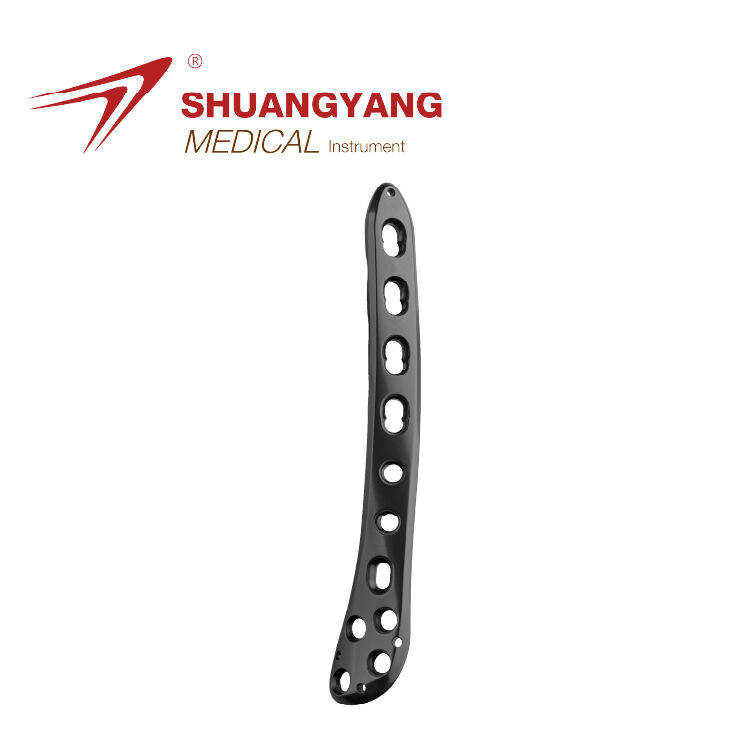
The Clinical Imperative: Why Cyclic Loading Demands Fatigue Testing Femur Plates
How everyday weight-bearing creates millions of loading cycles — not static loads
When people walk around normally, their femur plates experience much greater stress than what would happen if they were just sitting still. Each time someone takes a step during regular walking, the force on these implants can reach anywhere from double to triple what their body actually weighs. For folks who stay pretty active, this adds up fast - we're talking about well over a million such impacts every year. Regular stress tests aren't really enough because they don't account for all those repeated movements that gradually wear things down at the microscopic level, causing tiny cracks to form and spread over time. Studies in orthopedics show most metal materials can handle only about half their maximum strength when constantly stressed like this. That's why special fatigue tests are so important for femur plates. These tests need to mimic exactly how these implants perform in real life situations rather than just ideal laboratory conditions.
Retrieval evidence: Fractured titanium femur plates after 12 months reveal fatigue-driven failure modes
Analysis of retrieved implants provides direct clinical validation:
- 78% of fractured titanium plates show crack origins at screw holes
- Beach marks—distinctive striations indicating progressive fracture—appear in 92% of cases
- Average failure occurs at 14 months post-implantation, corresponding to ~1.2 million loading cycles
These patterns confirm that implant failure is driven primarily by fatigue—not acute overload—underscoring the need for fatigue testing protocols that mirror in vivo gait mechanics and loading frequency.
ASTM F382 Compliance: The Foundational Standard for Fatigue Testing Femur Plates
Bending fatigue protocol essentials: Load magnitude, cycle count, and environmental simulation
The ASTM F382 standard provides a basic setup for testing how femur plates handle fatigue when subjected to bending forces. According to the specs, manufacturers must apply repeated loads equal to around 70% of what the material can actually withstand before it yields, and they need to do this for approximately 5 million cycles. This roughly corresponds to what someone might experience during about two years of normal walking and standing activities. To make things even more realistic, the plates are soaked in salt water during testing, which mimics the body's internal chemistry where metal implants corrode over time. The combination of mechanical stress and chemical breakdown is particularly important for understanding how these plates will hold up inside patients' bodies over many years. Most companies rely on this standardized test method as their go-to approach for evaluating whether their orthopedic hardware meets safety requirements before going into clinical trials.
Limitations in practice: Why 5 million cycles at 70% yield may not reflect high-activity or osteoporotic bone scenarios
ASTM F382 is definitely important but comes with some real limitations when applied clinically. The 5 million cycle benchmark basically assumes normal daily activities, which falls short compared to what athletes or very active individuals actually experience – their bones take about three times more load. An even bigger issue though is that the standard completely ignores how things change in osteoporotic bone conditions. When bone stiffness decreases, stress on the implant plates can jump by around 40%, something current testing doesn't address at all. Because of these shortcomings, doctors and engineers need to supplement standard tests with additional methods like better wear simulations if they want implants to perform reliably across all types of patients and activity levels out there in the real world.
Beyond Compliance: Advancing Fatigue Prediction for Real-World Performance
Finite element analysis (FEA) as a predictive tool to augment fatigue testing femur plates
Finite Element Analysis, or FEA for short, takes traditional fatigue testing to another level by simulating millions of those physiological loading cycles with much higher resolution and computational efficiency than ever before possible. When used as a kind of digital twin, FEA spots these stress concentration points that tend to form around areas like screw holes and where plates transition from one section to another something that just doesn't show up clearly during regular physical tests. Combine this with fracture mechanics modeling and suddenly we can predict exactly where cracks might start forming and how they would spread through titanium alloys when subjected to all sorts of different loading conditions specific to individual patients. The big advantage here is obvious really it cuts down on the need for expensive round after round of physical testing while letting engineers catch potential design flaws much earlier in the development process.
Design adaptations: How material selection, plate geometry, and surface treatments improve fatigue resistance
Targeted engineering interventions significantly elevate fatigue resilience beyond baseline ASTM F382 compliance:
- Material science: High-strength titanium alloys (e.g., Ti-6Al-4V ELI) increase fatigue endurance limits by 40% versus legacy stainless steels
- Topography optimization: Variable-thickness and contoured geometries redistribute stress away from high-risk zones like screw holes toward more robust mid-sections
- Surface engineering: Laser peening introduces compressive residual stresses at the surface—effectively suppressing crack initiation under cyclic loading
Together, these innovations transform regulatory-compliant devices into implants engineered for durability across real-world gait variability, activity intensity, and bone quality spectra.
FAQ
Why are special fatigue tests necessary for femur plates?
Special fatigue tests are crucial because they simulate real-life conditions under which femur implants operate. Regular stress tests do not account for repeated movements, leading to microscopic wear and tear over time, which fatigue tests can predict and assess for better implant reliability.
What are the main limitations of the ASTM F382 standard?
The ASTM F382 standard may not accurately reflect high-activity or osteoporotic scenarios as it assumes normal daily activities and doesn't account for increased stress in weakened bones. Therefore, additional testing methods are essential for a comprehensive understanding of implant performance.
How does Finite Element Analysis enhance fatigue testing?
Finite Element Analysis (FEA) augments fatigue testing by providing high-resolution simulations of loading cycles, identifying potential stress concentration points, and predicting crack formation, thus helping in the early detection of design flaws without extensive physical testing.