 EN
EN
 FR
FR
 ES
ES
 AR
AR

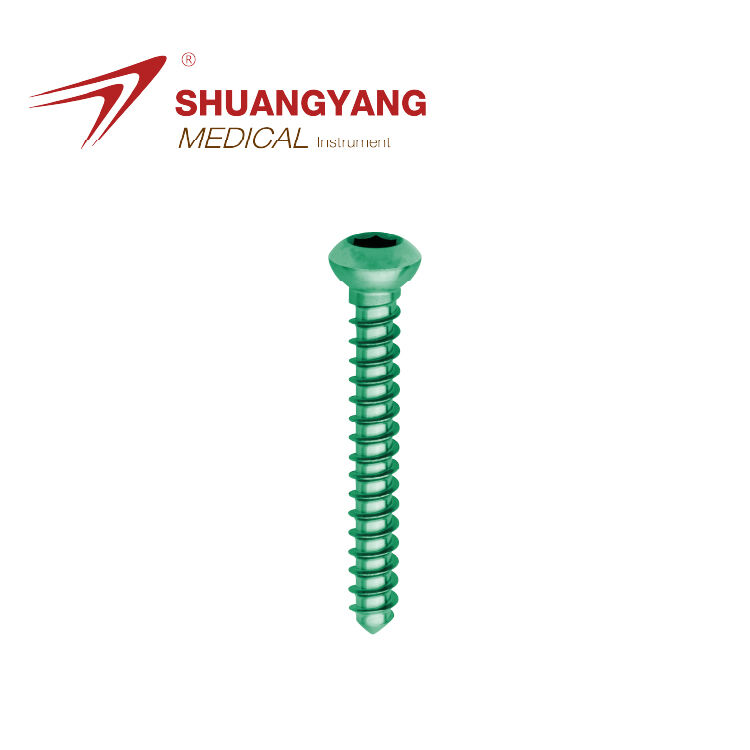
Ensuring Patient Safety Through Biocompatibility and Material Certification
Spinal fusion implant screw material certification is essential for eliminating biological risks and ensuring patient safety. A 2022 Journal of Biomedical Materials Research study found that 12% of revised spinal implants involved adverse tissue reactions linked to uncertified alloys, highlighting the importance of rigorous validation.
The Role of Material Certification in Preventing Adverse Biological Reactions
Material certification screens for cytotoxic or immunogenic components using ISO 10993-5 cytotoxicity testing. This helps prevent metallic ions such as nickel or cobalt from leaching into surrounding tissues, which can cause chronic inflammation or delayed fusion.
Biocompatibility Testing Under ISO 10993: Guaranteeing Tissue and Systemic Safety
ISO 10993 requires spinal implants to pass three key assessments:
- Cytotoxicity (risk of cell death)
- Sensitization (potential for allergic reactions)
-
Implantation (compatibility with local tissue)
Devices failing any of these tests face an 83% higher chance of FDA rejection compared to certified alternatives.
Corrosion Resistance and Long-Term Implant Stability Through Certified Materials
ASTM F136-certified titanium alloys exhibit less than 0.5% mass loss after 10-year simulated corrosion testing, outperforming non-certified stainless steel by a factor of three. Certification also includes fatigue testing at 5 million load cycles equivalent to over 15 years of spinal movement minimizing the risk of screw fracture.
FDA Validation Requirements for Spinal Implant Screws and Premarket Clearance Pathways
Under the FDA's 510(k) clearance process, companies need to show their medical devices are substantially equivalent to existing ones already on the market. This involves running various tests including mechanical performance checks, looking at how materials hold up against corrosion over time, and making sure they won't cause adverse reactions when placed inside the body. The guidance document titled "Use of ISO 10993-1" lays out specific requirements for spinal implants, basically saying they have to pass certain benchmarks related to cell toxicity levels, allergic reaction potential, and what happens when implanted tissue interacts with the device. When dealing with completely new materials or innovative surface treatments such as those found in 3D printed titanium alloys, things get a bit more complicated. These cases typically fall under the stricter Premarket Approval route which demands actual clinical trial evidence before getting approved for sale.
ISO 14630 and ASTM F1717 Compliance: Core Standards for Spinal Implant Performance
Global regulators recognize ISO 14630 (non-active surgical implants) and ASTM F1717 (spinal construct mechanical testing) as foundational benchmarks for material certification. Recent updates emphasize:
| Standard | Scope | Key Requirement | Recent Update |
|---|---|---|---|
| ISO 14630:2023 | Non-active surgical implants | Design controls & documentation | 2023 revision |
| ASTM F1717:2022 | Spinal implant mechanical test | 5 million cycle fatigue simulation | 2022 reaffirmed |
These standards require implants to withstand 2.5 kN compressive loads and 500 Nm torsional forces conditions simulating more than 15 years of spinal motion.
Global Harmonization of Material Certification: Aligning With EU MDR and International Benchmarks
Under the EU Medical Device Regulation (MDR 2017/745), medical device makers must track materials carefully at the batch level for things like titanium and PEEK implants. A recent report from Emergen Research shows that around 8 out of 10 manufacturers have adjusted their certification practices to meet both FDA standards and EU regulations these days. This alignment cuts down on duplicate testing expenses significantly, saving roughly seven hundred forty thousand dollars per device according to data from the 2024 Orthopedic Materials Report. Looking across the Asia Pacific region, we're seeing some interesting hybrid approaches develop. Take Japan's PMDA as an example they want companies following ISO 14630 guidelines while also conducting local biocompatibility tests specifically for products like pedicle screws used in spinal surgery.
Mechanical Reliability: How Certification Predicts Clinical Performance
Spinal fusion implant screw material certification provides predictive insights into device performance under physiological stress. Certified mechanical validation gives surgeons reliable data that mirrors real-world spinal loading conditions.
Static and Dynamic Testing of Pedicle Screws Under Real-World Load Conditions
Certification protocols include static loading trials where screws must resist forces exceeding 500N without displacement (Biomaterials Testing Journal 2023). Dynamic testing replicates spinal flexion-extension cycles, confirming that titanium alloys maintain deformation after 100,000 cycles.
Fatigue and Durability Testing: Simulating Long-Term Performance In Vivo
Accelerated aging tests simulate a decade of spinal motion, requiring no cracks in ASTM F136-compliant screws. Studies show certified cobalt-chrome devices achieve 98% survival rates after 10 million load cycles a strong predictor of 15-year clinical success (Orthopaedic Research Society 2022).
Evaluating Failure Modes: Do Current Test Standards Meet Next-Generation Device Demands?
While ISO 5840 addresses traditional failure mechanisms like screw fracture, modern certification now includes testing for porous-surface bioactive coatings. This evolution ensures standards keep pace with innovations in materials and minimally invasive surgical techniques.
Certified Materials in Practice: Titanium, Stainless Steel, and PEEK Compared
Medical-Grade Titanium (ASTM F136) in Spinal Fusion Screws: Strength and Biocompatibility
Spinal fusion screws are mostly made from medical grade titanium alloys that meet ASTM F136 standards because these materials offer just the right balance between strength and how well they work inside the body. The tensile strength is over 895 MPa according to research published in the Journal of Biomedical Materials Research back in 2023. This means titanium can handle all those spinal forces without breaking down. Plus, it helps bones grow around the implant too. About 92 percent of devices made with this certified titanium type actually fuse completely with surrounding bone tissue within a year. Another big plus for titanium is that it doesn't corrode easily and isn't magnetic, which makes MRI scans after surgery much easier and cuts down on problems patients might face years later.
Stainless Steel vs. PEEK: Balancing Mechanical Properties and Imaging Compatibility
| Property | Stainless Steel | PEEK Polymer |
|---|---|---|
| Elastic Modulus (GPa) | 190 | 3.6 |
| Radiolucency | Opaque | Transparent |
| Corrosion Resistance | Moderate | High |
The stiffness of stainless steel is actually three times higher than cortical bone, which often causes problems called stress shielding. On the flip side, PEEK has a modulus that's much closer to real bone tissue, so it helps maintain more natural weight distribution across the spine. Sure, stainless steel still makes sense from a budget standpoint when something needs temporary support, but most experts are moving toward PEEK these days. According to recent research published in Global Spine Journal back in 2023, around 78 percent of neurosurgeons have started favoring PEEK materials for complicated spinal fusions where they need to monitor progress using MRIs. Another big plus for PEEK is how it doesn't show up on scans like metal does. This property cuts down on those annoying image distortions by about forty percent compared with traditional metal implants, making diagnosis and follow-up assessments much clearer for doctors.
Material Selection Criteria: Impact on Fusion Success and Patient Recovery
Three critical factors guide material selection:
- Host Response: Titanium supports faster cellular attachment than PEEK due to its bioactive surface
- Mechanical Demands: Stainless steel is suitable for high-load cervical applications despite imaging limitations
- Fusion Stage: PEEK is increasingly used in pediatric cases due to its MRI compatibility and reduced artifact interference
Clinical evidence shows patients achieve mobility 15% faster when implant modulus aligns with adjacent bone, underscoring the importance of certification-driven material decisions.
Traceability and Quality Assurance: Maintaining Integrity from Production to Implantation
Batch-Level Material Certification and Full Traceability for Regulatory Accountability
Spinal fusion implant screws need specific material certifications for each batch if they want to comply with those important regulations like FDA 21 CFR Part 820 and ISO 13485 standards. The whole point of traceability systems is to follow raw materials all the way from processing through sterilization right up to when everything gets put together at the end. These systems help companies spot bad batches quickly and cut down on recalls before they become big problems. When talking about titanium screws that meet ASTM F136 requirements, manufacturers also need mill certificates that confirm both the chemical makeup and mechanical strength of the metal. After all, these properties matter a lot because the screws actually have to hold up under real weight and stress during surgery.
Quality Management Systems in Manufacturing: Ensuring Consistency and Compliance
Quality management systems (QMS) play a vital role in keeping production standards consistent throughout global supply chains. Manufacturers use automated controls along with statistical methods like AQL 1.0 inspections to keep defects under control, typically below 0.1% when working with certified facilities. These QMS setups include risk assessments following ISO 14971 guidelines to catch problems early on. They look at things like how threads fit together, surface textures, and whether sterilization works properly. All these details matter because even small variations can impact how well implants integrate with bone tissue. Regular third party checks combined with ongoing monitoring make sure everything stays within spec. Most spinal devices approved by the FDA depend on these kinds of systems to maintain regulatory compliance over time.
FAQs
Why is material certification important for spinal fusion implants?
Material certification is crucial as it screens materials for cytotoxic or immunogenic components to prevent adverse reactions in patients.
How does titanium compare to other materials in spinal fusion implants?
Titanium offers a good balance of strength and biocompatibility, supporting faster bone fusion and reducing complications during MRI scans.
What are the benefits of using PEEK in spinal implants?
PEEK provides imaging compatibility and helps maintain natural weight distribution across the spine, reducing stress shielding and improving post-operative assessments.
Table of Contents
- Ensuring Patient Safety Through Biocompatibility and Material Certification
- FDA Validation Requirements for Spinal Implant Screws and Premarket Clearance Pathways
- ISO 14630 and ASTM F1717 Compliance: Core Standards for Spinal Implant Performance
- Global Harmonization of Material Certification: Aligning With EU MDR and International Benchmarks
- Mechanical Reliability: How Certification Predicts Clinical Performance
- Certified Materials in Practice: Titanium, Stainless Steel, and PEEK Compared
- Traceability and Quality Assurance: Maintaining Integrity from Production to Implantation
- FAQs