 EN
EN
 FR
FR
 ES
ES
 AR
AR

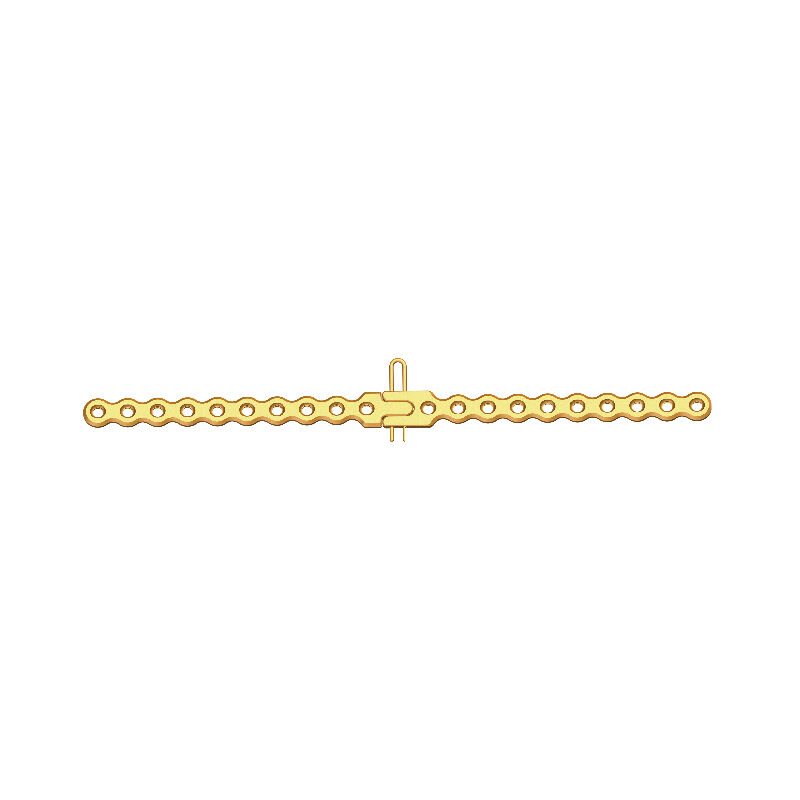
Understanding Thermal Resistance Requirements for Polymer Rib Fixation Systems
The polymers used in rib fixation devices need to handle both body temperatures around 37 degrees Celsius and withstand the intense heat from sterilization methods like steam autoclaving which can reach between 121 and 134 degrees. Safety and proper function depend on materials that can resist temperatures above 150 degrees Celsius so they don't deform when used clinically or after being cleaned and reused. Take polyether ether ketone or PEEK for instance. This material stays strong even at temperatures approaching 250 degrees, which is why it works well for implants that need to support weight. When looking at how these materials perform under heat, several important factors come into play regarding their thermal characteristics.
| Property | PEEK | PEKK | Polysulfone (PSU) |
|---|---|---|---|
| Glass Transition Temp | 143°C | 162°C | 185°C |
| Continuous Use Limit | 250°C | 260°C | 160°C |
| Autoclave Cycles Supported | 300+ | 300+ | 100 |
Polymers that fall below these thresholds risk dimensional changes exceeding ±0.5%—a critical margin in precision fixation systems (Biomaterials Thermal Performance Report, 2024).
Role of Glass Transition Temperature (Tg) in Maintaining Structural Performance
The glass transition temperature (Tg) marks the point at which a polymer transitions from a rigid, glassy state to a more pliable, rubbery state. For rib fixation devices:
- Below Tg: The material behaves like glass, maintaining rigidity essential for load-bearing applications
- Above Tg: The polymer softens by 40–60%, significantly reducing screw retention strength and risking mechanical failure
PEEK’s Tg of 143°C exceeds standard autoclave temperatures (134°C), ensuring the device retains 98% of its initial stiffness after sterilization. In contrast, nylon-based polymers with Tg values below 80°C undergo irreversible deformation under steam sterilization, disqualifying them for reusable implantable systems.
How Sterilization Processes Challenge Polymer Thermal Resistance
Repeated autoclave cycles induce cumulative thermal stress, leading to three primary degradation mechanisms:
- Chain scission, resulting in 2–5% molecular weight loss per cycle
- Crystallinity shifts that alter flexural modulus by ±15%
- Surface oxidation, increasing crack propagation risk threefold
Studies show steam sterilization reduces polyethylene’s fatigue resistance by 32% after 50 cycles, while PEEK retains 95% of its original properties under identical conditions. This stark contrast highlights why high-Tg semi-crystalline polymers dominate implantable device applications requiring repeated sterilization.
Sterilization Stability: Autoclaving and Thermal Endurance of Implantable Polymers
Compatibility of Medical-Grade Polymers With Repeated Autoclave Cycles
For medical grade polymers to be effective, they need to survive around 50 steam sterilization cycles between 121 and 134 degrees Celsius without losing their structural strength. Take semi crystalline thermoplastics for instance PEEK shows real toughness because of those high glass transition temperatures over 143°C, which means dimensional changes stay below half a percent even after multiple cycles. Things get tricky with amorphous polymers though. Polysulfone tends to warp badly once it goes past its Tg point. Medical devices made from this kind of material usually need checking again after about 30 sterilizations, sometimes more depending on usage conditions. That's why many manufacturers prefer materials that hold up better through repeated exposure to extreme heat.
Material Degradation Risks During Steam Sterilization at Elevated Temperatures
The steam sterilization process speeds up hydrolysis reactions in polyester materials and causes oxidation issues in polyolefin plastics, which is especially concerning for medical devices like load bearing rib fixation plates. Studies show that when the temperature during sterilization goes over a polymer's glass transition point (Tg) by at least 15 degrees Celsius, the material loses around 20 to 30 percent of its tensile strength. Take PEKK for example it keeps about 98% of its crystalline structure even after being exposed to 135 degrees Celsius. But PET tells a different story completely developing visible surface cracks under those same conditions. To combat these problems, manufacturers typically add cross linking agents and use various inorganic stabilizers. These approaches help ensure that products still meet the necessary ISO 10993-5 cytotoxicity standards required for medical applications, even after going through as many as 100 autoclave cycles.
Dimensional Stability Under Thermal Cycling in Load-Bearing Applications
Maintaining Precision and Fit in Rib Fixation Devices After Thermal Exposure
For polymer rib fixation systems to work properly, they need to hold their shape within tiny fractions of a millimeter after going through multiple heating and cooling cycles. Thermal expansion matters a lot here because if there's just a half percent difference in how much something expands when heated, the whole fixation system might not stay stable. That's why manufacturers turn to advanced biocompatible materials such as PEEK. These materials expand at around 50 parts per million per degree Celsius, which gets pretty close to how real cortical bone behaves at about 27 ppm/C. When materials match this expansion rate better, it helps reduce stress on the surrounding bone tissue whenever body temperatures change throughout the day.
Case Study: Deformation Risks in PEEK-Based Implants During Clinical Processing
PEEK has a glass transition temperature around 143 degrees Celsius, which should stop it from deforming permanently when exposed to the 134 degree autoclave cycles used in medical settings. However real world testing shows something different happens over time. After many repetitions of heating and cooling, these polymer plates start showing tiny warping issues at the microscopic level, especially noticeable in thinner sections of fixation devices. What this means for material selection is pretty straightforward actually. Engineers need to look beyond just how well a polymer stands up to heat initially. They must consider what happens after hundreds or even thousands of processing cycles because that's where problems tend to emerge in practice.
Key design considerations include:
- Implementing thermal annealing protocols to relieve residual stresses post-manufacturing
- Optimizing wall thickness to balance mechanical strength with thermal mass
- Matching CTE between polymer components and titanium hardware to reduce interfacial stress
Industrial standards now require validation testing over at least 1,000 thermal cycles—a 300% increase since 2019—reflecting heightened emphasis on long-term dimensional stability in reusable implantable devices.
High-Performance Polymers: PEEK, PEKK, and PSU for Surgical Fixation
Thermal Advantages of Polyether Ether Ketone (PEEK) in Medical Applications
Polyetheretherketone, or PEEK for short, has become a go to material in surgical fixation because of how well it handles heat. The glass transition temperature sits around 143 degrees Celsius, and it can keep going strong even when exposed to temperatures as high as 260 C. That means it stays put during standard steam sterilization processes which typically run between 121 and 134 degrees. What makes this semi crystalline plastic really stand out is that it holds onto about 85 percent of its tensile strength at 200 degrees Celsius. Compared to metal alternatives, PEEK not only resists heat better but also weighs roughly 70% less. Medical device makers take advantage of PEEK's minimal thermal expansion rate of plus or minus 0.3% at 150 degrees Celsius. This property helps stop tiny movements in fixation plates, which is important for bones to heal properly even when there are changes in body temperature or operating room conditions.
Comparative Thermal Stability of PEEK, PEKK, and Polysulfone (PSU)
| Polymer | Tg (°C) | Continuous Use Temp (°C) | Autoclave Cycles (ASTM F2500) |
|---|---|---|---|
| PEEK | 143 | 260 | 1,500+ |
| PEKK | 162 | 280 | 2,000+ |
| PSU | 190 | 160 | 300 |
PEKK offers 18% greater thermal stability than PEEK due to higher Tg and improved crystallinity, though at a 40% higher material cost. Polysulfone (PSU), while possessing a high Tg, has a lower continuous use limit, restricting its application to non-load-bearing components typically sterilized via ethylene oxide.
Long-Term Thermal Degradation Concerns in Implantable Polymer Devices
When oxidative degradation occurs at the crystallite boundaries, it tends to cut down on PEEK's flexural modulus by around 15 to 20 percent after about five to seven years inside the body. Looking at accelerated aging tests where materials are immersed in saline at 70 degrees Celsius, PEKK holds onto roughly 92% of its original strength after a decade. That's better than PEEK which manages about 85%, and significantly better than PSU at just 78%. The good news is recent improvements in stabilization additives have helped tackle those pesky chain scission issues that happen during gamma sterilization processes. These advancements mean these materials now last long enough to compete with titanium implants in rib fixation applications, meeting the typical 10 to 15 year lifespan requirements seen in clinical settings.
FAQ
- What is the glass transition temperature (Tg)? The Tg is the temperature at which a polymer changes from a rigid, glassy state to a flexible, rubbery state.
- Why is thermal resistance important for rib fixation devices? Thermal resistance is crucial to ensure that the device retains its mechanical properties after repeated sterilization treatments.
- How do autoclave cycles affect polymers? Autoclave cycles induce thermal stress, leading to degradation mechanisms like chain scission, crystallinity shifts, and surface oxidation.
- Which polymer offers the best thermal stability? PEKK offers superior thermal stability compared to PEEK and PSU, though it comes at a higher material cost.
- Can polymers compete with metallic materials? Recent advancements in stabilization additives have increased polymers' lifespan, allowing them to compete with titanium implants in terms of longevity and efficacy.
Table of Contents
- Understanding Thermal Resistance Requirements for Polymer Rib Fixation Systems
- Role of Glass Transition Temperature (Tg) in Maintaining Structural Performance
- How Sterilization Processes Challenge Polymer Thermal Resistance
- Sterilization Stability: Autoclaving and Thermal Endurance of Implantable Polymers
- Dimensional Stability Under Thermal Cycling in Load-Bearing Applications
- High-Performance Polymers: PEEK, PEKK, and PSU for Surgical Fixation