 EN
EN
 FR
FR
 ES
ES
 AR
AR

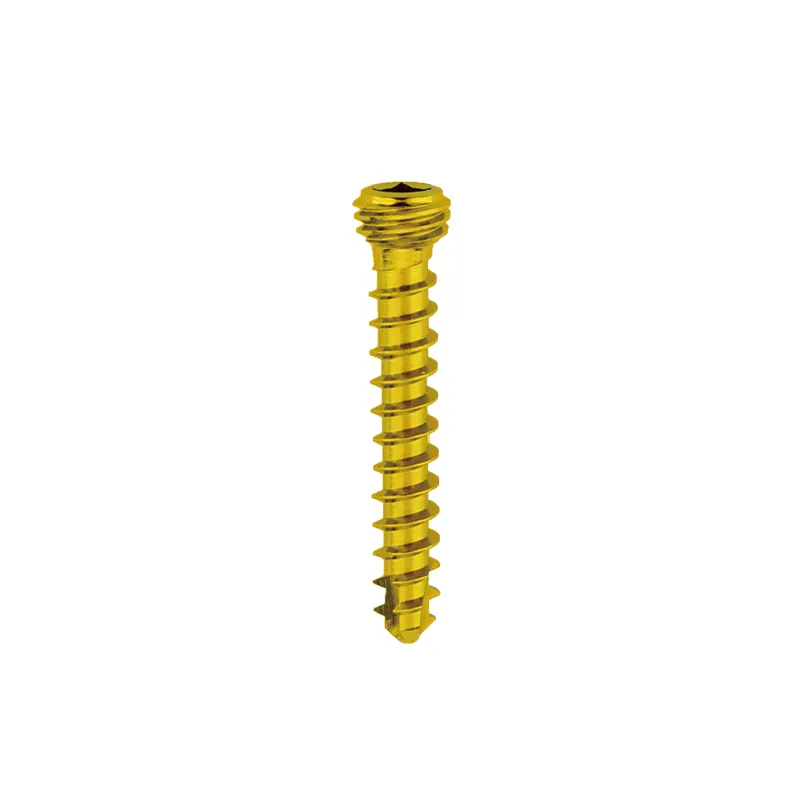
Radiopacity as a Non-Negotiable Safety Requirement for Spinal Implant Screws
Invisibility Risks: Missed Malposition and Undetected Loosening on X-ray and CT
Spinal screws that aren't visible on X-rays leave doctors guessing after surgery. Without proper imaging, surgeons have no way to check if the screws are placed correctly or spot problems like them coming loose over time. Recent research from 2023 shows pretty alarming results: in about 12 percent of lower back fusion operations, improperly positioned screws led to nerve issues. And when hardware moves around without anyone noticing, patients face an 18% higher chance of needing another operation down the road. Because of these risks, most regulatory bodies now require that all spinal implants be radiopaque. This means doctors can actually see where each screw ends up relative to important nerves and other structures during follow-up scans.
Physics Foundation: How Atomic Number and Density Drive X-ray Attenuation and Contrast
Radiopacity depends on atomic composition and material density: higher atomic numbers absorb more X-rays, generating greater image contrast. Titanium (atomic number 22) provides moderate visibility with fewer artifacts than stainless steel. New composites blend polymers with radiopaque markers like tantalum (atomic number 73). This table summarizes key material properties:
| Material | Atomic Number | Relative Radiopacity | Artifact Level |
|---|---|---|---|
| PEEK Polymer | 6 | Low | Minimal |
| Titanium Alloy | 22 | Moderate | Low |
| Tantalum Marker | 73 | High | Moderate |
Implant designers optimize these properties to ensure surgical verification imaging compatibility.
Enabling Precision Surgery: Radiopacity in Preoperative Planning and Intraoperative Guidance
Fluoroscopic Targeting: Why Consistent Radiopacity Is Essential for Real-Time Pedicle Screw Placement
Fluoroscopy gives doctors that live X-ray view they need when working on the spine. When parts aren't clearly visible on screen because of inconsistent radiopacity, it creates these dangerous blind spots. We've seen from recent 2023 studies that hardware which doesn't show up well can actually raise the chance of screws being placed wrong by about 15%. Getting those pedicle screws just right requires everything in the system to be consistently visible so surgeons can keep checking where things are going and how deep they're going. The constant feedback from fluoroscopy makes all the difference in avoiding damage to nerves and lets doctors work through complicated spinal structures with pinpoint accuracy down to the millimeter level.
Advanced Design Strategies: Radiopaque Markers and Hybrid Coatings for Enhanced Visibility
Innovations in material science are solving visibility problems without hurting overall performance. For instance, titanium markers built right into PEEK screws act as stable reference points during fluoroscopy procedures. Meanwhile, new hybrid coatings mix biocompatible metals with polymer bases to enhance image contrast significantly. Research indicates these markers can actually boost screw tracking accuracy during surgery by around 40%, all while creating fewer artifacts on imaging scans. What this means is that what was once just a passive property called radiopacity is now becoming something surgeons actively use as part of their toolkit during operations.
Supporting Long-Term Care: Radiopacity’s Role in Postoperative Assessment and Complication Monitoring
Titanium vs. PEEK—Titanium Composites: Balancing Radiopacity, Biomechanics, and Artifact Reduction
For long term monitoring, good radiopacity is essential when looking at X rays and CT scans. Titanium alloys definitely have strong radiopacity characteristics, though they tend to create major MRI and CT artifacts that can hide nearby tissues from view. PEEK material cuts down on those artifacts but doesn't come with natural radiopacity, which means there's a real risk of missing implant misplacement during regular X ray checks. The solution comes in PEEK titanium composite materials that combine titanium elements either as strands or surface coatings within the polymer base. These composites keep all the advantages of PEEK including its bone like flexibility along with the structural benefits of titanium. More importantly, they provide clear imaging after surgery something doctors need to track how well bones are fusing together and spot early signs of screws coming loose months later.
Regulatory and Material Standards for Radiopacity in Spinal Implant Screws
Radiopacity isn't something companies can skip over it's actually required by regulatory bodies like the FDA and ISO. Around the world, there are strict rules that demand manufacturers prove their products remain visible when viewed through fluoroscopic imaging and standard X-rays. They have to go through specific tests outlined in industry standards such as ASTM F1717 for evaluating spinal constructs and ISO 10993-1 which looks at biocompatibility issues. When it comes to making sure implants work properly during surgery, they need to show enough X-ray absorption so doctors don't see confusing shadows on scans. This helps surgeons accurately place screws and track them later too. The actual compliance checks happen using particular energy levels specified in ISO 13175. Basically, this means new medical technologies still need to meet basic visibility requirements to keep patients safe while pushing forward with innovative designs.
Frequently Asked Questions
What is radiopacity and why is it important for spinal implant screws?
Radiopacity refers to the ability of a material to be visible on X-rays. It's crucial for spinal implant screws because it allows surgeons to verify correct placement and monitor complications through imaging.
How does radiopacity affect surgery outcomes?
Radiopacity ensures that implants can be clearly seen during surgery via imaging techniques like fluoroscopy, reducing the risk of misplacement and subsequent complications that may necessitate additional surgeries.
Why are regulatory bodies like the FDA concerned with radiopacity?
Regulatory bodies require radiopacity to ensure that implants can be adequately monitored using imaging technologies, thus maintaining patient safety standards during and after surgical procedures.
What materials are commonly used for radiopaque spinal implants?
Common materials include titanium alloys, tantalum markers, and PEEK titanium composites, each offering varying degrees of radiopacity and artifact levels.
Table of Contents
- Radiopacity as a Non-Negotiable Safety Requirement for Spinal Implant Screws
- Enabling Precision Surgery: Radiopacity in Preoperative Planning and Intraoperative Guidance
- Supporting Long-Term Care: Radiopacity’s Role in Postoperative Assessment and Complication Monitoring
- Regulatory and Material Standards for Radiopacity in Spinal Implant Screws