 EN
EN
 FR
FR
 ES
ES
 AR
AR

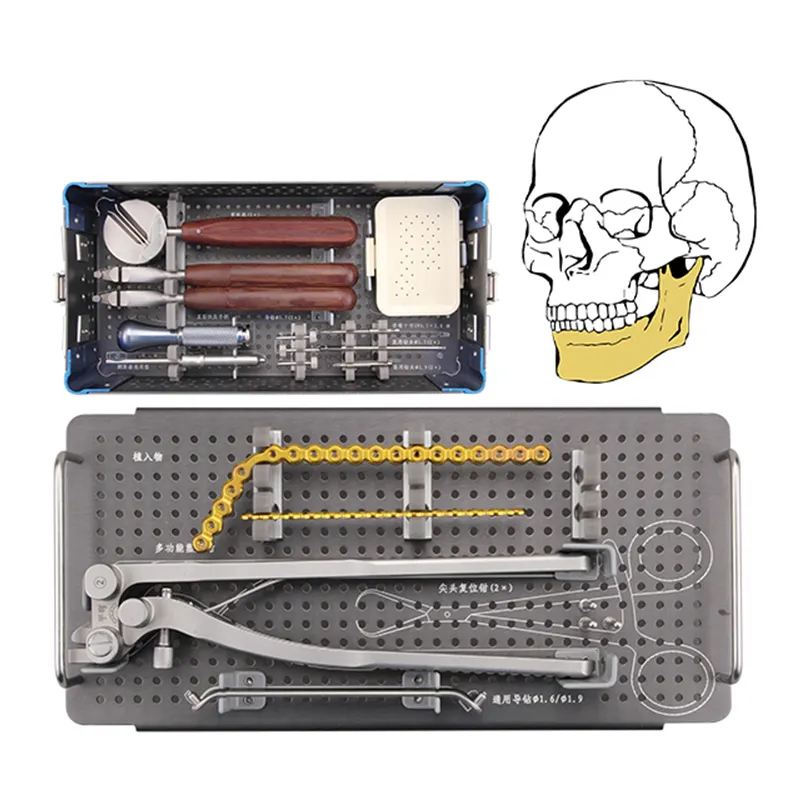
Why Cranio Maxillofacial Implant CT Compatibility Matters in Preoperative Planning
Impact on 3D Surgical Navigation, Virtual Planning, and Patient-Specific Implant Design
Computed tomography (CT) compatibility is foundational to precision in cranio maxillofacial reconstruction. Optimal compatibility enables 92% higher accuracy in 3D surgical navigation systems (Journal of Oral and Maxillofacial Surgery, 2023), directly supporting:
- Seamless integration of virtual surgical plans into intraoperative guidance
- Accurate design of patient-specific implants that conform precisely to anatomical contours
- Up to 40% reduction in operating time by eliminating intraoperative implant adjustments
Conversely, metal artifacts or poor contrast resolution force compromises in implant positioning–increasing revision surgery risk by 34%.
Consequences of Poor CT Compatibility: Misregistration, Inaccurate Segmentation, and Intraoperative Compromise
Suboptimal CT compatibility triggers cascading errors across the surgical workflow. Titanium implants without artifact mitigation cause up to 1.7 mm misregistration in navigation systems (Annals of Biomedical Engineering, 2022), resulting in:
- Inaccurate bone segmentation during virtual planning
- Mismatched implant placement requiring unplanned intraoperative modifications
- Compromised functional and aesthetic outcomes
A 2023 meta-analysis linked poor postoperative implant visibility on CT to a 2.3– higher complication rate in orbital and zygomatic reconstructions. Biomaterial choice plays a decisive role: non-metallic alternatives reduce imaging distortion by 68% compared to conventional alloys.
Optimizing CT Protocols to Maximize Cranio Maxillofacial Implant CT Compatibility
Key Parameters: kVp, mAs, Slice Thickness, and Reconstruction Kernel Selection
Getting the right balance between clear images and keeping patients safe from radiation takes careful adjustment of scanning protocols. When we bump up the kilovoltage peak (kVp), it helps cut down those annoying metal artifacts that show up on scans, but this comes at a cost since soft tissue details become harder to see. That means we have to tweak the milliampere-seconds (mAs) settings to keep the image quality decent enough for diagnosis. Thin slices around 0.6 mm or less make a big difference in seeing how bones interact with implants, and using sharper reconstruction algorithms really brings out the edges in the images. Putting all these adjustments together makes a noticeable improvement in post surgery CT scans, cutting down confusing results by about 40% compared to what most hospitals use as standard settings.
Dual-Energy CT and Iterative Reconstruction for Enhanced Bone-Implant Contrast Resolution
Dual energy CT uses material decomposition techniques to tell apart titanium from bone tissue, which actually improves contrast resolution by about 30 percent. Combining this method with iterative reconstruction algorithms works wonders too. These algorithms cut down on noise without making important edges look blurry, allowing doctors to assess how well implants integrate with surrounding bone structures. They can spot problems early on like tiny movements around the implant site or areas where bone density seems lower than normal. This matters a lot when dealing with facial implants because these often have complicated shapes and sit close to very thin layers of bone that need careful monitoring during healing processes.
Managing Metal Artifacts to Preserve Cranio Maxillofacial Implant CT Compatibility
Artifact Suppression Strategies Tailored to Titanium, PEEK, and Bioresorbable Implants
Metal-induced artifacts remain the most persistent barrier to diagnostic confidence in postoperative CT.
- Titanium (used in 85% of CMF reconstructions): Elevated kVp (e.g., 140 kVp) combined with multi-spectral imaging mitigates beam-hardening effects.
- PEEK: Its lower density benefits from sub-millimeter slice acquisition (<0.6 mm) and iterative reconstruction to preserve edge fidelity–particularly critical in orbital and zygomatic regions.
- Bioresorbable magnesium alloys: Require dual-energy protocols to capture progressive degradation phases without streak artifacts, ensuring longitudinal imaging consistency.
Each material demands tailored acquisition parameters to maintain visibility of the bone–implant interface–the linchpin of long-term monitoring and clinical decision-making.
MAR (Metal Artifact Reduction) Algorithms and Their Limitations in Complex Craniofacial Anatomy
Modern MAR algorithms that incorporate sinogram in-painting and frequency-splitting methods definitely help with metal compatibility issues, but they struggle badly when dealing with complex anatomy. We see this all the time in tricky areas such as around the maxillary sinus walls or in the temporal fossa region where effectiveness plummets under 30%. Why? There are basically three problems working against us here. First, those thin bony partitions create partial volume effects. Second, curved implant surfaces scatter photons in unpredictable ways. And third, nearby dental hardware just makes existing artifacts worse. A recent phantom study back in 2023 showed failure rates going over 40% right next to those neurovascular foramina, which messes up alignment with what was planned preoperatively. Bottom line? These MAR techniques work best when combined with good imaging protocols and careful material choices for implants rather than relying on them alone as some sort of magic fix.
Selecting Biomaterials That Support Long-Term Cranio Maxillofacial Implant CT Compatibility
The long term success of CT scans depends heavily on the materials used, specifically those that maintain consistent imaging characteristics while also working well within the body's systems. Take hydroxyapatite for instance. This material has almost exactly the same density as real bone tissue, which means doctors get over 85 percent accurate images after surgery according to research published last year in the Journal of Clinical Imaging. Things look different with titanium though. Even though it plays nicely with our bodies, about one third of all CT scans done after titanium implants show these annoying image distortions, as noted in Radiology Today from 2023. These artifacts make it harder for medical professionals to properly assess how things are healing following operations.
PEEK polymers offer markedly improved artifact reduction but require surface modifications (e.g., plasma treatment or bioactive coatings) to support reliable osseointegration. Recent material science research underscores porosity optimization as essential–not only for bone ingrowth but also for preserving consistent CT attenuation over time.
| Biomaterial | CT Clarity Retention | Artifact Risk | Long-Term Integration |
|---|---|---|---|
| Hydroxyapatite | ★★★★★ | Low | High |
| PEEK (modified) | ★★★★☆ | Medium | Medium-High |
| Titanium Alloys | ★★★☆☆ | High | High |
Emerging innovations focus on radiolucent composites and bioresorbable ceramics engineered to degrade predictably–without distorting diagnostic imaging. These materials bypass reliance on MAR algorithms entirely, ensuring unambiguous implant visualization throughout the patient’s clinical journey.
FAQ
What is CT compatibility in cranio maxillofacial reconstruction?
CT compatibility refers to the ability of imaging techniques to accurately represent implanted devices and anatomical features without distortion or artifacts.
Why is CT compatibility important for cranio maxillofacial implants?
CT compatibility ensures accurate diagnosis and surgical planning, minimizing the risk of revision surgeries due to improper implant placement or unforeseen complications.
What factors contribute to poor CT compatibility?
Poor CT compatibility can result from metal artifacts, improper imaging protocols, or unsuitable biomaterials, leading to misregistration and inaccurate segmentations.
Table of Contents
- Why Cranio Maxillofacial Implant CT Compatibility Matters in Preoperative Planning
- Optimizing CT Protocols to Maximize Cranio Maxillofacial Implant CT Compatibility
- Managing Metal Artifacts to Preserve Cranio Maxillofacial Implant CT Compatibility
- Selecting Biomaterials That Support Long-Term Cranio Maxillofacial Implant CT Compatibility
- FAQ