 EN
EN
 FR
FR
 ES
ES
 AR
AR

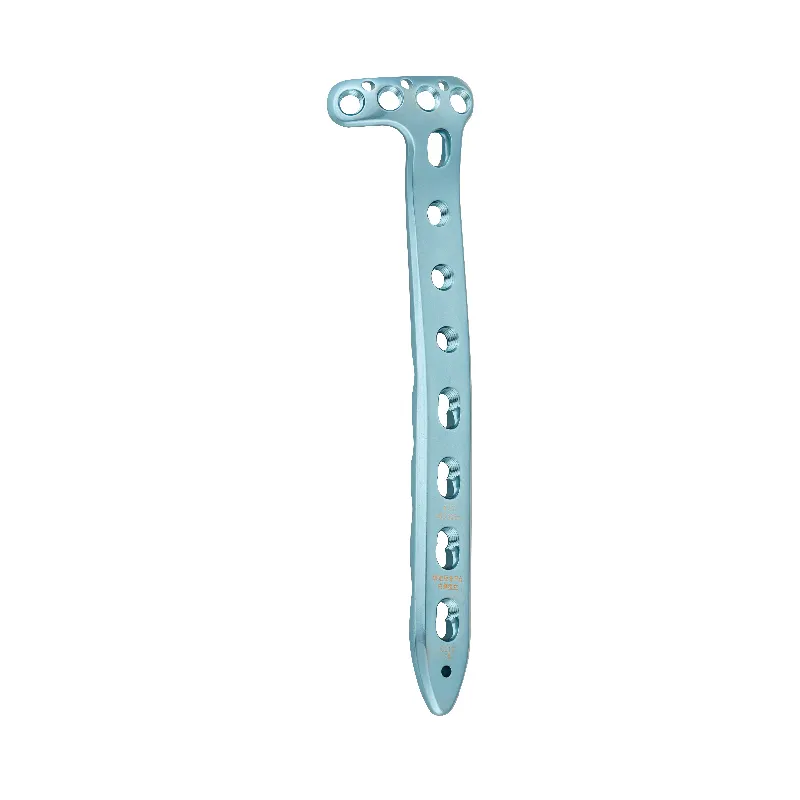
What Residual Stress Is and How Machining Introduces It in Tibia Plates
Mechanisms: Thermal gradients, plastic deformation, and phase changes during CNC milling and grinding
Residual stress shows up as internal tension inside solid materials even when no outside forces are acting on them. When working with tibia plates through CNC milling and grinding processes, there are basically three things happening that create this stress. Thermal gradients form because the area where the tool meets the workpiece gets hot locally. The cooler parts around it then restrict how much those heated areas can expand and contract, which leads to tensile stress once everything cools down. Another factor is plastic deformation. This happens when the cutting force goes beyond what the material can handle, permanently changing the grain structure right at the surface and along edges. For certain alloys like Ti-6Al-4V that aren't completely stable, quick changes in temperature can actually cause phase transformations. These transformations result in uneven expansion or contraction underneath the surface, adding even more stress. All these combined factors produce complicated stress patterns that vary with depth. We can measure them using techniques such as X-ray diffraction or the contour method. Importantly, these stresses have a direct impact on how stable the dimensions remain after machining is complete.
Material-specific behavior: Contrasting residual stress profiles in Ti-6Al-4V vs. 316L stainless steel plates
The way metals behave at a fundamental level really affects how residual stresses develop after machining. Take Ti-6Al-4V for instance. When we mill this alloy properly with minimal heat generation and keep temperatures below critical points, the material tends to form compressive stresses on the surface because plastic deformation takes precedence over thermal effects. Things work differently with 316L stainless steel though. This metal has poor thermal conductivity and is prone to forming strain-induced martensite, which means it often ends up with tensile stresses both on and just beneath the surface. Studies indicate that when ground using the same parameters, 316L plates show stress penetration depths around 40% greater than those seen in titanium alloys. This makes a real difference in practice, especially when validating orthopedic implants after machining since these deeper stresses can actually compromise dimensional stability requirements.
Clinical and Biomechanical Risks of Unmitigated Residual Stress in Tibia Plates
Stress-driven micromotion at bone–implant interface and its role in peri-implant osteolysis
When residual stress isn't properly managed, it leads to micromotion at interfaces that can go beyond 50 micrometers during normal body movements. This level is actually what scientists consider problematic for osseointegration to happen properly. The movement creates increased shear forces in the fluids between bone and implant surfaces, which triggers osteoclast activity and eventually causes bone loss around implants. Looking at X-ray findings, there's clear data showing plates with high residual stress show about three times more early radiolucent lines within just one year after being placed. These lines are basically warning signs that the implant fixation isn't working as intended anymore.
Accelerated aseptic loosening and early revision surgery linked to subsurface tensile stress
When subsurface tensile stresses reach around 650 MPa or higher in Ti-6Al-4V materials, they tend to form preferred locations where cracks start growing, especially near those little screw holes we see so often. According to some tests following ASTM F1800 standards, this can cut down on fatigue life by anywhere between 30 to almost half. The problem gets worse because these high stress areas actually speed up something called aseptic loosening through two main processes. First, there's this thing called stress shielding that basically makes bones break down faster. Second, the repeated stress causes layers of special coatings like hydroxyapatite to peel away over time. Looking at real world cases from clinics shows us something pretty concerning too. When residual stresses aren't properly managed, revision surgeries go up by about 40 percent compared to what we normally expect. And most of these problems happen way sooner than anticipated, usually showing up within just three years instead of lasting the full seven to ten year lifespan that everyone hopes for.
How Residual Stress Analysis Ensures Regulatory Compliance and Implant Reliability
ISO 13485:2016 and FDA QSR requirements for post-machining verification of dimensional and structural stability
The ISO 13485:2016 standard along with FDA's Quality System Regulation (QSR) basically tell manufacturers they need to check whether residual stresses from machining might mess up the dimensional or structural integrity when products go through sterilization, handling, or actual use in the body. For these regulations, companies must perform validation based on risks, particularly important for different materials like Ti-6Al-4V compared to 316L stainless steel where stress behavior varies so much across phases. We actually see this in practice too. Recent audits showed non compliant stress levels causing around 15% deviations from required dimensional tolerances. That's why many smart shops now incorporate stress analysis right into their manufacturing processes instead of treating it as an afterthought.
Role of XRD and contour method testing in design validation and batch release protocols
X-ray diffraction (XRD) works hand in hand with the contour method to give us those quantitative stress assessments needed for meeting all sorts of regulations. XRD is great because it doesn't damage the sample while providing detailed maps of stresses on surfaces and just below them. This matters a lot when looking at areas like screw holes where stress tends to build up. The contour method isn't so gentle since it actually cuts into the material, but what it gives back is pretty valuable: accurate measurements of stress deep inside three dimensions by watching how things relax after being cut apart. When these two techniques are combined, they check off several boxes at once. They confirm whether designs meet specs such as keeping stress below 100 MPa at those tricky curved parts, and also ensure that batches stay consistent across production runs. This combination satisfies requirements from FDA's Quality System Regulation regarding statistical controls and meets ISO 13485 standards for tracking risks properly. Some real world testing has found that using both methods catches about 22 percent more variations in stress levels among implants that haven't gone through certification yet, which means fewer defective products ever reach the final quality checks.
Impact on Fatigue Life and Long-Term Structural Integrity of Tibial Fixation Devices
ASTM F1800 data: 30–45% reduction in cyclic bending endurance for high-residual-stress plates
Tests following ASTM F1800 standards show that when residual stresses aren't properly controlled, they can cut down on how long materials last under repeated bending forces by about 30 to 45 percent. The way compressive and tensile stresses work together actually starts cracks forming beneath the surface, which leads to failures happening much sooner than expected. Look at plates with residual stresses above 200 MPa for example these tend to fail catastrophically three times more often after just 10,000 load cycles. That's roughly what happens during normal walking patterns over around 18 months. So it really makes sense why checking for residual stresses isn't something manufacturers can skip if they want to ensure their products will stand up to repeated use without breaking down unexpectedly.
FEA-validated stress concentration at screw holes and contoured bends under physiological loading
Using finite element analysis (FEA) and checking it against actual clinical data has revealed two main problem areas where leftover stress really increases the chance of failure. First, around the edges of screw holes when there's twisting force applied. Second, at the spots where plates bend from straight to curved shapes under bending loads. Stress levels in these regions can go way beyond what materials can handle normally, sometimes reaching 2.4 times the yield strength. Looking at real cases, parts with these stress issues tend to break at the screw holes about nine months sooner compared to parts made with better stress distribution. This means manufacturers need to think about stress patterns right from the start of machining processes. Proper toolpaths during manufacturing plus some fixes after processing help spread out the load more evenly across components, which keeps them structurally sound for much longer periods.
FAQ Section
What is residual stress?
Residual stress refers to internal tension within solid materials that persists even when no external forces are applied. It can affect the dimensional stability and structural integrity of machined parts.
How do thermal gradients contribute to residual stress?
Thermal gradients occur when the tool heats the workpiece locally, while surrounding cooler areas restrict expansion and contraction, leading to tensile stress upon cooling.
Why are Ti-6Al-4V and 316L stainless steel different in stress profiles?
Ti-6Al-4V tends to develop compressive stresses due to plastic deformation, whereas 316L stainless steel often forms tensile stresses due to poor thermal conductivity and martensite formation.
How does residual stress affect implant fixation?
Unmitigated residual stress can cause micromotion at bone-implant interfaces, leading to osteolysis and compromising the implant's fixation.
What techniques are used to measure residual stress?
X-ray diffraction (XRD) and contour method testing are used to measure residual stress accurately.
Table of Contents
- What Residual Stress Is and How Machining Introduces It in Tibia Plates
- Clinical and Biomechanical Risks of Unmitigated Residual Stress in Tibia Plates
- How Residual Stress Analysis Ensures Regulatory Compliance and Implant Reliability
- Impact on Fatigue Life and Long-Term Structural Integrity of Tibial Fixation Devices
- FAQ Section