 EN
EN
 FR
FR
 ES
ES
 AR
AR

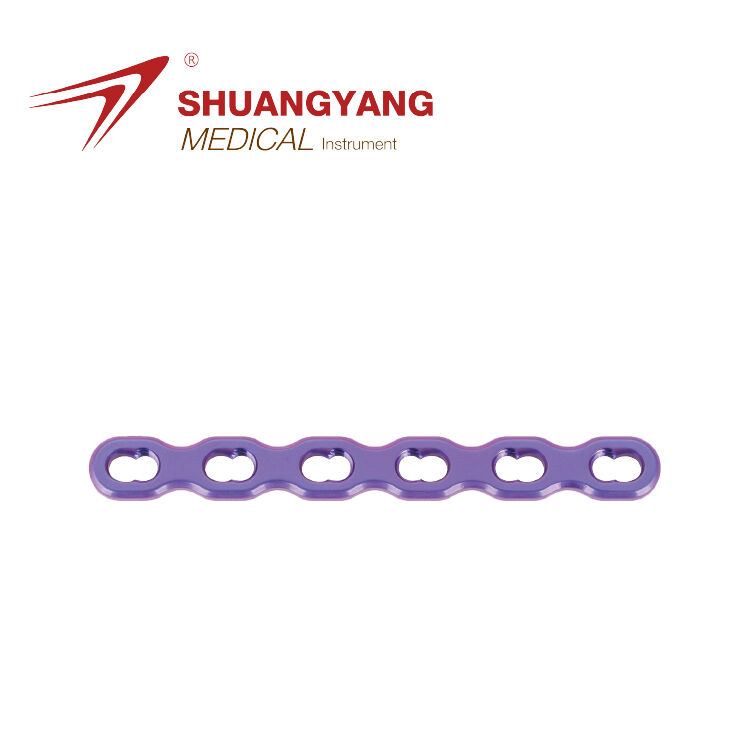
Understanding the FDA 510(k) Process for Distal Radius Volar Locking Plates
The Role of 510(k) Clearance in Orthopedic Device Market Entry
Getting FDA 510(k) clearance marks a major step forward for companies wanting to sell volar locking plates in the American orthopedic trauma market. The process involves showing that the new product is substantially equivalent to something already on the market for treating distal radius fractures. Most implant makers go this route since around 8 out of 10 Class II medical devices follow it instead of going through the much longer Premarket Approval process. Wrist fracture implants fall into this category because they don't pose the same high risk as life-supporting equipment, making the 510(k) pathway both faster and more cost effective for manufacturers looking to bring their products to market sooner.
Key Regulatory Requirements for Trauma Fixation and Anatomic Plating Systems
When it comes to volar locking plates, the Food and Drug Administration has pretty strict rules about testing before they can hit the market. These tests are all about making sure the implants won't break down over time and won't cause problems once inside the body. Manufacturers need to run their products through several key evaluations. First up is the ASTM F382 test which looks at how well the plate and screws hold up under repeated stress. Then there's the ISO 10993 assessment that checks if the materials used will actually be safe for long term implantation in humans. And don't forget about sterility requirements outlined in those ANSI/AAMI/ISO 11737 guidelines either. The numbers tell an interesting story too. According to recent FDA reviews, nearly one third of all 510(k) applications for trauma devices get rejected right off the bat because companies didn't provide complete mechanical testing information. That's a wake up call for medical device makers who want to avoid delays in getting their products approved.
Substantial Equivalence: Core Principle in 510(k) Submissions
To establish substantial equivalence, manufacturers need to align several key factors: what the existing device is meant for (like stabilizing those tricky distal radius fractures), its tech specs (think titanium alloy composition), and how it performs under stress tests like static load capacity. The FDA has been paying closer attention lately to claims about surface modifications. Take devices with those laser etched porous surfaces for instance they often need extra proof of osseointegration before approval, especially when compared against their smoother surfaced alternatives. This regulatory focus makes sense given how critical surface properties can be for long term implant success.
FDA Guidance Documents Relevant to Wrist Fracture Implants
When submitting products related to wrist fracture implants, manufacturers need to get familiar with the FDA's Class II Special Controls Guidance Document. This document is actually 32 pages long and covers all sorts of important stuff like what kind of bench tests are needed, how materials need to be tracked throughout production, and what kind of monitoring happens after the product hits the market. For companies new to the submission process, following these guidelines can really make a difference. The numbers back this up too first time applicants who stick closely to the guidance tend to see their reviews completed about 28 percent faster than folks who just go with what they know from previous similar devices. Makes sense when you think about it the FDA probably has everything laid out there for good reason.
Strategic Predicate Device Selection to Accelerate 510(k) Clearance
How to Identify Optimal Predicate Devices for Volar Locking Plates
Choosing the right predicate device makes all the difference when trying to get FDA 510(k) clearance faster. Focus on devices that got approved in the past 3 to 5 years. Look for ones that fix fractures the same way, like using a volar approach with locking screws. The anatomical fit should match for distal radius applications too. And don't forget about material similarities - titanium alloy grades work best here. According to a recent FDA report from 2023, companies referencing newer predicates (those cleared after 2020) actually needed about 32 percent fewer back and forth reviews compared to folks who stuck with older models. Makes sense really, since newer devices tend to align better with current standards and expectations.
Evaluating Substantial Equivalence Using Prior Cleared Distal Radius Plates
Establishing substantial equivalence involves detailed comparisons across key domains:
- Anatomic fit: Demonstrate equivalent plate curvature and screw trajectory angles
- Locking mechanism: Compare thread pitch, screw-plate interface tolerances, and torque resistance
- Load-bearing: Validate comparable yield strength under axial compression (≥725 N per ASTM F382)
Common Pitfalls in Predicate Selection and How to Avoid Them
Three frequent errors delay 64% of submissions according to FDA's 2024 Medical Device Reporting Data:
- Relying on predicates from discontinued product lines
- Inadequate characterization of surface treatments (e.g., hydroxyapatite coatings vs. plasma spray)
- Mismatched indications (e.g., comminuted fractures vs. simple Colles' fractures)
To avoid these issues, verify predicate market status and ensure alignment in both clinical indication and biomechanical function.
Case Study: Successful 510(k) Submission With a Recently Cleared Plate
A manufacturer managed to cut down their review period by around 40%. They got clearance within just 87 days compared to what most companies experience which averages around 145 days. How did they do it? By going with a predicate device cleared back in 2022 that had nearly the same specs including radius of curvature differences no bigger than 0.15mm either way, similar screw hole designs, and comparable fatigue resistance lasting about half a million cycles under 200 Newtons of force. After getting cleared, further checks revealed something interesting: almost all the test results from previous studies on this predicate were still valid for their new product too. About 94% of the data actually came straight out of the original 510(k) submission according to guidelines published by the FDA regarding substantial equivalence.
Leveraging Preclinical Testing and Biocompatibility Data Reuse
Streamlining Preclinical Testing for Orthopedic Implants
Following ISO 10993 guidelines along with ASTM requirements makes preclinical testing much smoother for volar locking plates. If the materials used stay similar to what was approved before, companies don't need to start from scratch when it comes to testing how these plates hold up over time under body stress or resist corrosion. The process saves a lot of time too. Some recent FDA numbers from 2023 suggest testing periods get cut down somewhere between 30% and 40% when everything lines up properly with existing standards. This kind of efficiency matters a lot in medical device development where speed without sacrificing safety is always the goal.
Biocompatibility Data Reuse Under FDA Guidelines to Reduce Review Time
When medical devices use the same materials and sterilization techniques as previously approved products, the FDA allows manufacturers to reuse existing biocompatibility test results rather than running new tests. This saves time and money because companies don't have to repeat unnecessary cytotoxicity checks or sensitization studies, which can cut around six to eight weeks off the regulatory approval process. Looking at recent trends, a study from last year showed something interesting about orthopedic implants specifically. About two thirds of the successful applications for distal radius plates used historical data for at least part of their required safety evaluations, showing how common this practice has become in the industry.
Impact of Implant Materials and Surface Modifications on Clearance
What materials get chosen can make all the difference when navigating the 510(k) clearance process. For instance, titanium alloy plates that already have solid records showing how well they integrate with bone tissue generally need less supporting evidence compared to newer polymer alternatives still proving themselves. The situation gets trickier though with certain surface treatments such as hydroxyapatite coatings which often require extra rounds of animal testing unless there's existing data from similar products on the market. The FDA recently updated its stance too, now placing greater emphasis on thorough chemical analysis instead of relying so heavily on standard live testing procedures for small changes to devices.
In Vitro and Mechanical Performance Testing for Regulatory Validation
Mechanical testing must replicate physiological loads specific to distal radius applications. Key benchmarks include:
| Test Type | FDA Requirement | Typical Value for Volar Plates |
|---|---|---|
| Axial Compression | ≥2,000 N cyclic loading | 2,200–2,500 N (ASTM F382) |
| Torsional Stiffness | 90% retention after 10,000 cycles | 0.35–0.45 Nm/degree |
These tests validate safety while minimizing clinical data demands under the principle of substantial equivalence.
Optimizing Clinical Evidence Strategy for Volar Locking Plate Submissions
When Clinical Data is Required (and When It’s Not) for 510(k) Clearance
In most cases, clinical data isn't needed when seeking 510(k) clearance for volar locking plates, except when manufacturers bring something truly new to market like different materials or completely non-anatomic designs. The majority of these applications depend heavily on preclinical tests along with comparisons to existing products on the market. Take for instance a standard plate that matches both size and uses the same titanium alloy as another already approved device. Such devices frequently get cleared just by showing good mechanical performance numbers. But things change when there's innovation involved. When companies start playing around with stuff like customized screw paths tailored to individual patients or adding those special bioactive coatings, the FDA tends to ask for actual clinical results before giving approval. They want real world evidence that these new features actually work as claimed.
Leveraging Published Studies on Volar Locking Plates for Distal Radius Fractures
According to a look at data from 2022, around 8 out of 10 volar plate applications included references to outside clinical research when making safety arguments. Companies looking to back up their products often turn to published studies they find credible. Take for instance Chung and colleagues work from way back in 2008 where they looked at how different age groups responded to locking plates. But this only works if what was studied actually matches what the manufacturer wants to claim. For building trust with regulators and buyers alike, focus on getting information from top tier medical journals such as Journal of Hand Surgery or maybe Journal of Orthopaedic Trauma. Also important is matching who participated in those studies with whom will be using the device in real life situations. And don't forget to include findings from at least three separate research projects so there isn't just one voice speaking for everyone.
Balancing Minimal Evidence With Increasing FDA Scrutiny: Industry Challenges
The FDA is looking closer at medical devices these days even though many still rely heavily on non-clinical data. According to their 2023 report on medical devices, there was about a third more requests for additional information specifically related to trauma implant products. Some companies have found ways around this stricter review process though. Take one manufacturer who got faster approval times by putting together different types of supporting evidence. They combined standard ISO 10993 tests showing how safe materials are for the body along with real world data from 247 wrist fracture cases across three European hospitals. The bottom line? All supporting documentation needs to match exactly what's stated in the product description to avoid getting stuck in regulatory limbo again later on down the road.
Accelerating Review Through Early FDA Engagement and Submission Planning
Benefits of Pre-Submission Meetings for 510(k) Pathway Clarity
Meeting with the FDA before submitting applications gives manufacturers much needed clarity about how to approach regulations when developing volar locking plates for treating broken wrists at the distal radius area. These early talks between companies and regulators really help get everyone on the same page regarding device classification, finding suitable predicates, and figuring out what tests need doing. A recent look at industry data from last year showed something interesting: around three quarters of firms who had these pre-sub meetings actually cut down their approval time by anywhere between twenty to forty days simply because they fixed problems ahead of time rather than waiting for feedback after submission.
How to Prepare for a Successful FDA Pre-Sub Meeting on Wrist Implants
When preparing submissions for distal radius plates, it makes sense to concentrate on three main topics during discussions. First, we need to look at how well the plate fits against the bone surface, which involves specific anatomical validation measures. Second, there should be clear reasoning behind choosing predicates based on AO/OTA fracture classification systems. And third, we must outline our plans for mechanical tests like cantilever bending experiments and fatigue resistance assessments. Bringing along preliminary summaries of biocompatibility studies and sterilization protocols to meetings really helps speed things along. Reviewers appreciate seeing this documentation upfront because it shows preparation and allows them to provide more targeted feedback from day one.
Strategic Timeline Planning: Milestones to Avoid Delays and Speed Clearance
Implement a six-phase roadmap for efficient 510(k) preparation:
- Months 1–2: Finalize predicate strategy and conduct clinical literature review
- Months 3–4: Complete ASTM F382 mechanical testing and F1877 corrosion analysis
- Months 5–6: Prepare design history file (DHF) with risk management per ISO 14971
- Month 7: Conduct pre-sub meeting and adjust testing plans based on feedback
- Months 8–10: Finalize submission documents in STED format
- Month 11: Submit via FDA’s eCopy portal
Sponsors who map testing activities to FDA-recognized consensus standards typically reduce initial review cycles from 90 days to 60–75 days.
FAQ Section
What is the FDA 510(k) process?
The FDA 510(k) process is a regulatory pathway for obtaining market clearance of medical devices by demonstrating they are substantially equivalent to already approved devices on the market.
What are volar locking plates used for?
Volar locking plates are used in orthopedic trauma surgery to stabilize and repair fractures of the distal radius, typically located at the wrist area.
Why do manufacturers prefer the 510(k) pathway?
Manufacturers prefer the 510(k) pathway because it is faster and more cost-effective than the Premarket Approval process, particularly for Class II medical devices like volar locking plates.
What are common pitfalls in selecting predicate devices?
Common pitfalls include relying on predicates from discontinued product lines, inadequate characterization of surface treatments, and mismatched clinical indications.
How can pre-submission meetings benefit the 510(k) process?
Pre-submission meetings clarify regulatory requirements, help in selecting suitable predicate devices, and ensure that necessary tests are conducted, thus potentially reducing review time.
Table of Contents
- Understanding the FDA 510(k) Process for Distal Radius Volar Locking Plates
- Strategic Predicate Device Selection to Accelerate 510(k) Clearance
- How to Identify Optimal Predicate Devices for Volar Locking Plates
- Evaluating Substantial Equivalence Using Prior Cleared Distal Radius Plates
- Common Pitfalls in Predicate Selection and How to Avoid Them
- Case Study: Successful 510(k) Submission With a Recently Cleared Plate
- Leveraging Preclinical Testing and Biocompatibility Data Reuse
- Optimizing Clinical Evidence Strategy for Volar Locking Plate Submissions
- Accelerating Review Through Early FDA Engagement and Submission Planning
- FAQ Section