 EN
EN
 FR
FR
 ES
ES
 AR
AR

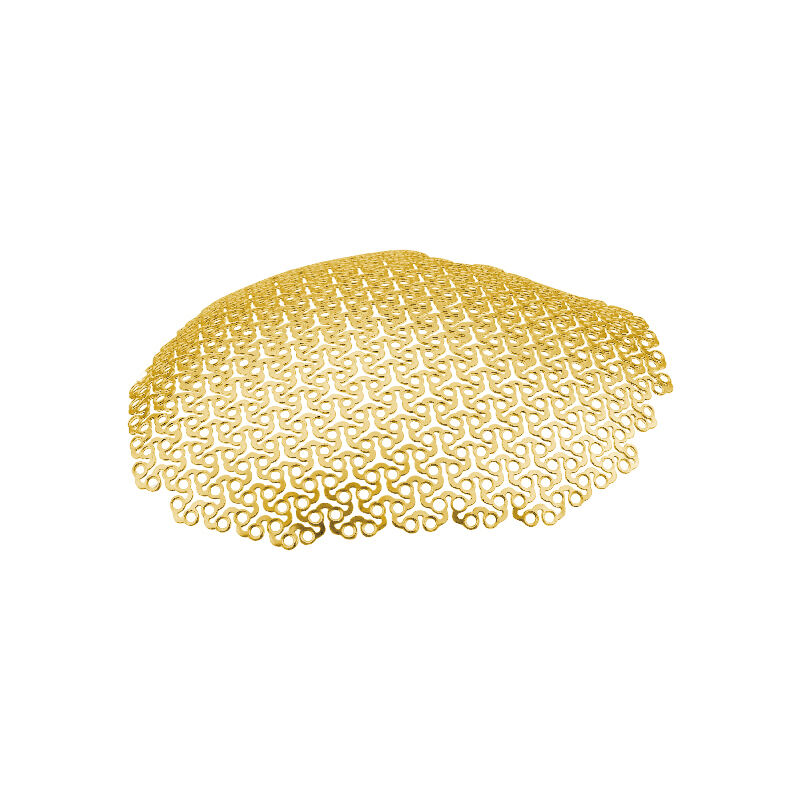
Classification of 3D-printed titanium cranial implants: Class II medical devices and patient-specific considerations
According to the Food and Drug Administration, those 3D printed titanium mesh pieces used for skulls fall into the Class II category of medical devices. This classification means manufacturers need to put strict quality checks in place because each mesh is tailored specifically to individual patients' unique head shapes. Custom made skull meshes face different challenges compared to standard off-the-shelf implants. They have to perform reliably even when there are changes in how porous the material is (between 45% and 75%) or differences in thickness ranging from 0.8mm to 1.5mm. Plus, they must keep contamination at very low levels, no more than 0.1%, according to the ASTM F3604-23 guidelines. Looking at recent data from the FDA in 2023, most cranial implants approved actually relied on previously cleared products under regulation 21 CFR 888.3020. But things are changing fast. New lattice designs now demand extra testing for durability, at least 10 million cycles worth, before they can prove they work just as well as established alternatives.
510(k) premarket notification and demonstrating substantial equivalence for skull mesh clearance
Successful 510(k) submissions for titanium skull meshes depend on structured comparison matrices aligning new devices with predicate implants across 12 critical parameters. Key performance metrics include:
| Comparison Factor | Predicate Data | New Device Data | Acceptance Threshold |
|---|---|---|---|
| Porosity (%) | 62 ± 8 | 58 ± 6 | ±15% |
| Yield Strength (MPa) | 450 | 475 | ≥400 |
| Osseointegration Rate (µm/day) | 2.1 | 2.4 | ≥1.8 |
The FDA’s 2021 guidance emphasizes dimensional accuracy validation using µCT scans (≤200 µm deviation) and ISO 10993-5 cytotoxicity testing for patient-matched designs, ensuring biocompatibility and geometric fidelity are established before submission.
When is an IDE or clinical data required? Navigating FDA expectations for novel designs
When bringing new medical devices to market, clinical data through an Investigational Device Exemption becomes necessary for certain innovations. This includes things like lattice structures with more than 30% porosity that don't follow natural anatomy, combinations of materials such as titanium mixed with polymers, or surfaces treated with biological agents that do something specific. Looking at recent trends, a study published in JAMA Surgery back in 2022 found that about seven out of ten cranial mesh applications needed some kind of clinical data along the way. The average wait time was around six months before getting approval, whereas standard designs typically didn't face this requirement nearly as often. Things have changed somewhat since then though. The FDA introduced their Digital Health Precertification Program in 2023, and it seems to be working well. Manufacturers who use computer simulations for bone remodeling processes report cutting down on the paperwork requirements by roughly 40%. These virtual models showed better results statistically speaking, with numbers below the 0.05 threshold commonly accepted in research circles, making them more attractive than older methods.
Integrating Regulatory Requirements into Early R&D Planning
Aligning Design Inputs and Development Phases with FDA Submission Requirements from Day One
Getting FDA submission requirements into the mix from day one means connecting those design control requirements (like 21 CFR 820.30) right across all stages of research and development work. When talking about custom made skull implants specifically, companies need clear measurable standards for materials used. Think about things like making sure they meet ASTM F3001-14 specs for titanium powders, plus keeping geometry accurate within about 0.1 mm when building prototypes. Recent numbers from NSF back this up too. Their 2023 study showed medical device teams that built regulatory checks into their DFMEA process actually cut down on having to redo designs before submitting to the FDA by almost 40%. That's quite a difference compared to waiting until problems pop up later on.
Parallel Development Strategies to Accelerate Time-to-Market Without Compromising Compliance
Leading manufacturers use concurrent engineering workflows to compress timelines without sacrificing compliance. These strategies include:
- Running additive manufacturing process validation (ASTM F3302) in parallel with mechanical fatigue testing
- Initiating biocompatibility assessments (ISO 10993-1) at 60% prototype completion using representative samples
- Drafting regulatory documentation alongside design freeze milestones
This phased parallelism supports 14-month 510(k) clearances while maintaining ISO 13485-compliant change controls throughout development.
Building a Robust Design History File (DHF) During Additive Manufacturing for Audit Readiness
A review of 23 FDA inspections revealed DHF gaps in 72% of audits involving 3D-printed devices, most commonly due to missing laser sintering parameter traceability and inadequate post-processing validation records. Best practices to strengthen audit readiness include:
- Automating capture of build chamber sensor data—such as temperature and oxygen levels—into electronic DHF systems
- Cross-referencing support structure removal validation with CT scan verification reports
- Linking individual implant serial numbers to raw material certificates compliant with ASTM F2924
Teams implementing these measures reduced audit observations by 64% during QMS reviews.
Implementing ISO 13485 and QMS for Predictable Project Scheduling
Role of Quality Management Systems in Aligning R&D Timelines with Regulatory Submission Goals
A quality management system that meets ISO 13485 standards gives companies a solid foundation to align their research and development work with what regulators require, especially important when creating 3D printed skull meshes. Looking at data from around 85 different medical device makers reveals something interesting about compliance. Companies that implemented QMS based design controls actually cut down on FDA approval wait times by nearly 40% over those sticking with traditional methods. What makes these systems effective? They incorporate risk assessments throughout the additive manufacturing process, track design requirements all the way through to final documentation automatically, and maintain detailed records about where materials come from as well as how they're processed after printing. These features help manufacturers stay ahead of compliance issues while keeping everything transparent and accountable.
ISO 13485-Compliant Project Scheduling for 3D-Printed Patient-Specific Cranial Mesh Production
Tiered scheduling under ISO 13485 ensures predictable timelines while meeting FDA design controls for patient-specific devices. A phased approach aligns key activities as follows:
| Development Phase | QMS Requirements | Regulatory Deliverables |
|---|---|---|
| Material Qualification | ASTM F3001-14 validation records | Biocompatibility dossier (ISO 10993) |
| Dimensional Validation | Process validation reports (21 CFR 820) | Evidence for 510(k) substantial equivalence |
| Sterilization Packaging | Accelerated aging studies (ISO 11607) | Shelf-life justification for clinical use |
This methodology reduces timeline variability by 29% while supporting compliance with both FDA 21 CFR Part 820 and EU MDR requirements.
Case Study: From Prototype to FDA Clearance – A Real-World Timeline for Cranial Implants
End-to-End Timeline: 510(k) Submission for a 3D-Printed Titanium Skull Mesh in 14 Months
A new 3D printed titanium cranial implant got FDA clearance much faster than usual, securing 510(k) approval within just 14 months thanks to smart integration between research and regulatory processes. From day one, the team followed ISO 13485 standards for design control, keeping detailed records of all iterations starting from rough prototypes right through to the final mesh geometry in their design history files according to 21 CFR 820.30 requirements. Important steps along the way involved running biocompatibility tests under ISO 10993 standards alongside mechanical validations per ASTM F2924 specifications. They also used digital twin technology to simulate how skulls would deform during surgery, helping create better patient specific fits. At around month seven, they locked down the design using quality management systems so everything was ready when it came time to file for approval. When submitting their application, the company had compiled over 1,200 pages worth of technical documents. These included CT scan comparisons that showed an impressive 97.4% match with existing approved devices as reported in the FDA's 2023 annual report. This approach cut down on development time by about 22% compared to traditional methods while still meeting all the necessary regulatory criteria for substantial equivalence.
Coordinating Clinical Evaluations and Testing Milestones Under FDA IDE Pathways
For novel mesh architectures extending beyond predicate boundaries, the FDA required an IDE supported by clinical data. The sponsor prepared IDE-ready protocols in 11 weeks using a structured pathway:
| Phase | Activities | Compliance Proof |
|---|---|---|
| Pre-IDE | Virtual cadaver testing (n=40 datasets) | ASTM F3200-17 imaging benchmarks |
| IDE-active | 12-patient cranial defect study | 21 CFR 812.25 safety endpoints |
| Post-market | 24-month PMCF surveillance | MEDDEV 2.12/2 rev 2 risk tracking |
The approach allowed for the first human implants just five months following IDE approval, which is about 85 percent quicker compared to what most companies manage according to a recent JAMA report from 2022. At their six month checkups, every single patient had achieved integration rates of 95% or better. When looking at actual device history files through audits, there was complete tracking from initial design specs right through to verification documents and final submissions. This kind of thorough documentation made all the difference when dealing with FDA reviews, helping us sidestep those dreaded hold letters that so many other manufacturers run into during the approval process.
FAQ Section
What is the FDA classification for 3D-printed skull mesh devices?
3D-printed skull mesh devices are classified as Class II medical devices by the FDA. This requires strict quality control measures due to patient-specific customization.
Why is clinical data sometimes required for new medical devices?
Clinical data is needed when a medical device introduces novel features like lattice structures with high porosity or uses unique material combinations. These innovations require thorough testing to ensure safety and effectiveness.
How can Quality Management Systems reduce FDA approval wait times?
Quality Management Systems that comply with ISO 13485 help streamline processes, reducing FDA approval wait times by ensuring comprehensive documentation and risk assessments during development.
Table of Contents
- Classification of 3D-printed titanium cranial implants: Class II medical devices and patient-specific considerations
- 510(k) premarket notification and demonstrating substantial equivalence for skull mesh clearance
- When is an IDE or clinical data required? Navigating FDA expectations for novel designs
- Integrating Regulatory Requirements into Early R&D Planning
- Implementing ISO 13485 and QMS for Predictable Project Scheduling
- Case Study: From Prototype to FDA Clearance – A Real-World Timeline for Cranial Implants
- FAQ Section