 EN
EN
 FR
FR
 ES
ES
 AR
AR

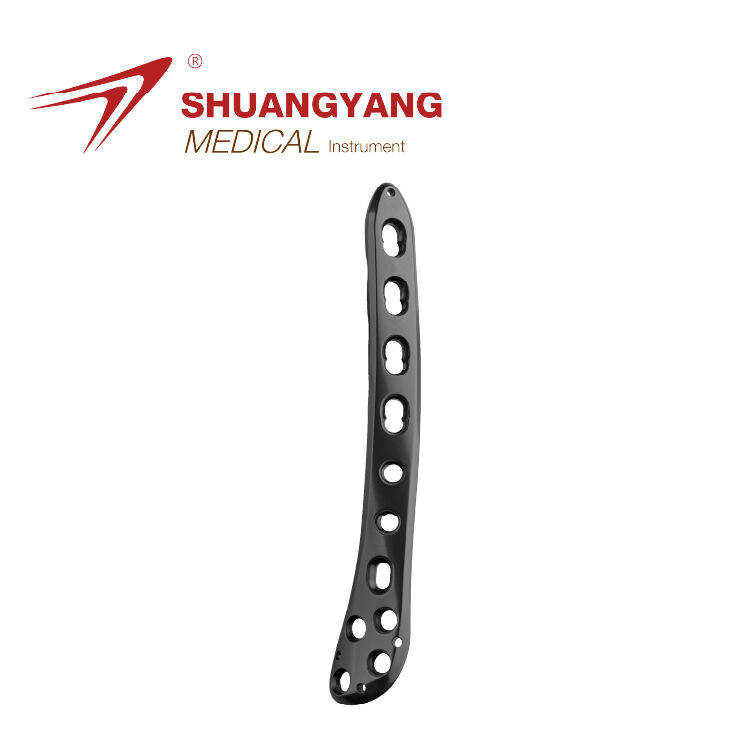
Understanding Cleanroom Classification in the Context of 3D-Printed Implant Assembly
ISO 14644-1 Cleanroom Classification Based on Airborne Particle Counts
Cleanroom standards under ISO 14644-1 look at how many particles ≥0.5 microns there are in each cubic meter of air. When it comes to making those 3D printed femoral locking plates, manufacturers need to work in either Class 5 spaces (no more than 3,520 particles per cubic meter) or Class 7 areas (up to 352,000 particles). These levels are pretty much required if they want to follow FDA rules for putting together medical implants. Even tiny bits of dust or debris can weaken the structure of these devices once implanted. Recent research from ASTM back in 2023 showed something interesting too. Facilities that didn't stick to these cleanroom standards saw about 27% more problems related to particles getting into their products compared with places certified under ISO guidelines. Makes sense really when considering what happens inside someone's body after surgery.
Relevance of ISO Class 5 and Class 7 Environments for Orthopedic Implants
For critical work like surface finishing and final product handling, facilities need Class 5 cleanrooms since even tiny particles under 5 microns can mess up the osseointegration process. These rooms maintain extremely controlled conditions that prevent contamination risks during sensitive manufacturing stages. On the other hand, Class 7 environments handle secondary tasks such as quality checks and component storage where particle levels aren't quite so strict. Looking at operational costs tells another story though. Running a Class 5 area typically sets back around $1,200 per square meter each year according to recent 2024 energy assessments, whereas maintaining Class 7 areas comes in at roughly half that price point at $480 per square meter. This significant difference means smart zoning decisions become both economically sensible and technically necessary when designing manufacturing spaces.
Particulate Control and Contamination Risks in Femoral Plate Assembly
Contamination during femoral plate assembly introduces two major risks:
- Mechanical failure: Particles 10μm create stress concentration points, reducing fatigue resistance by up to 34% (Journal of Orthopedic Research 2023)
- Biocompatibility issues: Metallic particulates exceeding ISO 10993-1 limits trigger inflammatory responses in 18% of patients
Human activity accounts for 68% of particulate contamination in medical device assembly. Implementing airlock protocols and HEPA-filtered gowning stations significantly reduces this risk.
Regulatory Standards Governing Cleanroom Use in Medical Device Manufacturing
FDA 21 CFR Part 820 and Contamination Control Requirements for Implantable Devices
FDA 21 CFR Part 820 mandates strict contamination controls for implantable devices like 3D-printed distal femoral locking plates. Manufacturers must establish environmental monitoring, air filtration systems, and personnel training programs to manage particulate and microbial contamination. Non-compliance contributes to costly recalls, with contamination-related enforcement actions costing the industry $740 million annually (2023).
Alignment of ISO 14644 with Medical Device Sterility Standards
ISO 14644 complements FDA requirements by defining measurable air cleanliness levels that support sterility assurance. ISO Class 5 environments are designated for final packaging, while Class 7 zones handle bulk component assembly. This dual alignment ensures 3D-printed femoral plates meet both international standards and FDA's 21 CFR 820.70 environmental control criteria.
Environmental Controls for Invasive, High-Risk Devices Like Distal Femoral Plates
Due to direct bone contact and long-term implantation, distal femoral plates require stringent environmental controls:
- HEPA-filtered laminar airflow (0.45 m/s ±20%) in ISO Class 5 areas
- Real-time particle counters with microbial limits ≤5 CFU/m³
- Temperature and humidity stabilization (±1°C, ±5% RH) to prevent warping of 3D-printed components
These measures reduce endotoxin contamination by 92% compared to uncontrolled environments (Journal of Orthopedic Manufacturing, 2023), minimizing the risk of osteolytic reactions from residual particulates.
Cleanroom Design and Operational Best Practices for 3D-Printed Orthopedic Implants
Designing ISO Class 5 and Class 7 Cleanrooms for Femoral Locking Plate Assembly
In the world of femoral locking plate manufacturing, ISO Class 5 and Class 7 cleanrooms play very different but equally important parts. The Class 5 spaces are where all the critical stuff happens - final assembly takes place here along with any direct contact with sterilized components. These areas need around 360 to 540 air changes every hour, plus HEPA filters to keep things pristine. Moving down to Class 7 environments, manufacturers handle less delicate operations such as preparing raw materials. This setup offers good value for money without compromising too much on quality standards. Most facilities go for modular designs when building these spaces. They maintain positive pressure gradients at least 0.05 inch water gauge to stop contamination from spreading between sections. Stainless steel workstations have become standard equipment because they just don't shed particles like other materials do, which is crucial when customizing plates according to specific surgical needs.
Sterile Packaging Validation and Environmental Monitoring Protocols
The sterile barrier integrity of distal femoral plates gets tested through what's called accelerated aging tests at around 70 degrees Celsius plus or minus 2 degrees for 14 days straight, along with checking for microbial ingress as per ASTM F1980 standards. Facilities keep tabs on things constantly with those 1 CFM particle counters alongside settle plates throughout their ISO Class 5 cleanrooms. Real world experience shows that missing even one small deviation can boost contamination risks by nearly 9% according to recent Ponemon research from last year. That's why most modern setups now incorporate automatic alert systems and have protocols ready to jump into action whenever test results cross acceptable limits.
Case Study: Implementing a Compliant Cleanroom for 3D-Printed Femoral Plate Production
A recent facility achieved regulatory compliance by integrating ISO Class 5 (unidirectional airflow) and Class 7 (turbulent airflow) zones for 3D-printed locking plate assembly. The design reduced airborne particulates by 89% through:
- Triple-stage airlocks with sticky mats and strict gowning procedures
- Real-time differential pressure monitoring with ±10% alarm thresholds
- Quarterly HVAC validations per ISO 14644-3
This approach brought post-sterilization contamination rates down to 0.03%—65% below the industry average for orthopedic implants.
FAQ
What is ISO 14644-1?
ISO 14644-1 is an international standard outlining the classification of air cleanliness in terms of the concentration of airborne particles.
Why are cleanrooms important in 3D-printed implant assembly?
Cleanrooms are crucial to prevent contamination that could compromise implant quality or patient safety.
What are the differences between ISO Class 5 and Class 7 environments?
Class 5 environments are more controlled and used for critical tasks, while Class 7 spaces are used for less sensitive operations with lower particle count requirements.
How does the FDA regulate cleanroom practices?
The FDA's 21 CFR Part 820 sets forth requirements for contamination control to ensure device safety and efficacy.
What strategies are used to minimize contamination in cleanroom environments?
Strategies include HEPA-filtered airflow, strict gowning procedures, airlock protocols, and real-time monitoring systems.