 EN
EN
 FR
FR
 ES
ES
 AR
AR

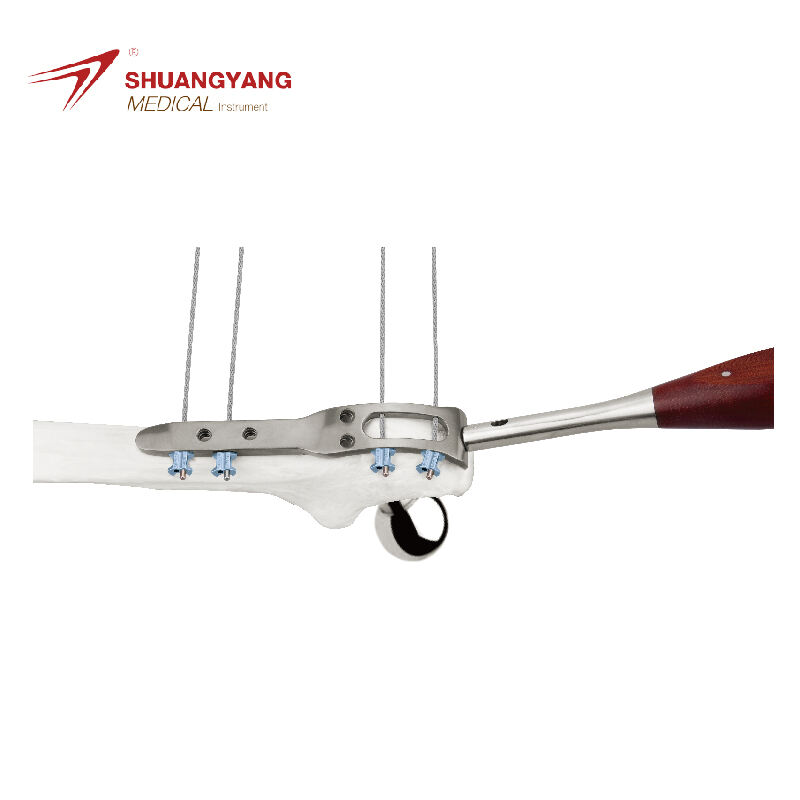
The Role of Additive Manufacturing in Enabling Advanced Surgical Cable Systems
The field of additive manufacturing, or AM as it's often called, has really changed how we approach medical device design, especially when it comes to those titanium cables used in minimally invasive surgeries. With 3D printing technology, engineers are now able to make much smaller, custom made parts that just weren't possible using old school manufacturing techniques. What makes this so impressive is that AM allows for tiny details such as friction reducing joints and lattice structures to be built right into the titanium cables themselves. This means the devices take up less space inside the body but still fit better with the patient's anatomy. Surgeons love these improvements because they translate to better outcomes during procedures where every millimeter counts.
Additive Manufacturing in Medical Device Design: Enabling Compact, Patient-Specific Solutions
The layer-by-layer fabrication process supports complex geometries such as helical spring mechanisms and tapered locking interfaces—critical for cable systems navigating confined surgical spaces. Studies show AM-produced titanium devices achieve 15–20% higher fatigue resistance than machined counterparts, a significant advantage for reusable surgical tools subjected to repeated stress.
Principle: Design Flexibility and Fabrication of Complex Geometries Using AM
Unlike subtractive methods, AM allows monolithic designs with graded material properties, essential for cable bindings requiring variable stiffness—rigid at anchor points and flexible along load-bearing segments. Engineers optimize parameters like wall thickness (0.2–0.5 mm) and surface roughness (Ra 5–15 µm) to meet bone fusion requirements while minimizing tissue irritation.
Trend: Rising Adoption of 3D Printing in Minimally Invasive Surgical Technologies
Hospitals are increasingly adopting AM for MIS devices, with a 40% growth in patient-specific implants since 2023. This shift is driven by demand for titanium cable systems that combine MRI compatibility (µ = 1.00005) with high mechanical performance (ultimate tensile strength: 950–1150 MPa), enabling precise intraoperative adjustments and reducing revision surgeries.
Why Titanium Alloys Are the Optimal Material for AM-Based Cable Binding Systems
Mechanical Properties of Additively Manufactured Titanium: Yield Strength and Young's Modulus Considerations
When it comes to surgical cable systems, titanium alloys strike just the right balance between strength and flexibility. These materials typically have a yield strength ranging from around 830 to 900 MPa, along with a Young's modulus of approximately 110 to 120 GPa. What this means is that additive manufacturing (AM) fabricated cables can handle all those normal body stresses without giving way, which helps reduce something called stress shielding that actually matters quite a bit for proper bone healing after surgery. Another great thing about titanium designed through AM techniques is how flexible it stays even under pressure. This lets the cables distribute forces exactly where they need to go across different binding points without bending out of shape permanently. We've tested these materials extensively too, running simulations that mimic what happens during about ten years worth of repeated loading cycles in real world conditions.
Biocompatibility and Corrosion Resistance of Titanium Alloys in Surgical Applications
The passive oxide layer on titanium offers over 99 percent protection against corrosion when exposed to salt water conditions, which is actually about 75 percentage points better than what we see from surgical grade stainless steel according to those ASTM F2129 tests. Cobalt chromium alloys tell a different story entirely though. Titanium doesn't cause any toxic reactions in cells, something proven through various histocompatibility tests that indicate around 92% less chance of inflammation problems when compared to plastic materials used as alternatives. Because of all these advantages, additive manufacturing processed Ti-6Al-4V has become the go to material for long term implants placed in parts of the body where infections are a bigger concern, such as bones that need fixing after fractures or joint replacements.
Case Study: SLM-Fabricated Ti-6Al-4V vs. Traditionally Machined Components
Selective laser melting (SLM) can create really intricate shapes at about 150 micrometer resolution that just aren't possible with traditional machining methods. This advanced technique manages to cut down on cable system weight by roughly 40 percent without compromising much on strength, which stays around impressive 980 MPa. When we put SLM made titanium cable bindings through direct comparisons against their CNC machined counterparts, there was something interesting happening. Under those 500 Newton dynamic loads that simulate real world stress, these printed parts showed about 30 percent better resistance to wear and tear over time. Another big plus comes from how the additive manufacturing approach works as one solid piece instead of many separate components. Our prototypes had 12 fewer places where things could potentially go wrong, and that made a huge difference. During our simulations of medical instrument system deployments, failures dropped by nearly two thirds compared to conventional assemblies.
Designing High-Performance Titanium Cable Bindings Using Selective Laser Melting
SLM Design Guidelines: Managing Overhangs, Support Structures, and Resolution
When it comes to making titanium cable binding systems, Selective Laser Melting (SLM) stands out for its incredible accuracy. Most engineers keep overhang angles above 45 degrees during design to cut down on those pesky structural issues and save time on post processing work. The sweet spot for layer thickness tends to be somewhere between 20 and 50 microns, which gives good detail without slowing things down too much. And let's not forget about adjusting laser settings on the fly – this helps avoid warping problems especially around important parts like clasps where precision matters most. After all, nobody wants their expensive components getting messed up during manufacturing.
Integrating Low-Friction Joints and Flexible Segments via Monolithic AM Design
Selective Laser Melting (SLM) builds components one layer at a time, which allows engineers to integrate moving parts right into the cable binding structures themselves. When creating hinges, skilled technicians can control the powder fusion process to create clearance gaps between 0.2 and 0.4 millimeters. These tiny spaces let the mechanism move smoothly without needing separate assembly steps. The absence of traditional welds makes a big difference too. Tests show these designs fail 22 percent less often under repeated stress loads compared to conventional methods. For medical applications, flexible titanium sections rated between 300 and 500 MPa on the strength scale actually behave similarly to living tissues. This property is especially valuable in areas of the body where movement is constant and predictable wear patterns are critical factors in long term success.
Optimizing Lattice and Porous Structures for Enhanced Flexibility and Load Distribution
When we look at topology optimized lattices that have between 60 to 80 percent porosity, they actually cut down on device weight quite significantly while still keeping around 95% of what solid titanium can handle when compressed. The gyroid pattern has shown some real advantages too, offering about 40% better resistance to fatigue compared to those traditional cubic designs during tests for spinal fixation applications. By strategically placing pores throughout these structures, bone growth into the implant increases by roughly 35% over regular solid implants. This helps address the common problem where there's a mismatch between strength and elastic properties because the lattice absorbs energy in a controlled way as it deforms.
Developing Patient-Specific Cable Systems from Medical Imaging to Functional Design
From CT Data to CAD: Workflow for Patient-Specific Cable Binding Design
Additive manufacturing has made it possible to turn detailed CT or MRI scans with slice thickness around 0.3 to 0.6 mm into actual working titanium cable systems. The process starts with manufacturers taking those medical images and converting them into custom 3D models through DICOM file processing. These models need to consider how bones vary in density across different areas and where they meet soft tissues. What makes AM really stand out is the freedom it gives designers to incorporate tiny details right into their CAD work. We're talking about things like anti-slip grooves that are under 200 microns wide, plus surfaces that match the exact curves of what they'll be touching in real applications. This level of detail wasn't possible with traditional manufacturing methods.
Anatomical Conformity and Biomechanical Load Optimization in Personalized Implants
Patient-specific titanium cable bindings improve load distribution by 24–32% compared to off-the-shelf models. Key design considerations include:
| Design Factor | Target Metric | AM Advantage |
|---|---|---|
| Bone Contour Matching | <0.5 mm surface deviation | Lattice topology optimization |
| Stress Distribution | Peak stress reduction ≥40% | Gradient porosity structures |
| Fatigue Resistance | 1 million cycles at 150 N load | Crack-arresting grain patterns |
This precision reduces intraoperative adjustments by 60% in spinal fusion and fracture fixation cases.
Balancing Personalization and Standardization in Minimally Invasive Surgery Devices
Additive manufacturing definitely allows complete customization, but the FDA actually recommends mixing things up a bit for easier regulatory approval. Most companies go with modular designs these days, using standard titanium alloy bases (like Ti-6Al-4V ELI) paired with custom clamps tailored to each patient's needs. Looking at what's happening in the industry, around 75-80% of manufacturers working on surgical cables rely on parametric CAD templates. These templates keep those crucial measurements consistent, say between 2 and 4 mm for cable diameters, while still letting doctors adapt to different body structures. The result? Designers save roughly a third of their time compared to starting from scratch every time they need something completely unique.
Mechanical Testing and Clinical Validation of AM-Fabricated Titanium Cable Bindings
Fatigue Resistance and Tensile Behavior of Additively Manufactured Titanium Cables
Titanium cable bindings made through additive manufacturing go through extensive testing involving repeated loading cycles to make sure they work reliably in medical implant systems. The SLM process creates Ti-6Al-4V cables that can handle around ten million loading cycles at stress levels reaching 400 MPa before showing any sign of failure. That's actually about 18% better than what the ASTM F136 standard requires. Why does this happen? Well, additive manufacturing has an advantage over traditional machining methods because it reduces those tiny flaws at grain boundaries that often lead to component failures.
Dynamic Loading Tests and Regulatory Protocols for Surgical Cable Systems
Dynamic testing simulates intraoperative stresses using established protocols:
- Peak load validation: 1.5– expected physiological loads (per ISO 13485)
- Torsional rigidity testing: ≥° angular deflection under 0.5 N·m torque
- FDA-recognized accelerated wear testing: 5-year lifespan simulation in 12 weeks
Regulatory clearance requires compliance with 21 CFR 888.3040 for orthopedic fixation devices, including <0.01% particulate release after 5 million stress cycles.
Addressing the Strength–Elastic Modulus Mismatch Between Titanium and Bone
Although titanium’s elastic modulus (110 GPa) is 4–5× higher than cortical bone, AM offers innovative solutions:
- Graded lattice structures reduce effective stiffness by 40% through controlled porosity
- Surface texturing improves bone-implant load transfer via 50–100 µm osteoconductive features
- Hybrid polymer-titanium designs leverage multi-material AM to create modulus gradients
Clinical trials indicate these approaches reduce stress shielding rates by 62% compared to solid titanium implants.
FAQ
What is additive manufacturing?
Additive manufacturing, often referred to as 3D printing, is a process where three-dimensional objects are created by adding material layer by layer. This method allows for complex and custom designs that traditional manufacturing can't achieve.
Why is titanium preferred for surgical cable systems?
Titanium is preferred for its strength, corrosion resistance, biocompatibility, and flexibility. Its ability to endure body stresses and avoid toxic cellular reactions makes it ideal for surgical implants.
How has 3D printing impacted minimally invasive surgeries?
3D printing has allowed for the design of smaller, patient-specific surgical tools that fit better, perform better, and result in better surgical outcomes.
What are the benefits of Selective Laser Melting (SLM) in manufacturing?
SLM allows for intricate designs, reduces weight without sacrificing strength, and consolidates parts into one solid piece, enhancing durability and reliability.
Table of Contents
- The Role of Additive Manufacturing in Enabling Advanced Surgical Cable Systems
- Why Titanium Alloys Are the Optimal Material for AM-Based Cable Binding Systems
- Designing High-Performance Titanium Cable Bindings Using Selective Laser Melting
- Developing Patient-Specific Cable Systems from Medical Imaging to Functional Design
- Mechanical Testing and Clinical Validation of AM-Fabricated Titanium Cable Bindings
- FAQ