 EN
EN
 FR
FR
 ES
ES
 AR
AR

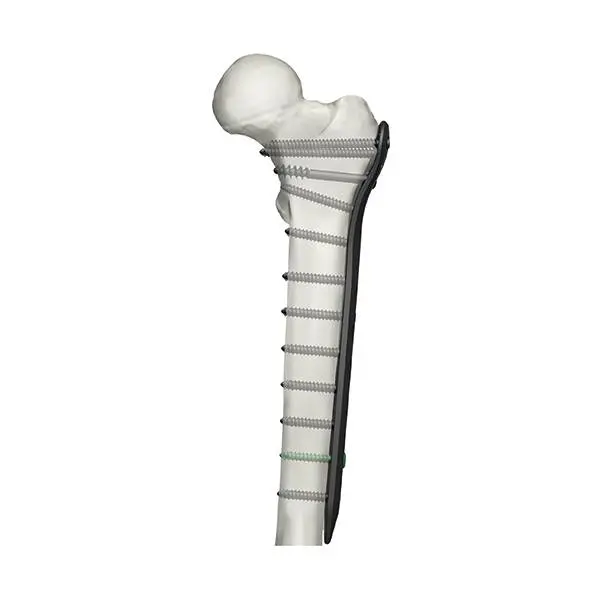
Technical Barriers to Consistent and Reliable Production
Scaling 3D-printed humeral locking plate production requires overcoming critical technical challenges that directly impact implant safety and performance. These barriers span every stage of the additive manufacturing (AM) process, demanding precision engineering and robust quality systems.
Ensuring Batch-to-Batch Consistency in Additive Manufacturing
When laser power wavers around ±15 watts and temperatures inside SLM chambers fluctuate, it creates all sorts of problems with how the material melts during production runs. According to some research from ASTM back in 2023, even when using exactly the same CAD designs on various additive manufacturing platforms, there was still about a 12% difference in strut thickness for those lattice structures used in locking plates. To deal with these inconsistencies, many manufacturers have started installing real time monitoring systems that keep tabs on over 200 different factors throughout each build cycle. But let's be honest, most companies struggle here. Less than one in five actually manages to hit the ISO 13485 standards required for consistent results when working with medical grade titanium alloys, which remains a big challenge for the industry as a whole.
Material Integrity Risks from Powder Reuse in Ti-6Al-4V Printing
When titanium powder gets recycled, it starts forming those pesky surface oxide layers that go beyond 30 nanometers thick after just three times through the process according to NIH data from 2022. This leads to a drop in fracture toughness of around 21 percent as shown in those ASTM F2924-14 bend tests we all know about. Some fancy equipment like advanced sieves and plasma atomizers can bring back some of that lost quality, but look at the numbers: only about 28 percent of medical additive manufacturing facilities across America actually comply with the current ASTM F3301-20 standards for reuse. And there's real world consequences too. Back in 2023, the FDA had to pull certain products off shelves because plates were failing early. Turns out this was connected to something called alpha-phase embrittlement, which happens when there's too much oxygen messing with the metal structure during recycling.
Post-Processing Challenges: Dimensional Accuracy and Surface Finish
The electron beam polishing process can bring down surface roughness (Sa) values from around 25 microns all the way down to about 6 microns. However, this method tends to mess with the plate geometry quite a bit, going beyond the ±150 micron tolerance limits set out in ASTM F543-17 standards. A recent 2023 report from the AMRC found that nearly two thirds of these locking plates needed some hands-on touch ups after processing just to maintain that crucial 0.1mm contact area between bone and plate. The newer hybrid manufacturing setups that mix additive manufacturing with traditional CNC finishing have managed to hit about 98.7% accuracy when it comes to dimensions. But there's a trade off here too - production times jump by roughly 140% compared to what we see with standard manufacturing techniques, which is something manufacturers need to weigh against their quality requirements.
Quality Control Protocols: Non-Destructive Testing and Failure Analysis
Micro CT scans can find tiny internal voids down around 50 microns in size, though they really struggle when it comes to spotting stress points inside those complicated lattice structures. According to new research from NIST published last year, combining phased array ultrasound with artificial intelligence for defect sorting has bumped up crack detection rates to an impressive 99.2 percent for parts made from Ti-6Al-4V alloy. Still, adoption remains low among orthopedic device makers - just about 9 out of every 100 companies have actually implemented these cutting edge non-destructive testing techniques. The main roadblock? System validation alone typically runs manufacturers about seven hundred forty thousand dollars according to Ponemon Institute data from 2023. That kind of price tag makes many hesitate even with all the benefits these technologies offer.
Economic and Scalability Challenges in Patient-Specific Implant Manufacturing
Cost-Effective Scaling of Custom Humeral Locking Plates: Economic Realities
Getting economies of scale right with 3D printed humeral locking plates continues to be a tough nut to crack. Additive manufacturing sure allows for those custom designs tailored to individual patients, but the bottom line is still problematic. Unit costs hang around three to five times what traditional implants cost, mainly because we're talking about small production runs and all that manual work needed after printing. Looking at industry numbers, most manufacturers need to hit about 150 plates a month just to make this financially viable, and honestly only about one in five actually manages that target. The materials themselves are another hurdle, with medical grade titanium alloy running between $300 and $500 per kilogram. And let's not forget the constant recalibrations these machines require, which eats into production time. All these factors put serious pressure on profit margins, particularly for hospitals trying to keep their costs within a tight 5% range from batch to batch.
Balancing Customization and Standardization in Locking Plate Design
Most top manufacturers have adopted mixed approaches that try to get the right mix between customizing implants for specific anatomy and keeping production at scale. These companies typically rely on parametric design systems that handle around 85 to 90 percent of standard plate shapes, but leave room for doctors to adjust where screws go and how curves match patient bones through AI tools before surgery. The problem remains though - even with these standardized elements, getting plates approved under ISO 13485 standards takes anywhere from 22 to 35 man hours each time, which really slows things down when someone's in urgent need of treatment. There's growing interest in these semi-custom designs optimized through topology analysis. Early results suggest they might reduce validation time by roughly 40 percent without compromising structural integrity much below what's needed for proper load bearing requirements.
Real-World Production Failures: Case Study on Laser Calibration Drift
A 2023 failure analysis of a recalled batch of 3D-printed humeral plates traced dimensional inaccuracies to undetected laser power drift during continuous 72-hour printing cycles. Post-incident simulations showed:
| Calibration Interval | Layer Fusion Defects | Yield Loss |
|---|---|---|
| 8 hours | 0.2% | 4% |
| 12 hours | 1.1% | 18% |
| 24 hours | 5.7% | 63% |
This case highlights the necessity of closed-loop monitoring systems when maintaining ±50μm dimensional tolerances essential for locking plate functionality.
Regulatory and Compliance Hurdles for Mass Market Approval
Meeting FDA, ISO, and MDR Requirements for 3D-Printed Implants
Producing 3D printed humeral locking plates at scale means dealing with a complex web of regulations. Manufacturers have to follow the FDA's Quality System Regulation (21 CFR Part 820), meet ISO 13485 standards for medical devices, and comply with EU Medical Device Regulation MDR 2017/745 as well. These rules all require similar things though - testing materials for biocompatibility according to ISO 10993 standards, making sure they hold up mechanically per ASTM F382-21 guidelines, and following proper sterilization procedures outlined in AAMI ST79:2017. Recent research from 2023 shows quite a challenge here too. About 38 percent of additive manufacturing shops run into trouble when documenting their processes for patient specific implants because the printing parameters keep changing so much between different cases.
Design Validation and Traceability Under ASTM F3383-19 and EU MDR
The ASTM F3383-19 standard imposes pretty tough requirements on orthopedic implants made through additive manufacturing. For these devices to pass muster, they need to show porosity below 30% to allow proper bone integration, demonstrate tensile strength exceeding 900 MPa when using Ti-6Al-4V material, and withstand around ten million cycles at 70% of their yield strength. Over in Europe, the Medical Device Regulation (MDR) has its own challenges with the Unique Device Identification system. Manufacturers must track every single batch of metal powder used, record all laser settings, and document each step after printing completes. Recent audits from 2024 found an alarming issue where nearly one out of five companies couldn't connect the CT scan results showing part quality (with resolutions down to 50 micrometers) back to their original computer designs when submitting paperwork for MDR compliance.
Bridging the Gap: Rapid Innovation vs. Lengthy Regulatory Timelines
The speed of 3D printing lets designers make changes within just three days, but getting FDA 510(k) clearance for locking plates still takes around 165 days according to that recent MDIC report from 2023. This creates real problems for manufacturers who must choose between finalizing their designs too early or holding off on approval while trying to include new technologies such as AI based topology optimization. Some pilot projects through the FDA's Safer Technologies Program, known as STeP, have actually cut down review times by about 31 percent for certain implant products. These are typically ones that come with closed loop powder reuse systems which meet standards set forth in ASTM F3456-22 specifications.
Key Compliance Strategies:
- Implement digital thread systems to auto-generate FDA eSTAR submission templates
- Conduct gap analyses against EU MDR Annex XVI for patient-matched devices
- Validate machine learning algorithms for defect detection under IEC 62304:2015
This phased approach balances innovation velocity with the rigorous documentation required for global market access.
Strategies for Scaling 3D-Printed Locking Plate Production Successfully
Integrated Digital Workflows to Streamline Design and Manufacturing
Digital integration from start to finish cuts down the time between design and production by around 30%, plus it makes batches more consistent overall. Surgeons can now upload detailed information about patient anatomy straight into computer-aided design databases. These systems then use artificial intelligence to optimize how plates are shaped, making sure they meet those important ASTM F543 standards for screws. According to research published last year in the field of orthopedic implant design, these new methods basically got rid of about four out of five manual revisions needed when developing plates for the upper arm bone area. That's pretty impressive when we think about all the time and resources saved.
AI-Powered Defect Detection and Automated Quality Inspection Systems
Monitoring happens in real time as we look at how the melt pool behaves and track those layer by layer temperature changes when printing Ti-6Al-4V parts. The system will catch anything that goes beyond the normal range, typically set around plus or minus 5% energy density. After the printing process is complete, special computer programs called convolutional neural networks take over. They check if the surface finish meets our standards, which is below 6.3 micrometers roughness average. For threads, they ensure tolerance stays within 0.1 millimeter range. These inspections happen incredibly fast though, processing about 200 plates each hour. That's actually six times quicker than what someone could do manually with just eyes and measuring tools. What makes all this important? Well, these systems are built to meet ISO 13485:2016 standards, meaning every step can be traced back and quality remains consistent throughout production runs.
Modular, Semi-Custom Plate Designs for Scalable Personalization
Parametric design algorithms enable 85% standardized base geometries with customizable length (50â150mm) and curvature (±15°) for patient-specific fit. A leading manufacturerâs 2024 trial demonstrated that modular locking plates reduced inventory costs by $2.1M annually compared to fully custom implants. This hybrid model supports batch runs of 50â100 units without sacrificing anatomical adaptability.
Closed-Loop Powder Management and Certified Reuse Protocols
Ti-6Al-4V powder produced via gas atomization goes through ASTM F3001-14 tests following every reuse cycle. The oxygen levels stay consistently below 0.25% thanks to careful handling with argon purging throughout processing. Special vacuum sealed containers keep track of where the powder comes from during recycling all the way to the final sintering stage. This tracking system helps achieve around 93% material usage rates at facilities cleared by the FDA for medical applications. Studies show that even after going through five complete manufacturing cycles, the tensile strength stays above 950 MPa provided the powder remains stored properly in Class 8 cleanrooms during these processes.
FAQ Section
What are the main technical barriers in 3D-printed humeral locking plate production?
The main barriers include ensuring batch-to-batch consistency, managing material integrity risks, post-processing challenges, and implementing effective quality control protocols.
Why is powder reuse a challenge in Ti-6Al-4V printing?
Powder reuse can lead to surface oxide layers forming, which reduces fracture toughness and can cause early material failure.
What are the economic challenges of scaling custom humeral locking plates?
Challenges include high unit costs due to small production runs and manual labor, material costs, and maintaining production consistency for viable profit margins.
How do manufacturers balance customization and standardization?
Top manufacturers use parametric design systems for standard shapes while allowing doctor-customized adjustments to fit specific patient anatomy.
What regulatory challenges exist for 3D-printed implants?
Compliance with FDA, ISO, and MDR requirements involves rigorous testing, process documentation, and bridging the gap between rapid innovation and lengthy approvals.
Table of Contents
- Technical Barriers to Consistent and Reliable Production
- Economic and Scalability Challenges in Patient-Specific Implant Manufacturing
- Regulatory and Compliance Hurdles for Mass Market Approval
- Strategies for Scaling 3D-Printed Locking Plate Production Successfully
-
FAQ Section
- What are the main technical barriers in 3D-printed humeral locking plate production?
- Why is powder reuse a challenge in Ti-6Al-4V printing?
- What are the economic challenges of scaling custom humeral locking plates?
- How do manufacturers balance customization and standardization?
- What regulatory challenges exist for 3D-printed implants?