 EN
EN
 FR
FR
 ES
ES
 AR
AR

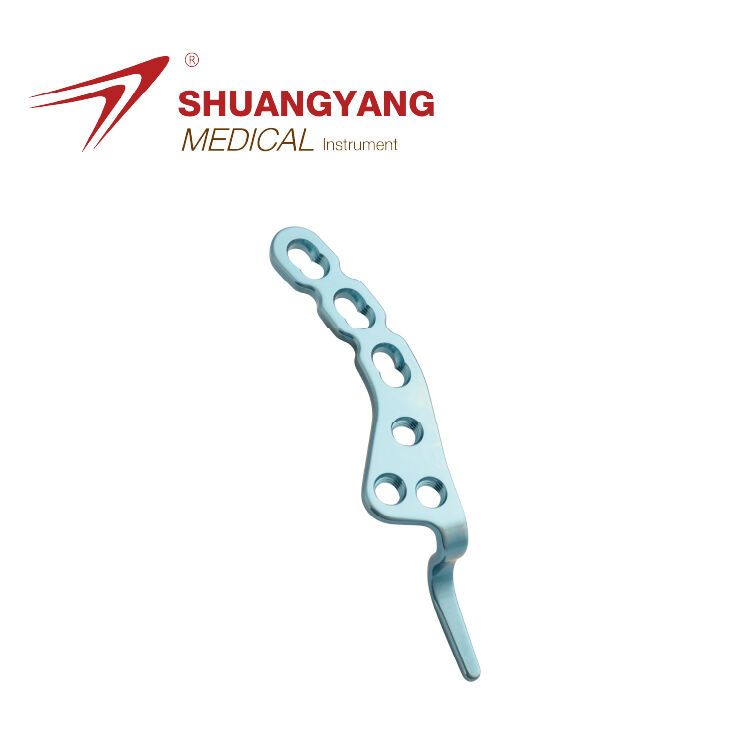
Understanding the Design Transfer Process for 3D-Printed Clavicle Plates
Defining Design Transfer in the Context of Additive Manufacturing for Orthopedic Implants
The process of design transfer in additive manufacturing involves moving those carefully optimized 3D printed clavicle plates from lab settings into actual mass production environments. During this important stage, manufacturers must make sure that key parameters stay consistent across all units produced. We're talking about things like pore size ranging between 300 to 500 micrometers, surface finish below 10 micrometer Ra, and ensuring the material can withstand at least 500 megapascals before yielding. What makes AM different from conventional manufacturing approaches is how sensitive it is to factors such as part orientation during printing and what happens after the print job completes. For electron beam melting systems specifically, getting these details right isn't just about quality control but also meeting strict medical device regulations that protect patient safety.
Key Phases in Transitioning 3D-Printed Clavicle Plate Designs from R&D to Production
Design Freeze & Documentation
Finalize topology-optimized geometries and pore architecture in accordance with ASTM F2924-14 standards to ensure mechanical integrity and osseointegration potential.AM Parameter Locking
Validate laser power (150–300W), layer thickness (20–50µm), and scan speed using medical-grade Ti-6Al-4V powder to achieve repeatable microstructure and mechanical properties.Pilot Production Runs
Execute 10–15 builds on production-scale AM systems to establish statistical process control limits and identify sources of variability before full-scale rollout.
Cross-Functional Collaboration Between R&D, Engineering, and Manufacturing Teams
Getting successful design transfers done right really depends on getting all the different departments working together properly. Material scientists need to figure out how much powder can be reused safely, usually around five cycles or less. Meanwhile, quality engineers are busy creating detailed protocols using micro CT scans to check for pores in materials. And let's not forget about the regulatory folks who have to make sure everything follows the rules outlined in 21 CFR 820.30(g). When companies connect their CAD software with manufacturing execution systems through what we call digital threads, they actually cut down on documentation mistakes by about two thirds. This connection makes it so much easier for everyone involved to share information and work as a team without constant back and forth.
Regulatory Compliance in Design Transfer of 3D-Printed Medical Devices
Meeting FDA 21 CFR 820, ISO 13485:2016, and MDSAP Requirements During Transfer
When moving designs from development to production, companies need to make sure everything fits within international regulations. This includes following FDA 21 CFR 820 requirements that demand strict control over design processes and keeping thorough validation records. There's also ISO 13485:2016 to consider, which focuses heavily on managing risks during actual manufacturing operations. The Medical Device Single Audit Program, or MDSAP for short, helps manufacturers navigate these rules across key markets like America, Canada, and Australia all at once rather than dealing with each country separately. Looking at recent data from 2023 shows just how critical proper documentation really is. About two thirds of FDA audits found problems with missing validation info specifically for additive manufacturing processes. These gaps typically show up when there aren't enough details about how materials behave, what happens between layers during printing, and what changes occur after parts get finished through various post processing steps.
Design History File (DHF) and Device Master Record (DMR) Integration
A synchronized DHF-DMR workflow ensures continuity from development to manufacturing. The DHF captures all design decisions, biocompatibility testing results, and rationale behind the medical device design handoff, while the DMR translates these into actionable production instructions. Critical components include:
| Component | Key Requirements |
|---|---|
| Material Certifications | Traceable lot data for titanium and PEKK powders |
| AM Process Parameters | Validated build orientation and support structures |
| Sterilization Methods | Gamma/irradiation compatibility documentation |
This integration reduces non-conformances during initial production by 42% (PwC MedTech Report 2023).
Ensuring Audit Readiness Across Global Regulatory Frameworks
Getting ready for audits means looking at what different regions need before problems arise. The EU's MDR regulations demand solid clinical proof when it comes to those 3D printed clavicle plates. Meanwhile over in Japan and Brazil, their regulatory bodies focus more on checking out the actual facilities where additive manufacturing happens. Companies that run practice audits tend to find issues faster, like when there are no links between design history files and device master records, or when training documentation falls short. According to Deloitte's latest compliance study from 2024, this approach can boost compliance efficiency by about 31%. Keeping thorough documentation on all engineering modifications, plus having clear post market monitoring strategies and complete biocompatibility information makes moving between different markets much smoother overall.
Developing a Comprehensive Design Transfer Plan for Additive Manufacturing
Best practices for creating a structured Design Transfer Plan (DTP)
Creating a solid Design Transfer Plan (DTP) helps bridge the gap between creative ideas and what can actually be manufactured. Good DTPs set out exactly what needs to happen when, who is responsible for what, and what gets delivered at each stage. Many companies base their plans on ISO 13485:2016 guidelines for tracking things back through the process. Early documentation of important factors such as how parts are built, what happens after printing, and where quality checks occur makes a big difference. According to recent research from the Journal of Medical Device Regulation (2023), teams that follow standard DTP formats see about 38 percent fewer changes needed after transferring designs to production. For risk management, it's smart to run phased assessments using Failure Mode and Effects Analysis (FMEA). This approach helps focus validation efforts on critical aspects like how well devices fit human anatomy and whether surface finishes meet required specifications.
Incorporating design for manufacturability (DFM) in 3D-printed clavicle plates
Getting DFM principles involved right at the start makes sure clavicle plate designs work well with additive manufacturing processes. There's this great topology-adaptive software out there that helps engineers tweak those complex lattice structures in the design phase. We've seen material waste drop somewhere between 15 to 22 percent when using these tools, all while still meeting the mechanical requirements set forth in ASTM F2996-13 standards according to ASME research from 2022. Designers need to think about those specific challenges related to additive manufacturing too. Things like removing support structures after printing and achieving surfaces that can withstand sterilization procedures should be considered way before finalizing any design. Looking at industry data from last year shows just how important this is practically speaking. Out of every ten FDA 510(k) applications submitted for 3D printed orthopedic implants in 2023, almost seven needed some sort of DFM adjustment. That really affects how long it takes to get regulatory approvals down the road.
Managing engineering changes and version control during transition
Setting up a closed loop change control system using digital thread tech makes tracking changes throughout CAD versions much easier, especially when keeping those three version backups. It also helps monitor adjustments to material parameters and any tweaks made during post processing stages. When it comes to documentation, automated audit trails that meet FDA's 21 CFR Part 11 standards cut down on mistakes significantly compared to old school manual methods according to recent guidance from 2021. These systems not only keep records straight but also provide solid evidence for compliance checks, which is crucial for passing inspections and avoiding regulatory headaches down the road.
Conducting production readiness assessments for AM processes
Assess production readiness through triplicate runs evaluating dimensional accuracy, surface roughness, and tensile strength against established thresholds:
| Assessment Criteria | Acceptance Threshold |
|---|---|
| Dimensional accuracy | ±0.15mm (ASTM F3122-14) |
| Surface roughness (Ra) | 3.2 µm for bone contact |
| Tensile strength | ≥800 MPa (Grade 23 Ti-6Al-4V) |
Additionally, verify operator competency via GMP-based training programs, as 42% of AM production delays stem from human error (Additive Manufacturing Benchmark Report, 2022).
Verification and Validation of 3D-Printed Clavicle Plate Manufacturing Processes
Executing Verification and Validation (V&V) Protocols in Design Transfer
The process of verification and validation (V&V) ensures that those 3D printed clavicle plates actually work as intended and match all the design specs they should follow. What does this really mean? Well, it involves checking if materials will safely interact with body tissues, testing how strong and durable the plates are under stress, and making sure dimensions are spot on through detailed scans with micro CT technology. Recent guidelines from the FDA have pushed manufacturers to properly validate their metal additive manufacturing processes following standards like ASTM F3604-23 specifically for laser powder bed fusion systems. And there's good reason behind this push. Research published last year showed that nearly one out of five orthopedic implant recalls happened because companies didn't adequately check temperature parameters during manufacturing. This highlights why keeping complete records of all these validation steps remains so critical in those official Design History Files that regulatory bodies require.
Process Validation and Equipment Qualification in Metal Additive Manufacturing
Getting robust process validation right means making sure all the equipment works properly, checking quality of raw materials, and validating what happens after processing is complete. Key parts of this process involve characterizing powders according to standards like ASTM F3049-14, fine tuning those laser settings and figuring out the best way to orient parts during building, plus looking at residual stresses either through destructive tests or using neutron diffraction techniques. Many shops rely on statistical process control methods these days, particularly Shewhart control charts which track how consistent batches are from run to run. When following ISO 13485:2016 requirements, most manufacturers need to show their defect rates stay below 0.1% for important features like the threading in screw holes or the curvature of plates. Meeting these specs isn't just about paperwork though it affects everything from product reliability to customer satisfaction in the long run.
Overcoming Common AM Process Validation Challenges in Orthopedics
When it comes to validating those 3D printed clavicle plates, there are some real headaches to deal with. The main problems? Material anisotropy where the yield strength can vary between 12 and 15 percent depending on how things get built, plus controlling porosity so voids stay under half a percent. Smart companies tackle this mess with inline metrology systems these days. These setups cut down on shape deviations by around two thirds compared to when folks just eyeball stuff manually. Mixing computer simulations with actual lab tests cuts down the whole validation process by roughly 40 percent too, all while keeping up with those pesky MDSAP audits nobody really likes. For getting patient specific implants out into the world consistently, going through multiple stages makes sense starting from looking at prototypes right through to small scale production runs before full deployment.
FAQ Section
What is design transfer in the context of 3D printing clavicle plates?
Design transfer is the process of moving optimized 3D printed clavicle plate designs from research and development settings to mass production while ensuring consistent quality and regulatory compliance.
Why is it important to lock AM parameters during production?
Locking AM parameters like laser power, layer thickness, and scan speed is crucial to achieving consistent microstructure and mechanical properties across all units produced.
What are some common challenges in validating 3D printed orthopedic implants?
Common challenges include controlling material anisotropy and porosity, which can affect the yield strength and void content in the final product.
How does integrating DHF and DMR help in production?
The integration of DHF and DMR ensures continuity from design to manufacturing, translating design decisions into actionable production instructions while reducing non-conformances.
Table of Contents
- Understanding the Design Transfer Process for 3D-Printed Clavicle Plates
- Regulatory Compliance in Design Transfer of 3D-Printed Medical Devices
- Developing a Comprehensive Design Transfer Plan for Additive Manufacturing
- Verification and Validation of 3D-Printed Clavicle Plate Manufacturing Processes
- FAQ Section