 EN
EN
 FR
FR
 ES
ES
 AR
AR

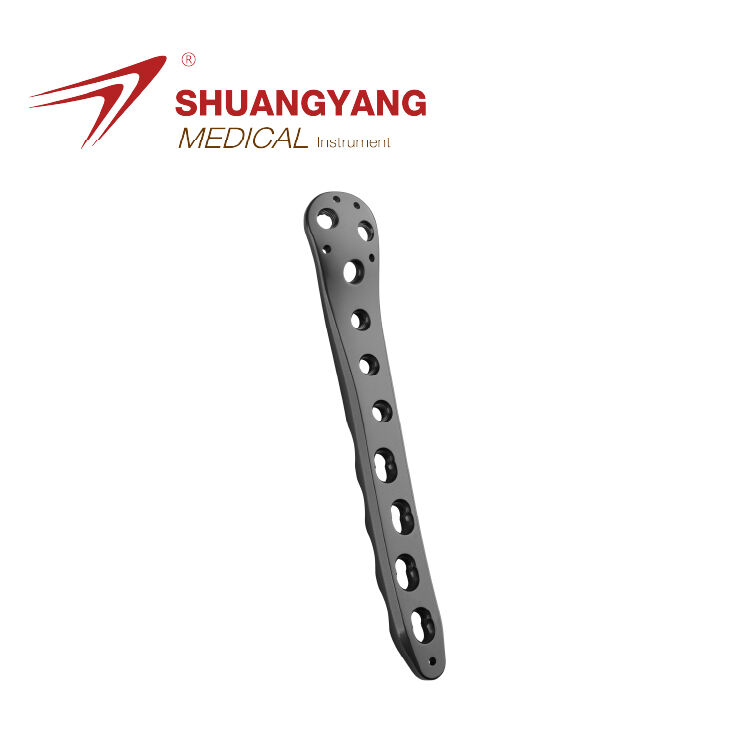
Understanding Global Regulatory Requirements for Proximal Femoral Locking Plate
Core Principles of Medical Device Regulation in Key Markets
The FDA classifies proximal femoral locking plates as moderate risk devices (Class II) according to regulation 21 CFR 888.3030, which means companies need to go through the 510(k) process to show their products are substantially equivalent to existing ones on the market. Things get even more complicated in Europe where these implants land in the higher risk category of Class IIb under the Medical Device Regulation (MDR). This classification requires evaluation by official certification bodies like BSI or TÜV SÜD before getting approved. According to a recent report from Medical Device Review in 2023, nearly four out of five orthopedic device makers face significant holdups because documentation standards vary so much between different countries. The situation becomes particularly frustrating in places like Brazil where regulatory agency ANVISA frequently demands additional local testing for these implants, typically pushing back approvals by anywhere from three to six months extra time that could otherwise be spent bringing products to market.
Harmonization Efforts: Role of ISO 13485 and IMDRF Guidelines
Since 2020, the International Medical Device Regulators Forum (IMDRF) managed to cut down on documentation problems by around 40% thanks to their Medical Device Single Audit Program (MDSAP). A recent look at regulations across different countries shows that ISO 13485:2016 certification covers about 94% of what's needed globally when it comes to locking plates. This kind of standardization makes life easier for manufacturers who want to get their products approved quicker. Companies working within these unified systems are seeing approval times drop by roughly 30% in places like Australia where TGA handles things, and also in Canada under Health Canada regulations. The time savings can make all the difference during product development cycles.
Digital Transformation: Rise of e-Dossiers and Electronic Submissions
Nowadays, electronic submissions are required for proximal femoral locking plates across about 65 percent of all regulatory areas, which represents quite a jump from just 32 percent back in 2019. Looking at specific examples helps put things into perspective. Take the European Union's EUDAMED database alongside China's NMPA e-CTD portal. These systems have actually cut down how long it takes regulators to process applications by roughly 22 days according to data from the Orthopedic Regulatory Efficiency Index published last year. There's another important angle worth noting here too. Last year alone, the FDA turned away nearly one out of every five submissions because people couldn't find their way through the digital folders they submitted. This highlights why smart document organization matters so much these days. Advanced PDF bookmarks and properly structured datasets aren't just nice to have features anymore but essential tools for getting past regulatory hurdles successfully.
Developing a Strategic Framework for International Registration
Building a Harmonized Technical Documentation System
Manufacturers trying to get products approved worldwide can cut down on duplicate work by around 60% when they implement a single technical documentation system. The core of these systems usually starts with ISO 13485 certified technical files. From there, companies add different sections depending on where they need approval. For instance, Chinese regulators want specific clinical data formats from NMPA, while European markets under MDR require detailed post market surveillance info. Having all documents in one central place makes it possible to update materials instantly across over twenty different regions at once. Plus, this setup keeps everything ready for audits whenever inspectors show up unannounced.
Leveraging MDSAP and Mutual Recognition Agreements (MRAs)
The Medical Device Single Audit Program, known as MDSAP, lets companies get away with just one audit instead of going through multiple regulatory checks across five big markets including the US, Canada, Japan, Brazil, and Australia. This saves manufacturers around 74 thousand dollars per product according to some research from Ponemon back in 2023. There's another angle too. The European Union has these mutual recognition deals with countries like Switzerland and Israel. These agreements basically cut down on paperwork so products can reach those secondary markets much faster than usual, probably saving anywhere from eight to twelve weeks off the timeline for approval.
Regional Hub Model for Scalable and Efficient Filings
| Strategy | Implementation Benefit | Market Example |
|---|---|---|
| Single EU Authorized Representative | 27-country access via one submission | EMEA region |
| ASEAN Common Submission Dossier | 65% faster approvals vs individual filings | Southeast Asia |
| GCC Centralized Review | 14-month reduction in median review time | Middle Eastern markets |
This model cuts redundant testing costs by 38%, while still meeting localized requirements such as ANVISA’s Good Manufacturing Practice inspections or TGA’s biocompatibility reporting.
Navigating Country-Specific Registration Pathways
China NMPA: Clinical Data, Local Testing, and Approval Timelines
The Chinese National Medical Products Administration (NMPA) wants to see clinical trial results from within the country before approving safety claims specific to the local population for these proximal femoral locking plates. Getting approval usually drags on for around 14 to 18 months total. During this time, manufacturers must go through all sorts of tests to prove their products are biocompatible, plus face unannounced inspections at their factories. A recent survey by RAPS in 2023 found that nearly seven out of ten orthopedic device makers list these local testing requirements as their biggest headache when dealing with regulations in China. Makes sense really, since navigating different standards across countries is always a pain point for medical tech companies trying to expand globally.
EU MDR and UK MHRA: Post-Market Surveillance and CE Mark Considerations
Under the EU MDR, manufacturers must implement robust post-market surveillance (PMS) plans and submit annual safety updates for Class III implants like femoral locking plates to maintain CE Marking. Following Brexit, the UK MHRA now requires UKCA marking; however, CE-marked devices remain accepted until July 2024 under current transitional arrangements.
FDA (USA), Health Canada, and TGA (Australia): Comparative Submission Processes
- FDA 510(k) pathway: Requires predicate devices but increasingly demands enhanced biomechanical testing specific to locking plate designs.
- Health Canada: Conducts 180-day reviews with emphasis on surgical technique guides and sterilization validation.
- TGA: Aligns closely with CE Mark technical documentation, enabling a 40% reduction in duplicate testing for companies with ISO 13485-certified quality systems.
A harmonized technical documentation system can shorten international registration timelines by 6–9 months, based on a 2024 orthopedic regulatory benchmarks study comparing multi-market strategies.
Integrating Clinical Trial Registration to Support Global Approvals
Mandatory Public Registration via clinicaltrials.gov and WHO ICTRP
More than thirty nations now demand that clinical trials for orthopedic implants be publicly registered on sites such as clinicaltrials.gov and the World Health Organization's ICTRP database. According to research published last year in JAMA Network, this kind of openness cuts down on publication bias by around half when compared to studies that don't get registered. Regulators benefit from being able to check out these trials much sooner, which helps ensure everything is above board before approval decisions are made. Take Brazil for example where their regulatory body ANVISA actually requires documentation showing proper registration for any implant study that includes Brazilian participants. This has become especially important as medical device manufacturers expand into new markets across Latin America.
Linking Clinical Evidence to Regulatory Submissions
Regulatory bodies are starting to demand Clinical Study Reports (CSRs) that follow the ICH E3 guidelines pretty much religiously these days. They want those trial results woven right into the technical docs instead of being separate documents. When companies embed trial registration IDs like NCT numbers directly into their CSRs, it creates this clear paper trail that regulators can actually follow. The Medical Device Innovation Consortium found that this simple step cuts down FDA review times by around 19%, which is a big deal in our industry. And let's not forget about ISO 14155 compliant templates either. These standardized formats make things so much smoother when different countries need to evaluate the same data sets, saving everyone time and headaches during international submissions.
Balancing Transparency with Intellectual Property Protection
According to the Global Harmonization Task Force report from 2023, around three out of four regulators require companies to disclose their data publicly. But there are ways manufacturers can still guard their intellectual property. They might use restricted access portals where they share only specific parts of their proprietary methods, leave out details about new alloy recipes when necessary, or negotiate different levels of information sharing with certification authorities. Such approaches help meet requirements under EU MDR Article 61 without giving away all the secrets behind innovations like locking plates technology that give companies their edge in the market.
Accelerating Market Access Through Process Optimization
Global regulatory strategy for proximal femoral locking plates demands systematic optimization to balance speed and compliance. Companies achieving faster approval timelines—often under 30% below industry average—consistently apply three proven approaches.
Case Study: Reducing Review Time Using Common Technical Files
Harmonized technical documentation cut FDA and EU MDR review cycles by an average of 18 weeks, according to a 2023 MedTech Industry Report. One orthopedic developer standardized biocompatibility protocols across 12 markets, eliminating redundant animal studies and saving $220k annually in submission preparation costs.
Modular Documentation Strategies for Faster Updates
A component-based dossier structure allows targeted updates—such as to sterilization validations—without triggering full re-submissions. A 2024 survey by Global Regulatory Associates found this approach reduces documentation maintenance workload by 45% compared to traditional monolithic filings.
Overcoming Delays in High-Growth Markets (e.g., Brazil ANVISA)
According to Orthopedic Device Tracker 2024, about 37% of all first time filings come from emerging markets. When dealing with complicated regulatory landscapes such as Brazil's, companies need to take certain steps ahead of time. Meeting with ANVISA before submitting anything is a good idea. At the same time, they should work on both clinical evaluations and factory inspections happening at once. Finding partners locally helps meet those ongoing monitoring requirements after products hit the market. All these efforts must still follow ISO 13485 standards throughout different manufacturing locations. Getting this right makes a big difference in successfully entering new markets.
FAQ
What is a proximal femoral locking plate?
A proximal femoral locking plate is a type of orthopedic implant used to stabilize fractures in the upper femur, near the hip joint.
Why are proximal femoral locking plates classified as Class II devices by the FDA?
The FDA classifies them as Class II devices due to their moderate risk level, requiring companies to go through the 510(k) process.
How does IMDRF assist in regulatory processes?
IMDRF assists by harmonizing documentation standards globally, which reduces approval times and simplifies compliance.
Why is clinical trial registration important for global approval?
Registration ensures transparency and allows regulators to review trial outcomes before making approval decisions, thus reducing bias.
What is the Medical Device Single Audit Program (MDSAP)?
MDSAP allows companies to undergo a single audit recognized across multiple major global markets, streamlining the approval process.
Table of Contents
- Understanding Global Regulatory Requirements for Proximal Femoral Locking Plate
- Developing a Strategic Framework for International Registration
- Navigating Country-Specific Registration Pathways
- Integrating Clinical Trial Registration to Support Global Approvals
- Accelerating Market Access Through Process Optimization