 EN
EN
 FR
FR
 ES
ES
 AR
AR

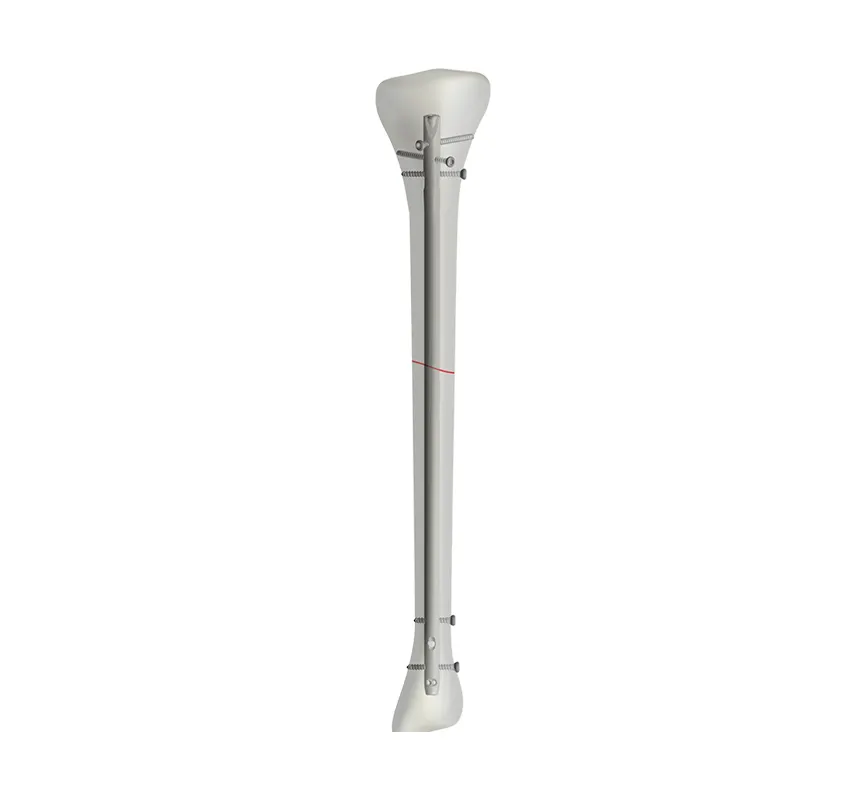
Standardizing Core Manufacturing Processes for Multi-Site Production
Material Specifications, Heat Treatment, and Surface Finish Harmonization
Getting consistent manufacturing results across different production sites starts with making sure all the material specs, heat treatment methods, and surface finishes are aligned properly. When it comes to those medial proximal tibia plates specifically, we need to stick strictly to the same ASTM F136 titanium alloy grade everywhere around the world. The trace elements such as iron content and oxygen levels have to stay within about plus or minus 0.05 percent tolerance range. For heat treatments, the furnace temperature needs to stay within five degrees Celsius and soaking time should not vary more than three minutes either side. This helps achieve the required tensile strength above 860 megapascals and at least ten percent elongation according to ISO standard 5832-3. Surface finish matters too - we aim for Ra values below 0.8 micrometers roughness through electropolishing which also acts as passivation layer against bacteria sticking to surfaces. Recent research from 2023 actually showed something pretty telling: places where these processes weren't properly harmonized had fracture rates going up by roughly twelve percent during those cyclic load tests. That really highlights how important it is for documentation systems between sites to check each batch against those master process parameters before anything leaves the factory floor.
Cross-Site Gage R&R and Measurement System Analysis (MSA)
Having a consistent Measurement System Analysis (MSA) setup matters a lot when checking if tibia plates match dimensions across all manufacturing sites worldwide. Most Gage R&R studies aim for no more than 10% variation in key measurements such as the positioning of locking screw holes (within 0.1 mm tolerance) and the radius of plate curves. Good practice involves doing calibration checks every three months between different locations using standard reference parts. Also important are automated coordinate measuring machine logs that feed into shared dashboards, plus statistical analysis looking at differences between operators and instruments through ANOVA methods. Any facility falling under 85% accuracy in their MSA needs fixes right away because even small dimensional errors can mess up how well these medical devices fit during surgery and affect their stability once implanted. The FDA has recently updated its guidelines stressing proper MSA procedures during product transfers for Class II orthopedic implants, aiming to stop problems caused by local variations when making products at multiple locations.
Robust Design Transfer and Process Validation Across Facilities
Structured Design Transfer Protocol with Traceability and Sign-Off Requirements
Having a solid design transfer process is key for making sure medial proximal tibia plates come out consistently across multiple manufacturing sites. The process takes all those design specs and turns them into actual manufacturing steps that can be followed on the factory floor, with complete records tracing back to where everything started in the design phase. Different departments need official approval at every major step along the way, from creating detailed work instructions to integrating risk assessments and verifying that staff has been properly trained. This method keeps implant specs exactly the same no matter which facility produces them. Recent research shows these tracking systems cut down on production errors by about 34 percent according to findings published last year in the Journal of Medical Device Regulation.
Bridging Studies and Site-Specific Validation per ISO 13485:2016
Standardized processes are helpful but not enough on their own. Facilities still need custom validation work done through what's called bridging studies. These studies basically check if products from old and new manufacturing locations match up when tested mechanically and analyzed for materials. When validating at specific sites, three main things need to be shown: materials should have similar properties according to ISO 5832 standards, performance needs to stay consistent during tests that mimic real body conditions, and parts must fit within tight size limits, usually plus or minus 0.1 mm. According to the ISO 13485:2016 guidelines, proper records should contain info about equipment checks, process capability numbers that hit at least 1.33 CpK, and details about how environments are controlled during production. Companies typically need to run these validations every two years, or whenever there's been a major change in how things are made, just to keep meeting regulations and ensuring patients get clinically equivalent products.
Real-Time Production Control and Deviation Management in Multi-Site Environments
Unified SPC Framework for CNC Machining Lines Across Geographies
The implementation of a central Statistical Process Control (SPC) system allows manufacturers to monitor the production of medial proximal tibia plates in real time across their global network of CNC machining facilities. With centralized dashboards, companies can keep tabs on key metrics like dimensional tolerances, surface finish quality, and tool condition indicators. These dashboards apply the same control standards and response procedures at every location. When something goes off track - whether it's tool bending issues or temperature related shifts - the system catches these problems almost instantly and sends out automatic warnings so corrections happen fast. According to recent data from Ponemon Institute (2023), plants that adopted this approach saw around 37% fewer unexpected shutdowns and about 29% less wasted material. That translates to roughly $740,000 saved each year per facility. The automated documentation features also make ISO 13485:2016 compliance checks much smoother since they provide detailed records across all locations. This becomes especially important when working with titanium alloys, where even small inconsistencies in screw hole placement can significantly impact how well the final product performs mechanically.
Equivalence Verification of Medial Proximal Tibia Plates Across Sites
Mechanical and Functional Equivalence Testing: Bending, Torsion, and Locking Screw Pull-Out
Establishing functional equivalence in multi-site production of medial proximal tibia plates requires rigorous mechanical validation. Three critical tests ensure consistent performance across global facilities:
- Bending stiffness tests, simulating physiological gait loads using identical force parameters (ASTM F382)
- Torsional rigidity assessments, quantifying resistance to rotational forces with ±5% variance permitted between sites
- Locking screw pull-out strength, verifying fixation integrity with maximum force tolerances aligned within 7% (ISO 6475:2019)
| Test Parameter | Method | Acceptance Criteria | Standard |
|---|---|---|---|
| Bending Stiffness | 4-point bend | ±8% variance between sites | ASTM F382-17 |
| Torsional Rigidity | Axial rotation at 2 Nm torque | ±5° angular displacement | ISO 9585:2021 |
| Screw Pull-Out Strength | 5mm/min displacement rate | ≥1800N retention force | ASTM F543-17 |
Cross-facility validation mandates identical fixturing, strain rates (±0.5 mm/min), and environmental controls (23°C ±1°C). Statistical equivalence (p 0.95) in these metrics confirms manufacturing consistency—eliminating site-dependent performance variations in orthopedic implants.
FAQ
Why is standardizing core manufacturing processes important for multi-site production?
Standardizing core manufacturing processes is crucial for ensuring consistent product quality and performance across different production sites. It helps minimize variations in material specifications, heat treatments, and surface finishes, leading to improved product reliability and safety.
What is the significance of Measurement System Analysis (MSA) in multi-site production?
Measurement System Analysis (MSA) ensures that measurements are consistent and accurate across all manufacturing sites. This is important for maintaining the dimensional accuracy of products, which directly impacts their fit and stability during use.
How do bridging studies contribute to multi-site production validation?
Bridging studies help validate that products manufactured at different locations meet the same quality and performance standards. They involve testing against material properties, performance in real body conditions, and size limits to ensure product equivalency.
What benefits are achieved through a unified SPC framework in CNC machining lines?
A unified Statistical Process Control (SPC) framework allows real-time monitoring of production processes globally. It leads to reduced unexpected shutdowns, decreased material waste, and significant cost savings while ensuring product consistency.
Table of Contents
- Standardizing Core Manufacturing Processes for Multi-Site Production
- Robust Design Transfer and Process Validation Across Facilities
- Real-Time Production Control and Deviation Management in Multi-Site Environments
- Equivalence Verification of Medial Proximal Tibia Plates Across Sites
-
FAQ
- Why is standardizing core manufacturing processes important for multi-site production?
- What is the significance of Measurement System Analysis (MSA) in multi-site production?
- How do bridging studies contribute to multi-site production validation?
- What benefits are achieved through a unified SPC framework in CNC machining lines?