 EN
EN
 FR
FR
 ES
ES
 AR
AR

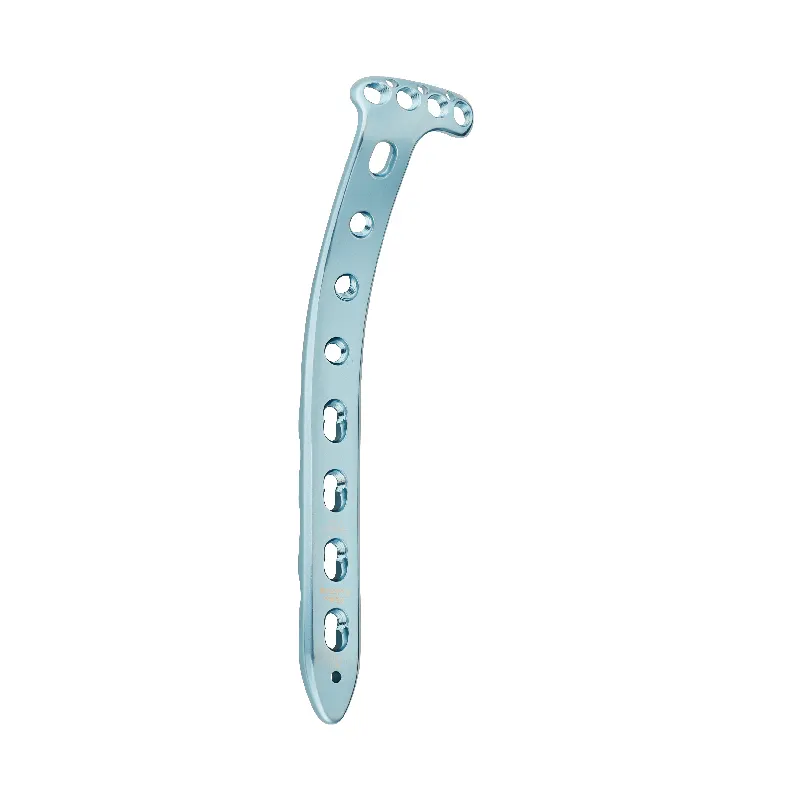
Understanding the Cost-Quality Imperative in Distal Humerus Plate Manufacturing
For patients recovering from orthopedic injuries, distal humerus plates need to be strong enough to support healing but not so expensive that hospitals struggle to afford them. Manufacturers walk a tightrope here trying to cut costs while still making implants that work properly. When companies try saving money by skimping on testing these devices, they end up paying much more later on. The Ponemon Institute reported back in 2023 that when implants fail and require replacement surgery, each case can cost over seven hundred forty thousand dollars. That makes investing in proper validation processes look like smart business despite higher upfront spending.
The application of value engineering helps tackle these challenges by looking at design choices and materials right from the start. Take DFM approaches for instance they can cut down on CNC machining time by around 15 to maybe even 30 percent when shapes are made simpler. And when working with titanium, getting better material yields means less waste overall. At the same time, implementing lean manufacturing methods makes heat treatment processes more standardized, which cuts down on expensive mistakes later on. The combination works well because it keeps the plates strong enough to withstand about 5,000 cycles according to ISO standards, all while keeping costs in check. So really, managing expenses doesn't have to come at the expense of structural strength these two goals actually work together pretty nicely in practice.
Design Optimization: DFM and Value Engineering for Cost Reduction and Distal Humerus Plate Quality
Simplifying geometry and standardizing features to cut CNC machining time and tooling costs
When manufacturers apply Design for Manufacturability (DFM) concepts to distal humerus plates, they often see a noticeable drop in production costs. Simplifying complex shapes by getting rid of unnecessary curves and making screw holes follow standard patterns can cut down on CNC machining time somewhere between 25% and 40%, according to recent industry data from 2023. With fewer tools needing to be swapped out during production runs, there's less wear on equipment and savings on labor too. Standardized parts mean companies don't have to keep so many specialty cutting tools in stock either. Through value engineering techniques, designers find those extra features that aren't really needed, like duplicate holes in certain areas, which can be trimmed back without affecting how well the implant works mechanically. What this all adds up to is manufacturing that runs smoother overall, gets products made quicker, saves money per unit produced, and still maintains good structural integrity in the final product.
Balancing titanium grade selection, wall thickness, and biomechanical validation to preserve quality
Finding the right balance between material costs and performance without compromising on clinical reliability is essential in medical device manufacturing. Take titanium grades for instance. Grade 5 has excellent strength properties but comes at around 30% higher price point compared to Grade 2. Smart design choices guided by computer modeling techniques let engineers keep Grade 5 in areas where stress levels are highest while using the cheaper Grade 2 elsewhere in the component. By carefully reducing wall thickness by approximately 0.2 to 0.5 millimeters across certain sections, manufacturers can maintain necessary strength requirements while significantly cutting down on material usage. This approach has been tested extensively according to international standards like ISO 6474-1 for fatigue resistance. When it comes to maximizing material efficiency, optimizing how sheets get cut plays a big role too. Computer simulations show that these modified designs still hold up to at least 95% of what they originally could handle. Such scientifically backed modifications help avoid costly product rework and potential recalls, ultimately saving money throughout the production lifecycle while still delivering devices that surgeons actually want to work with.
Process Efficiency: Lean Manufacturing and Material Yield Strategies
Reducing scrap rate and optimizing nesting in titanium sheet/plate stock cutting
Material waste remains one of the biggest costs when making distal humerus plates, and lean manufacturing approaches focus specifically on this issue. When manufacturers optimize how they nest parts on titanium sheets during cutting operations, they typically see about a 15 to 20 percent improvement in material yield according to industry standards from 2023. This makes a real difference in what companies spend on raw materials. The latest computer-aided manufacturing software looks at the actual shapes of these plates to cut down on wasted edges and leftover bits. At the same time, statistical process controls keep an eye on all those cutting parameters so problems get caught early before anything ends up as scrap metal. What this means is that each plate maintains its intended material characteristics throughout production runs. Manufacturers benefit from lower costs without sacrificing the structural integrity needed for medical applications.
Standardizing heat treatment and surface finishing protocols to ensure consistency and lower rework
About 30% of quality issues in trauma implants actually come down to variations during post processing according to recent research from the Journal of Orthopedic Manufacturing (2024). When manufacturers standardize their heat treatment processes, making sure they get temperature control right along with proper soak times and cooling rates, it really helps eliminate those pesky thermal stress problems that weaken the implant over time. And let's not forget about abrasive blasting either. Getting this right means consistent surface texture which is super important for how well the implant integrates with bone tissue and stands up against corrosion. The numbers speak for themselves too. These standardized methods cut down on rework by nearly half, around 45%, while ensuring all plates meet the strict ASTM F136 standards. For companies producing distal humerus plates specifically, this kind of process discipline translates into real money savings without sacrificing product quality.
Clinical-Manufacturing Alignment: Standardizing Based on Surgical Approach and Fixation Principles
Leveraging dominant approaches (lateral paratricipital, triceps-sparing) to rationalize contouring and hole-pattern families
When plate designs are standardized based on the most common surgical approaches like lateral paratricipital and triceps-sparing techniques, it actually makes manufacturing much more efficient without compromising how well they work biomechanically. Manufacturers who map out their plate shapes and hole placements according to these proven methods can simplify their CNC machining processes and avoid creating too many different design versions. A recent study found that grouping screw holes into just three or four main patterns that have been tested for biomechanical effectiveness reduces tool changes by about 40 percent and shortens CNC cycle times by roughly 25 percent according to research published in the Journal of Orthopaedic Translation back in 2023. Getting all these design elements aligned properly means each new version of the product still follows those fundamental principles.
- Validated load-distribution requirements
- Minimal contouring deviations from anatomical benchmarks
- Interchangeable screw-angulation options
Such strategic standardization minimizes rework risk without compromising construct stability; as streamlined designs inherently reduce tolerance stack-ups during finishing and improve intraoperative predictability.
FAQ
Why is it important to invest in proper validation processes for distal humerus plates?
Investing in proper validation processes is crucial because when implants fail and require replacement surgery, it can cost over seven hundred forty thousand dollars per case. Proper testing ensures reliability and avoids such costly situations.
How do DFM approaches help in reducing manufacturing costs?
DFM approaches help to simplify complex shapes and standardize features, effectively cutting down on CNC machining time by 25-40%, leading to reduced tooling costs and overall production expenses.
What are the benefits of balancing titanium grade selection in manufacturing?
By using higher-grade titanium in stress-heavy areas and cheaper grades elsewhere, manufacturers can cut costs while preserving the necessary structural and clinical reliability without compromising quality.
How do lean manufacturing techniques optimize material usage?
Lean manufacturing techniques improve material yield by optimizing nesting in titanium sheets, which reduces scrap rates and lowers overall raw material costs.
Why standardize heat treatment and surface finishing protocols?
Standardizing these protocols ensures consistency, reduces rework by half, and maintains necessary standards like ASTM F136, thus preserving implant quality without raising costs.
Table of Contents
- Understanding the Cost-Quality Imperative in Distal Humerus Plate Manufacturing
- Design Optimization: DFM and Value Engineering for Cost Reduction and Distal Humerus Plate Quality
- Process Efficiency: Lean Manufacturing and Material Yield Strategies
- Clinical-Manufacturing Alignment: Standardizing Based on Surgical Approach and Fixation Principles
-
FAQ
- Why is it important to invest in proper validation processes for distal humerus plates?
- How do DFM approaches help in reducing manufacturing costs?
- What are the benefits of balancing titanium grade selection in manufacturing?
- How do lean manufacturing techniques optimize material usage?
- Why standardize heat treatment and surface finishing protocols?