 EN
EN
 FR
FR
 ES
ES
 AR
AR

Regulatory Foundations for Validating Cleaning Instructions
AAMI ST98, ISO 17664, and FDA Guidance: Core Requirements for Reusable Orthopedic Devices
Getting cleaning instructions right for distal humerus plates means following those key regulatory guidelines pretty closely. The AAMI ST98 standard lays out how to validate reprocessing methods for these reusable implants, especially focusing on getting rid of soil from tricky spots like threaded holes where contaminants tend to hide. ISO 17664 basically tells manufacturers they need to give hospitals clear instructions that have been properly tested so everything works with standard sterilization processes. Meanwhile, the FDA has its own rules under 21 CFR 211.67 that push for scientifically backed cleaning validation. This means companies must document proof that their methods actually remove contaminants effectively. All these standards together set safety benchmarks for trauma devices. For example, there's a maximum allowable residue level of less than 1 microgram per square centimeter of protein left behind after cleaning. And this isn't just theoretical stuff either. Manufacturers who fail to meet these requirements are frequently mentioned in FDA warning letters. In fact, poor cleaning validation was one of the most common problems cited in warnings issued to orthopedic device makers last year alone.
Why AAMI TIR12:2020 and TIR30 Are Essential for Distal Humerus Plate Validation
The AAMI TIR12:2020 tackles those tough spots in reprocessing validation, especially when dealing with complex reusable orthopedic gear such as distal humerus plates. The document looks at how to validate designs around tricky areas where dirt and debris tend to stick around in hard to reach places. Then there's also AAMI TIR30 which gives detailed methods for measuring leftover proteins after cleaning processes. These methods actually match up pretty well with what the FDA expects regarding contamination controls. When healthcare facilities put both of these technical guides into practice together, they get solid guidelines for setting realistic standards about what counts as clean enough. Why does this matter? Well, recent studies from 2023 show that almost 4 out of every 10 sterilization problems with trauma implants come down to poor cleaning practices. So following both TIR12 and TIR30 makes sense if hospitals want consistent results in removing soil from their equipment and keeping different instruments from getting contaminated during reuse cycles.
Device-Specific Challenges in Validating Cleaning Instructions for Distal Humerus Plates
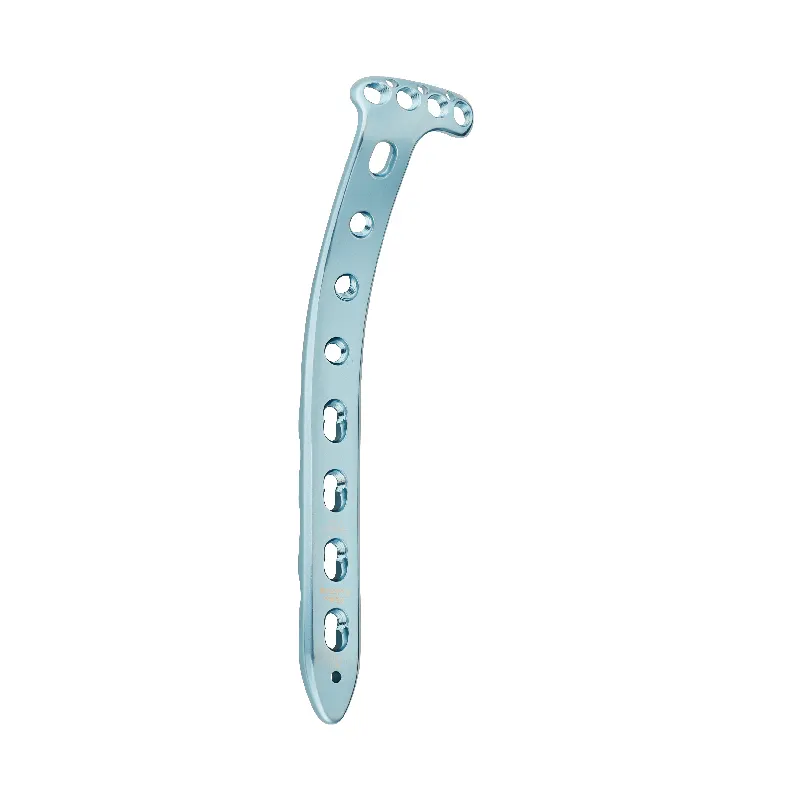
Reusable distal humerus plates present unique validation hurdles due to their intricate geometries. Unlike smooth-surfaced instruments, these orthopedic implants feature complex contours, including intersecting planes, narrow inter-arm gaps, and internal threaded interfaces, that demand tailored cleaning protocols to ensure patient safety.
Geometry-Driven Soil Retention: Crevices, Threaded Holes, and Subsurface Contours
Those tiny threaded screw holes and all those little surface grooves just love collecting biological soils in hard to reach spots. Research indicates that curved plate surfaces hold about 40 percent more leftover protein compared to flat ones because of how fluids behave when cleaning them. Getting into those super narrow spaces between plate arms is basically impossible for regular brushes since they're often under 1mm apart. When we run thermal cycles for sterilization, it actually sets the dirt deeper into those textured areas. That's why proper validation needs to test the really bad cases where soils stick around longest; following guidelines from AAMI TIR12:2020 standards makes sense here.
Lessons from Orthopedic Tray Studies on Residual Soil Distribution and Removal Efficacy
Executing a Robust, Science-Based Cleaning Validation Protocol
Simulated Soiling, Extraction, and Residual Protein Quantification per AAMI TIR30 and FDA Standards
The AAMI TIR30 standards along with FDA guidelines require medical device manufacturers to follow a specific three step process when validating cleaning procedures for those reusable distal humerus plates. Step one involves creating simulated soiling conditions that mimic the worst possible biological contamination scenarios we might encounter in actual surgical settings. Think things like albumin, hemoglobin buildup, and stubborn fibrin deposits accumulating in tricky spots such as threaded holes or complex subsurface contours where debris tends to hide. The second phase focuses on extracting samples from these hard to reach areas through either swabbing techniques or controlled rinsing methods. These sampling approaches need to be thoroughly tested themselves to ensure they accurately capture what's really present rather than missing key contaminants. Lastly comes the actual measurement phase where lab technicians quantify remaining protein levels using either spectrophotometry or fluorescence detection methods. They compare these results against established benchmark values that represent acceptable cleanliness levels based on extensive research data. Following this entire validation sequence not only satisfies regulatory requirements regarding effective soil removal but also creates a solid paper trail that can withstand scrutiny during audits or inspections down the road.
Defining Acceptable Residue Limits: Evidence-Based Thresholds for Trauma Implants (e.g., <1.0 µg/cm² protein)
Acceptable residue limits must derive from toxicological risk assessments, clinical data, and analytical performance—not arbitrary benchmarks. For trauma implants like distal humerus plates, peer-reviewed research supports a residual protein threshold of <1.0 µg/cm² as scientifically justifiable. This limit balances:
- Patient biocompatibility and inflammatory response risks
- Analytical method detection limits and reproducibility
- Worst-case soil retention observed in device crevices under validated cleaning conditions
Regular reassessment of this threshold, guided by evolving AAMI standards and real-world reprocessing data, ensures continued alignment with clinical safety expectations and regulatory requirements.
FAQ
What are the main guidelines for validating cleaning instructions for distal humerus plates?
The primary guidelines include AAMI ST98, ISO 17664, and FDA regulations, each setting criteria for validated cleaning processes.
Why are AAMI TIR12:2020 and TIR30 important for validation?
These provide methods for ensuring cleaning effectiveness and maintaining contamination controls, aligning with FDA expectations.
What is the significance of geometry in cleaning validations?
Complex geometries in distal humerus plates require tailored cleaning protocols due to unique soil retention challenges.
How are residue limits defined?
Residue limits are based on toxicological assessments, clinical data, and performance metrics, ensuring safety and regulatory compliance.