 EN
EN
 FR
FR
 ES
ES
 AR
AR

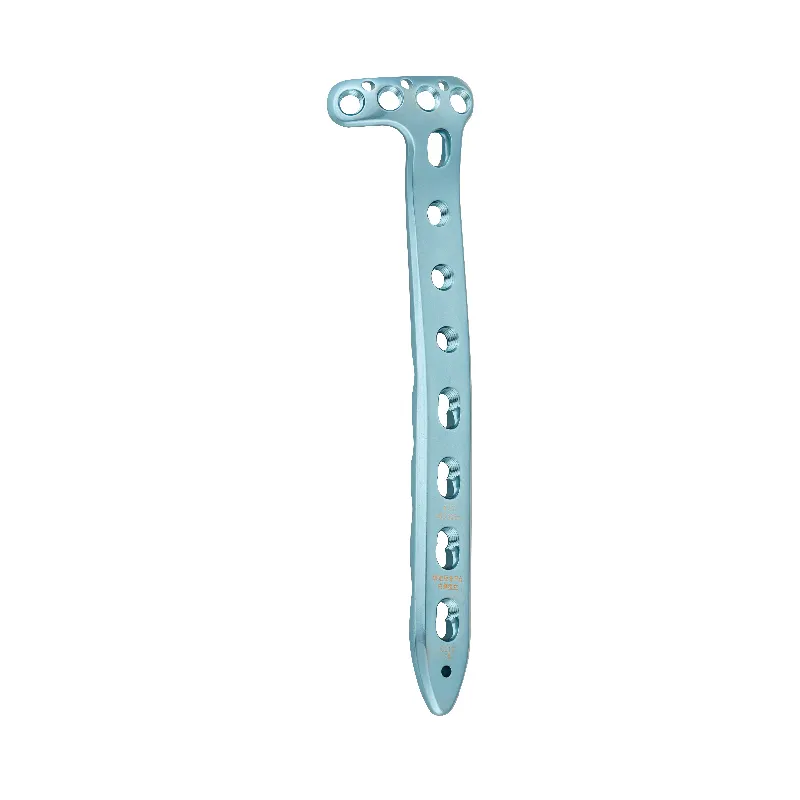
Biomechanical Stability Testing: Core Requirements for Regulatory Submission
Static and Dynamic Load Testing in Synthetic and Cadaveric Bone Models
To properly validate the biomechanics of these coated proximal humerus plates, researchers need to conduct both static and dynamic load testing on two different types of samples: synthetic polyurethane foam and actual human cadaveric specimens. When looking at static tests, they apply axial compression forces until reaching peak loads of around 2,500 Newtons to see how much the implants deform. For dynamic testing, they subject the plates to at least 10,000 cycles at 2 Hz frequency, which mimics what happens during normal body movement. The cadaveric models are particularly valuable because they account for real biological variations. Recent research from the Journal of Orthopaedic Research (2023) actually found that osteoporotic bones can withstand about 15 to 20 percent more force before failing compared to their synthetic counterparts. Using this combination approach meets both FDA standards and ISO 16087 guidelines since it shows consistent results across different bone densities. Synthetic models allow scientists to control variables and run parameter studies systematically, whereas testing on cadavers confirms whether the plates fit properly in real anatomy and maintain stability against twisting forces. Companies developing these medical devices need to keep detailed records of when materials start to yield, their stiffness measurements, and exactly how they fail. All this data forms the foundation for submitting regulatory approval applications.
Cyclic Cut-Out Failure Assessment Under Physiological Loading Conditions
Preventing cut-outs remains an important measure of implant stability that needs special testing procedures mimicking the natural movement of shoulders when they move away from and back toward the body. The standard test involves applying gradually increasing pressure similar to what happens during normal daily activities, typically around 3 to 5 Newton meters of force at a frequency between once and twice per second for about 100 thousand cycles. This kind of repeated stress is roughly equivalent to what someone might experience over five years after getting their implant. To track how well screws stay put during these tests, researchers use digital imaging techniques. Failure occurs when the screws move more than 5 millimeters or when the whole plate pulls off completely. Studies published last year showed that implants coated with hydroxyapatite had about 40 percent fewer problems with cut-outs compared to regular implants when tested on models simulating weak bones. These kinds of assessments help manufacturers meet medical device regulations because they show how long coatings last while maintaining proper hold under constant sideways forces, something measured through various parameters like how much weight can be applied before breaking and where exactly stress builds up across the implant.
Coating-Specific Stability Validation: Adhesion, Durability, and Environmental Resistance
Coating Adhesion Testing per ASTM F1160 and ISO 13779-2
The strength at which coatings stick to implants plays a critical role in how well these devices perform over time. Testing needs to follow specific guidelines like ASTM F1160 and ISO 13779-2 standards. According to these rules, laboratories conduct what's called pull-off tests to measure exactly how much force it takes before a coating comes loose from the metal base. Most regulatory agencies want to see numbers above 3 MPa as a baseline for acceptable adhesion. When surfaces aren't properly prepared or when coatings don't apply evenly across the surface, this can lead to problems during testing. We've seen cases where weak bonding causes coatings to peel off under normal body stresses, which might affect how fractures heal properly. Looking beyond simple yes/no results makes sense too. Understanding how actual test data relates to real world function helps engineers design better implants that work as intended in patients' bodies.
Accelerated Aging and Shelf-Life Stability Under Humidity/Temperature Stress
When we want to see how coatings hold up over time, accelerated aging tests can simulate anywhere from 5 to 10 years worth of environmental stress in just a few weeks. These tests follow standard procedures involving things like humidity cycling where samples are exposed to 85% relative humidity at 85 degrees Celsius, plus thermal shock testing that mimics what happens during actual storage and transportation. What researchers look for includes things like cracks forming, changes in color, and how well the coating resists corrosion over time. Studies indicate that if a coating keeps more than 95% of its original stickiness after these tests, it generally performs reliably when used in real world situations. To figure out how long products will last on shelves, manufacturers run ongoing stability checks at regular intervals. This helps ensure that coated plates continue meeting ISO 10993 standards for biocompatibility right up until the expiration date printed on packaging.
Computational—Experimental Correlation: Validating Implant Fixation Stability
Finite Element Analysis of Coating—Bone Interface Under Calcar-Loading and Varus Collapse Scenarios
FEA helps predict how stress spreads across the coating-bone interface when facing risky situations like calcar loading or varus collapse. When we model differences in bone density and the way forces actually work in real bodies, FEA spots areas where coatings might peel off and compromise the implant's hold, especially in weaker bones typical of osteoporosis patients. The simulation results show that adjusting screw paths can cut down on stress around implants by roughly 37% compared to regular setups, which means fewer instances of screws cutting through bone tissue. Using virtual tests speeds up product development and cuts down on expensive physical prototypes by about two thirds. This makes it easier to check if coated implants will stay stable over time, though engineers need to make sure computer models match what happens in lab tests before trusting them completely.
Micromotion Thresholds and Strain Distribution Validation Against In Vitro Data
To make sure computational predictions actually work in practice, they need to be checked against real world data from lab tests on micromotion and strain. Studies show that if there's more than about 150 micrometers of movement at the implant interface, it tends to stop proper bone integration and instead causes fibrous tissue buildup around the implant. For finite element analysis models to be useful, they generally need to stay within about 10 percent difference compared to actual physical tests looking at how strain spreads across different axes. When simulating progressive varus deformations, these models start showing real value when the strain around screws stays under roughly 7,000 microstrains. That level seems to correspond with very little bone loss over time. Getting an R squared value above 0.85 between computer simulations and real test data is pretty much the gold standard for proving that a model has clinical significance. It also meets the necessary standards set out in ISO 13485 for properly validated modeling software.
Regulatory Alignment: Mapping Stability Studies to FDA, MDR, and ISO 14155 Requirements
Getting coated proximal humerus plates approved requires navigating several important regulatory systems at once. Three main frameworks stand out as critical: the FDA in the United States, the EU Medical Device Regulation (MDR), and international standard ISO 14155. When it comes to FDA approval, manufacturers face decisions about risk classification through either 510(k) or PMA pathways. They also need solid evidence showing how these devices perform under actual body conditions, plus ongoing monitoring to see if coatings hold up over time. The European regulations take things further by demanding more detailed clinical evaluations. Specific standards like ASTM F1160 and ISO 13779-2 become essential when proving that coatings stick properly to surfaces. There's also a requirement to test how products age before they hit shelves. ISO 14155 deals specifically with clinical research methods, insisting on strong connections between computer models and real world tests, particularly regarding tiny movements and stress limits within different stability zones. Putting together standards such as ISO 10993 for safety testing and ISO 16087 for mechanical performance helps companies submit their products worldwide without repeating the same tests over and over again.
- Key alignment strategies include:
- Mapping cyclic cut-out failure data to MDR Annex XV risk documentation
- Correlating finite element analysis outputs with FDA’s guidance on computational modeling
- Applying ISO 10993-accelerated aging protocols for shelf-life validation
Common pitfalls involve duplicative documentation—particularly for coating adhesion durability and clinical data summaries. A unified, standards-based approach reduces approval timelines by up to 30%, according to industry benchmarks (MedTech Strategic Review, 2023).
FAQ Section
-
What is static and dynamic load testing in biomechanical stability testing?
Static load testing involves applying axial compression forces to test maximum load resistance, while dynamic load testing mimics body movement stress through cyclic testing.
-
Why is coating adhesion important in implant testing?
Proper coating adhesion ensures implants perform reliably under body stress, reducing the risk of coating peeling and implant failure.
-
How does regulatory alignment affect medical device approval?
Regulatory alignment ensures compliance with various standards like FDA, MDR, and ISO, speeding up the approval process and ensuring device safety and effectiveness.
-
What role does finite element analysis play in implant stability validation?
FEA predicts stress distribution in coatings and helps adjust implant designs to mitigate stress and improve stability, based on computational modeling results.
Table of Contents
- Biomechanical Stability Testing: Core Requirements for Regulatory Submission
- Coating-Specific Stability Validation: Adhesion, Durability, and Environmental Resistance
- Computational—Experimental Correlation: Validating Implant Fixation Stability
- Regulatory Alignment: Mapping Stability Studies to FDA, MDR, and ISO 14155 Requirements