TPLO vs TTA: Choosing an Implant for Cranial Cruciate Disease
Cranial cruciate ligament (CCL) disease is one of the most common causes of pelvic-limb lameness in dogs. Two widely used surgical strategies — tibial plateau leveling osteotomy (TPLO) and tibial tuberosity advancement (TTA) — both neutralize cranial tibial thrust, but they change joint mechanics differently and they pull different implant families from your inventory. This article compares indications, stocking implications and recovery expectations for buyers and surgical teams evaluating which systems to keep on the shelf.
Clinical disclaimer
Procedure choice is case-specific and must be made by the attending veterinary surgeon. The notes below summarize common teaching points and inventory implications; they are not outcome guarantees and do not replace peer-reviewed literature, training courses or product instructions for use.
How the Two Osteotomies Differ Mechanically
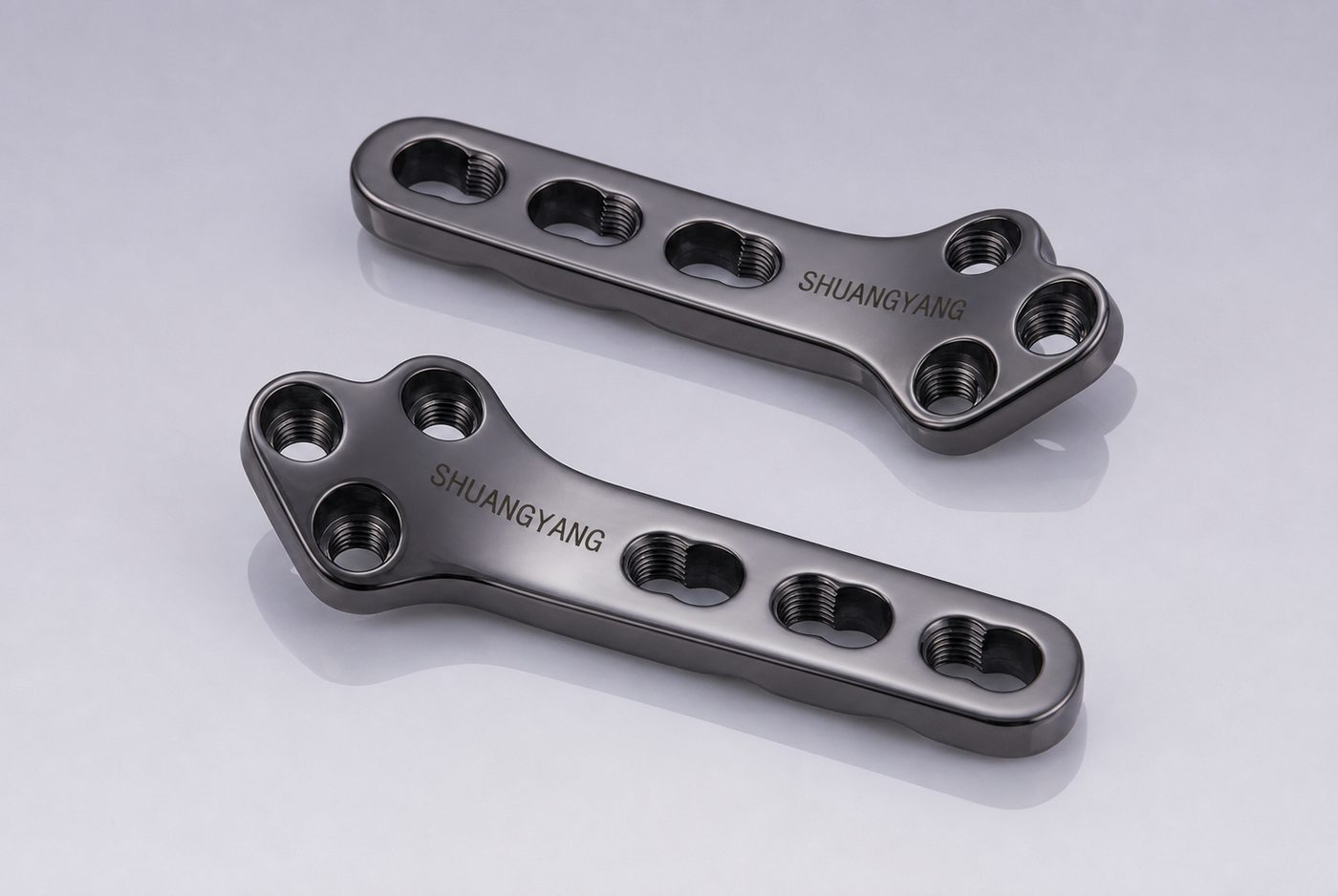
TPLO rotates the tibial plateau to reduce the plateau angle, so femorotibial shear during weight-bearing is less dependent on an intact CCL. Fixation is typically a contour-specific locking plate on the medial proximal tibia — including I-type head-lock systems and rod-lock constructs.
TTA advances the tibial tuberosity so that the patellar tendon force is oriented to counteract cranial tibial thrust. Fixation relies on a cage (or equivalent spacer), fork/plate or dedicated TTA implant set, plus secure osteotomy healing at the crest.
Both aim for a stable, pain-reduced stifle; neither recreates the native ligament. Concurrent meniscal injury, conformation, age and owner compliance influence which pathway a surgeon prefers.
Indications and Case-Selection Themes
| Theme | TPLO — typical discussion points | TTA — typical discussion points |
|---|---|---|
| Patient size | Broad published use from small to giant breeds when a matching plate size exists | Often discussed for dogs in which crest advancement and cage sizing fit the anatomy |
| Plateau angle / conformation | Directly addresses high tibial plateau angle via leveling | Addresses thrust via tuberosity advancement geometry rather than leveling the plateau |
| Surgeon / training factors | Requires comfort with radial saw cuts, rotation and TPLO-specific plating | Requires comfort with crest osteotomy, cage seating and TTA-specific fixation |
| Revision / complexity | Large published experience base; implant removal or revision follows plate/screw pathways | Revision pathways differ when cages and crest fixation are involved |
Table 1 — High-level comparison themes for clinic discussion. Individual case selection remains with the surgeon.
Implant Inventory: What You Actually Need to Stock
TPLO ladder
A functional TPLO tray is a size matrix, not a single plate. Shuangyang’s published orthopedic pages include:
- TPLO 2.0 Plate — toy / small breeds
- TPLO 2.4 Plate and the 2.0/2.4 TPLO locking compression plate set
- TPLO 2.7 Plate — medium breeds
- TPLO 3.5 Plate and TPLO III universal plate — larger patients
Rod-lock designs add an internal locking rod to resist toggle during early loading — see Why surgeons choose rod-lock TPLO plates and the broader Veterinary TPLO Locking Plate System article. Left/right and size (#) variants should be planned so emergency CCL cases do not stall on a missing laterality.
TTA ladder
TTA stocking centres on cage/advancement sizes and the matching fixation set rather than a TPLO-style proximal tibial plate curve. On this site, related product pages include TTAⅠ and TTA Ⅲ. Confirm cage sizes, forks/plates and instrumentation against your surgeon’s preference card before the first PO.
Shared tray items
- Oscillating saw blades / TPLO or TTA jigs as taught in your training pathway
- Depth gauges, drill sleeves and colour-coded screws matched to each system
- Meniscal probes and fine instruments — meniscal work is common regardless of osteotomy choice
Explore the category hub: Orthopedic Implants. Catalog breadth across Shuangyang’s veterinary lines is described as 150+ SKUs, produced under ISO 9001 & ISO 13485.
Recovery Expectations (Owner-Communication Level)
Both TPLO and TTA typically involve restricted activity for several weeks, staged leash walks, and follow-up radiographs to confirm osteotomy healing before unrestricted play. Exact timelines vary by dog, osteotomy stability and clinic protocol. From a procurement angle, the implant’s job is to hold correction while bone consolidates — which is why locking purchase, correct size and complete instrumentation matter as much as the brand name on the box.
- Early phase — incision care, controlled weight-bearing, prevention of implant overload from running/jumping
- Mid phase — progressive physiotherapy as cleared by the clinician
- Late phase — return to activity only after radiographic and clinical clearance
Choosing What to Stock First
- Ask which procedure your surgeons actually book weekly — stock that ladder deeply before adding a second osteotomy family.
- Map your regional breed mix to TPLO sizes (2.0→3.5) or TTA cage sizes; avoid “one medium plate” gaps.
- Keep IFUs, sterilization instructions and tray photos with the set for locum surgeons.
- When evaluating suppliers, verify QMS documentation — see How to evaluate a veterinary implant supplier.
For a wider primer on implant roles in small-animal surgery, read veterinary orthopedic implants overview. For weight-banded fracture plating outside CCL work, see the companion draft bone plate sizing by dog weight.
Building a TPLO or TTA tray?
Share your target breed/weight mix and preferred technique — we can suggest a starter size matrix, lead time and MOQ for TPLO and TTA implants.
Request a Quote