 EN
EN
 FR
FR
 ES
ES
 AR
AR

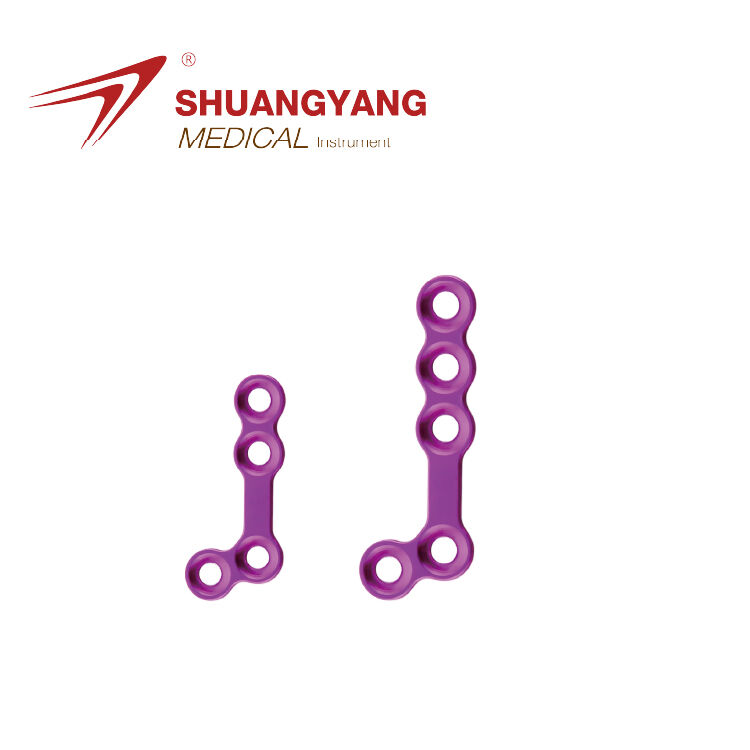
Defining Patient-Specific 3D-Printed Implants and Regulatory Classification
What distinguishes patient-specific from off-the-shelf mandibular implants?
Custom made 3D printed mandibular plates start with CT scans and detailed anatomical models that create exact matches for each person's unique bone shape. This means surgeons don't have to make those last minute adjustments during surgery that come with standard implants from the shelf. The benefit? Less time spent operating and fewer complications because there's no need for all that manual bending during the actual procedure. When we look at traditional options versus these custom designs, studies show something pretty impressive happening. Biomechanical forces get distributed better across the jaw area, and according to research published in Journal of Craniofacial Surgery last year, doctors end up making between 40 to 60 percent fewer adjustments while working on patients who receive these personalized plates.
Regulatory classification of 3D-printed titanium plates under FDA and EU MDR
Patient-specific mandibular plates fall into Class II according to FDA regulations, which means they need 510(k) clearance before going to market. Things get trickier in Europe though, where the MDR puts these same devices in Class III under Rule 11 because they're permanently implanted and made through additive manufacturing techniques. The Europeans have taken a much tougher stance here, showing real concern about how well these titanium implants will hold up over time and whether the materials stay stable after being printed layer by layer. What's interesting is that both regulatory bodies want complete tracking of all digital design work and exact production settings too. This creates some serious paperwork headaches for companies trying to get their products approved across different markets, especially when dealing with complex 3D printing processes that generate massive amounts of data needing proper documentation.
Global regulatory landscape: Key differences in classifying custom craniofacial devices
The way regulations work differs quite a bit across different countries. For instance, Japan's PMDA requires full clinical trials for every single patient-specific cranial implant they approve. On the flip side, Australia's TGA takes a different approach altogether, allowing exemptions when manufacturers produce small numbers of custom devices. Then there's Brazil where ANVISA has created something in between these extremes. They ask for CAD validation reports as part of the approval process, but skip over biomechanical testing requirements for facial plates that don't need to bear weight. These differences create real headaches for companies trying to get their products approved internationally. Trying to align design validation methods and figure out what kind of monitoring needs to happen after market release becomes especially tricky when dealing with 3D printed mandibular plates that fall into multiple regulatory categories at once.
FDA 510(k) Clearance Pathway for 3D-Printed Mandibular Plates
Demonstrating Substantial Equivalence for Patient-Matched Mandibular Prostheses
Getting FDA 510(k) approval for these things means showing that 3D printed titanium jaw plates work just as well as existing products on the market. This involves doing all sorts of tests looking at how they behave mechanically and checking if they actually fit properly when placed in someone's mouth. Standard off-the-shelf implants don't need this kind of detailed analysis, but custom made ones do. Manufacturers have to prove their design fits within about half a millimeter tolerance and can withstand millions of pressure changes before breaking down. Recent research published in the Journal of Oral Implantology back in 2023 showed something interesting too. About six out of ten applications included computer models to check how stresses spread across the implant material, making sure nothing breaks unexpectedly during normal use.
Design Validation Challenges in Meeting FDA Requirements for Additively Manufactured Implants
Additive manufacturing introduces unique regulatory challenges related to powder quality control and layer fusion integrity. FDA reviewers now require:
- Traceability of titanium alloy (Grade 23 Ti-6Al-4V) powder lots
- Micro-CT scanning confirming <0.1% internal porosity
- Post-processing validation ensuring surface roughness <5 Ra μm
Recent FDA guidance (May 2024) also emphasizes computational fluid dynamics simulations to predict bone-implant interface performanceâa requirement that delayed 34% of submissions in Q1 2024.
Case Study: First FDA-Cleared 3D-Printed Titanium Plate for Mandibular Reconstruction
The 2023 FDA clearance of a patient-specific mandibular reconstruction system marked a milestone in integrating AI-based defect analysis with laser powder bed fusion manufacturing. Post-market data from 87 patients demonstrated significant improvements over conventional plates:
| Metric | 3D-Printed Plate | Conventional Plate |
|---|---|---|
| Surgical Time | 2.7 hrs | 3.9 hrs |
| Plate Adjustments | 0.3 per case | 2.1 per case |
| 6-Month Success | 94% | 82% |
This approval involved 18 months of design refinement and has since set a benchmark for incorporating topology optimization into future regulatory submissions.
CE Marking and Compliance with EU Medical Device Regulation (MDR)
Conformity Assessment Routes for Custom-Made 3D-Printed Craniofacial Implants
The EU Medical Device Regulation places custom 3D printed mandibular plates somewhere between Class IIa and III classification, based largely on how complex the anatomy is and whether they need to bear weight. Companies have options when it comes to compliance pathways - either go with Annex IX which covers full quality assurance or opt for Annex XI focused on product verification. For those in the highest risk category (Class III), getting approval means working closely with a Notified Body throughout both clinical evaluations and design reviews. Most manufacturers actually choose Annex XI for these personalized craniofacial implants since around three out of four cases end up there anyway. This approach puts greater emphasis on tracking materials used and doing proper risk assessments tailored specifically to each patient rather than just following standard protocols meant for mass produced items.
Role of Notified Bodies in Auditing Quality Management Systems for Medical 3D Printing
The Notified Bodies conduct thorough audits of quality management system components that are essential for additive manufacturing processes. They pay special attention to design controls as outlined in ISO 13485:2016, specifically section 7.3, along with validation procedures after processing. When it comes to titanium implants, the auditing teams tend to zero in on two main areas: how well characterized the powder material is and what orientation was used during building. These aspects have a real impact on how resistant the final product will be to fatigue over time. Looking at recent data from MedTech Europe's 2024 report, around 62 percent of all audit issues found relate to missing or incomplete records regarding process validation for electron beam melting workflows. This highlights a significant problem area within the industry that needs addressing.
Special Considerations for "Custom-Made" Devices Under Article 9 of EU MDR
Article 9 allows exemption from full conformity assessments for patient-specific mandibular plates provided that:
- Anatomical uniqueness is documented via CT-based reconstructions
- Annual batch reviews track all custom devices produced
- Enhanced post-market surveillance monitors long-term biomechanical outcomes
Per MDCG 2021-3 guidelines, manufacturers must maintain 10-year traceability for every implantâa crucial consideration for revision surgeries in mandibular reconstruction.
Design Validation, Clinical Evidence, and Quality Assurance Standards
Biomechanical Testing and Computational Modeling for Regulatory Approval
Getting solid biomechanical validation done right is really important if companies want to meet those tough FDA and EU MDR requirements. Most top manufacturers these days run their products through fatigue tests that simulate what happens after about ten years of chewing motions, while also using something called finite element analysis (FEA) to figure out where stresses might build up. According to research published last year in the Journal of Medical Device Regulation, plates that went through this kind of computational checking had 32 percent fewer failures in actual clinical settings than regular implants that weren't tested this way. And speaking of standards, the latest ISO 13485 guidelines actually require looking at pore structures in lattice designs too, because getting good bone integration remains critical for long term success.
Generating Clinical Data to Support Submissions for Patient-Specific Implants
Real world evidence has become a major focus for regulatory bodies lately. Take the FDA for instance - they generally ask for at least 12 months worth of follow up data from around 50 patients before granting approval these days. Looking back at past studies, there's pretty compelling data showing that when surgeons use digital planning tools along with CT scans after operations, the success rate jumps to about 89%. But here's where things get tricky according to the latest MDIC audits from 2024. Nearly half (that's 41%) of all submissions actually get rejected right off the bat because companies didn't properly document their design changes throughout development. This highlights a real gap between what regulators want to see and what manufacturers are currently providing in their applications.
Trend: Digital Twins and Simulation in Design Verification
Manufacturers who are pushing boundaries have started employing digital twins tailored for individual patients to test how teeth withstand forces during chewing, sometimes reaching pressures as high as 725 Newtons, while also predicting changes in jawbone structure before actual surgery takes place. A small study involving twenty patients showed promising results too - surgeons made about half as many adjustments during operations compared to traditional methods. The European Union's regulatory authorities are beginning to take notice, accepting computer simulations as additional proof when assessing medical devices according to rules outlined in Annex VII of the Medical Device Regulation (MDR). This marks a shift towards greater acceptance of virtual testing methods within official guidelines.
Ensuring Compliance With ISO 13485 and Material Standards
Medical 3D printing facilities must implement quality management systems aligned with ISO 13485, covering:
- Traceability of titanium powder batches per ASTM F3001
- Surface roughness validation (<32 Ra μm required)
- Sterilization cycle documentation following AAMI TIR42 guidelines
A 2024 benchmark revealed that manufacturers with ISO 13485-certified additive workflows achieved 94% first-pass regulatory approval rates, compared to 67% among non-certified peers.
Frequently Asked Questions (FAQ)
What is the main advantage of patient-specific 3D-printed mandibular implants?
The main advantage is their custom fit which reduces surgical time and complications due to manual adjustments. These implants distribute biomechanical forces better across the jaw area.
How are 3D-printed mandibular plates classified by the FDA and EU?
In the U.S., they fall under Class II devices, needing 510(k) clearance. In Europe, they are classified as Class III due to their permanent implant nature and manufacturing method.
What challenges do manufacturers face in getting FDA and EU approval?
Manufacturers need rigorous testing to demonstrate substantial equivalence and must ensure traceability, porosity, and surface roughness. Regulatory bodies demand comprehensive documentation and clinical data.
How do different countries classify custom craniofacial devices?
Regulations vary widely. Japan requires full clinical trials for each implant. Australia allows exemptions for small production batches, while Brazil has intermediate requirements such as CAD validation reports.
What role do Notified Bodies play in the approval process?
They audit quality management systems and focus on powder material characterization and build orientation to ensure final product resistance to fatigue.
Table of Contents
- Defining Patient-Specific 3D-Printed Implants and Regulatory Classification
- FDA 510(k) Clearance Pathway for 3D-Printed Mandibular Plates
-
CE Marking and Compliance with EU Medical Device Regulation (MDR)
- Conformity Assessment Routes for Custom-Made 3D-Printed Craniofacial Implants
- Role of Notified Bodies in Auditing Quality Management Systems for Medical 3D Printing
- Special Considerations for "Custom-Made" Devices Under Article 9 of EU MDR
- Design Validation, Clinical Evidence, and Quality Assurance Standards
-
Frequently Asked Questions (FAQ)
- What is the main advantage of patient-specific 3D-printed mandibular implants?
- How are 3D-printed mandibular plates classified by the FDA and EU?
- What challenges do manufacturers face in getting FDA and EU approval?
- How do different countries classify custom craniofacial devices?
- What role do Notified Bodies play in the approval process?