 EN
EN
 FR
FR
 ES
ES
 AR
AR

Regulatory Foundations: How FDA Risk Classification Defines Class II vs Class III Cervical Spine Fusion Devices
The Risk-Based Framework: Why Cervical Fusion Devices Fall into Class II or Class III
Medical devices get grouped by the FDA according to their risk level, divided into three main categories. The first category includes things like bandages that pose minimal danger to patients. Categories two and three handle devices that present greater risks, often involving implantation inside the body. When it comes to cervical spine fusion devices, most land in either category two or three. These particular implants stay in contact with vital parts of the spine for extended periods. They play a crucial role in maintaining spinal stability while affecting nerve function as well. There's also the real possibility that these devices might fail or cause problems down the road, sometimes necessitating additional surgical interventions later on.
For Class II medical devices, there are moderate risks involved which get handled via specific control measures. These include things like performance tests, proper labeling guidelines, and keeping an eye on how these products perform after they hit the market. Then we have Class III devices at the other end of the spectrum. These ones carry the biggest risks because either they keep people alive in critical situations or they contain new tech that hasn't been around long enough to prove itself safe over time. The whole classification setup works pretty well actually. Regulators can focus their attention where it matters most based on what kind of danger each device might present to patients. Makes sense really when thinking about balancing innovation with patient safety concerns.
Key Determinants: Intended Use, Implant Permanence, and Anatomical Impact
Three interrelated factors primarily determine whether a cervical fusion device receives Class II or III designation:
- Intended Use: Devices used to reconstruct unstable spinal segments after trauma or tumor resection often escalate to Class III due to the heightened consequences of failure—including paralysis or respiratory compromise.
- Implant Permanence: Non-removable, lifelong implants (e.g., integrated cage-plate systems or motion-preserving artificial discs) typically qualify as Class III. Their permanent presence increases long-term risks of infection, subsidence, or immune-mediated rejection.
- Anatomical Impact: Implants placed near the spinal cord, vertebral arteries, or brainstem face Class III classification. A mechanical breach or migration in these zones could result in irreversible neurological injury or hemorrhage.
For example, a temporary cervical trial spacer may be Class II, while a permanent artificial disc with dynamic articulation is Class III. These criteria ensure high-risk innovations undergo rigorous clinical validation before market entry.
Pre-Market Pathways: Contrasting 510(k) Clearance for Class II vs PMA Requirements for Class III
510(k) for Class II Devices: Demonstrating Substantial Equivalence and Its Clinical Limitations
Most Class II cervical spine fusion devices like standard titanium or PEEK interbody cages along with some anterior fixation systems usually make their way into the U.S. market through what's called the 510(k) pathway. For this approval route, companies need to show these new products are substantially equivalent to something already on the market. They have to match up in how they're meant to be used, what technology they employ, and their overall safety record. The process is pretty quick by regulatory standards, often taking around three months for FDA review. But there's a catch here because it depends mostly on old data instead of fresh clinical trials. Sometimes small changes in how these devices work biomechanically might slip through unnoticed. Think about things like different ways weight gets distributed across vertebrae or variations in surface texture. Long term results for complicated neck structures tend to be guessed at rather than actually tested over time. Sure, getting products to patients faster is good, but we end up knowing surprisingly little about how well they hold up in real life situations or if they cause uncommon problems down the road.
PMA for Class III Devices: The Necessity of Robust Clinical Trials and Long-Term Safety Data
Class III cervical fusion implants usually require Premarket Approval (PMA) when they contain new biomaterials, have parts that stay in the body permanently, or involve major surgery. This is different from the 510(k) pathway because PMA needs actual clinical trials that are planned ahead of time with specific goals. These trials typically need at least two years of follow-up showing both safety and effectiveness across a range of patients. When submitting for approval, companies must provide all sorts of detailed evidence including tests on how the implant handles normal body forces, biocompatibility studies following ISO standards, and results from multiple centers where doctors report any bad events properly. The whole process takes a lot of work since each submission often requires tracking more than 1,200 patient years worth of data. While this creates real hurdles for developers, it does give regulators much greater assurance about devices that directly impact spine stability and protect nerves. Essentially, PMA changes how manufacturers approach regulation by focusing on reducing risks from scratch rather than just proving similarity to existing products.
Design and Clinical Implications: How Device Architecture Drives Class II vs Class III Classification
Interbody Cages, Anterior Plates, and Fixation Systems: Anatomy of Risk Escalation
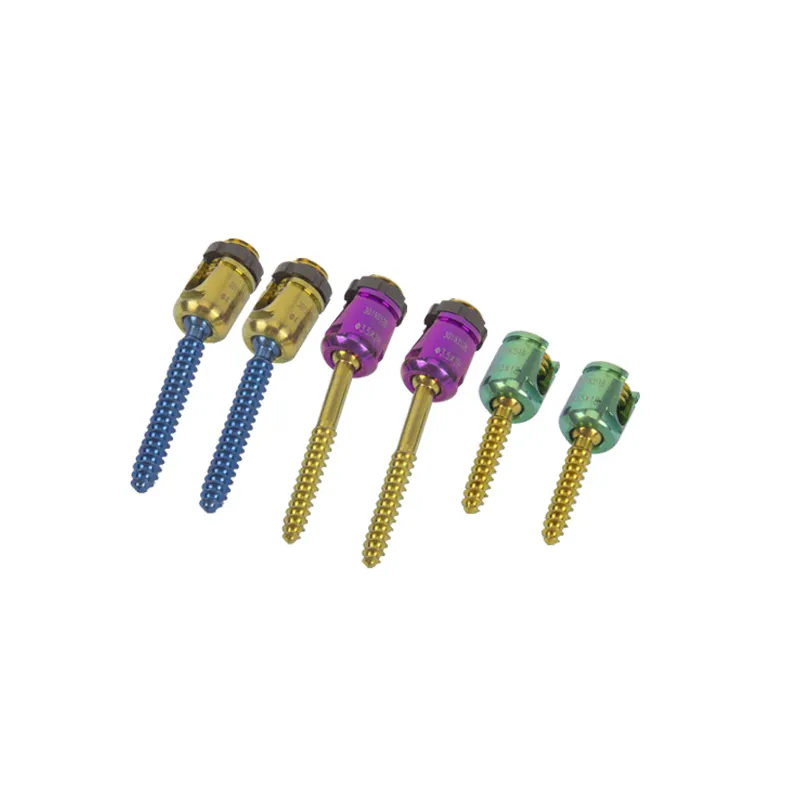
The way medical devices are physically designed plays a big role in how the FDA classifies them. Most standard interbody cages for single level ACDF procedures typically fall under Class II status when they're made from established materials like PEEK or machined titanium and go through the 510(k) clearance process. Things get trickier though when these cages are paired with anterior plates, especially when screws actually reach into the vertebrae at multiple levels, or when they connect to posterior fixation systems. Pedicle screw based implants tend to land squarely in Class III territory because they sit so close to sensitive nerve structures and involve complex biomechanics when transferring loads between moving spinal segments. A recent study published in the Journal of Spine Surgery back in 2023 found that around 78% of these multi part spinal fusion systems need full PMA approval from the FDA. This shows just how much extra oversight comes with combining different components in spinal surgery devices.
Novel Biomaterials, Permanent Implantation, and Surgical Invasiveness as Class III Triggers
Three design-related features routinely elevate cervical implants to Class III:
- Novel Biomaterials: 3D-printed porous titanium lattices, bioresorbable polymers, or growth factor-eluting scaffolds lack long-term clinical track records and require full PMA evaluation to assess degradation kinetics, inflammatory response, and osseointegration fidelity.
- Permanent Implantation: Devices designed for lifelong residence—such as integrated cage-plate units or total disc replacements—are automatically classified as Class III. Their failure could necessitate complex revision surgery with elevated risks of neurological injury or vascular compromise.
- Surgical Invasiveness: Procedures requiring extensive soft-tissue dissection, multi-level exposure, or combined anterior-posterior approaches increase complication rates by up to 40%, per The Spine Journal (2023). Such technical demands heighten reliance on device reliability—justifying the highest level of premarket evidence.
These triggers collectively ensure that innovation in cervical spine fusion aligns with robust safety validation—not just theoretical promise.
Real-World Classification in Practice: FDA Decisions on Common Cervical Fusion Implants
The way the FDA classifies medical devices shows pretty consistent application of risk assessment principles across actual products on the market. Most interbody cages for ACDF surgeries end up in Class II when they use materials and shapes that are already well known, plus they show they're substantially equivalent to existing devices via the 510(k) process. Things get different though for devices that include stuff like resorbable polymers, those special coatings that encourage bone growth, or these complicated composite structures. These tend to land in Class III because there's still so much unknown about how they interact with the body over time and what happens when they start breaking down mechanically.
Multi level posterior fixation systems, those with screw rod constructs covering three or more vertebrae, fall squarely into Class III category across the board. These devices stay inside the body permanently, sit dangerously close to the spinal cord, and require exact biomechanical positioning. That's why they need the full PMA approval process, which demands solid evidence before clearance. Looking at this classification pattern reveals something about how regulators think. They don't just consider what a medical device accomplishes, but also factors like implant location, duration within the body, and most importantly, how much room there is for mistakes during surgery.
FAQ
Why are cervical fusion devices classified as Class II or III?
Cervical fusion devices are classified into Class II or III based on risk. Class II involves moderate risks with specific control measures, while Class III poses higher risks due to innovation or critical use scenarios.
What are the main factors determining the classification of cervical fusion devices?
Key factors include intended use, implant permanence, and anatomical impact, which influence whether a device is designated Class II or III.
How does the FDA approval process differ between Class II and III devices?
Class II devices typically use the 510(k) pathway to demonstrate equivalence to existing products, while Class III devices require Premarket Approval (PMA) with substantial clinical trials.
What design features might elevate a cervical fusion device to Class III?
Features like novel biomaterials, permanent implantation, and surgical invasiveness can trigger Class III classification due to higher associated risks.