 EN
EN
 FR
FR
 ES
ES
 AR
AR

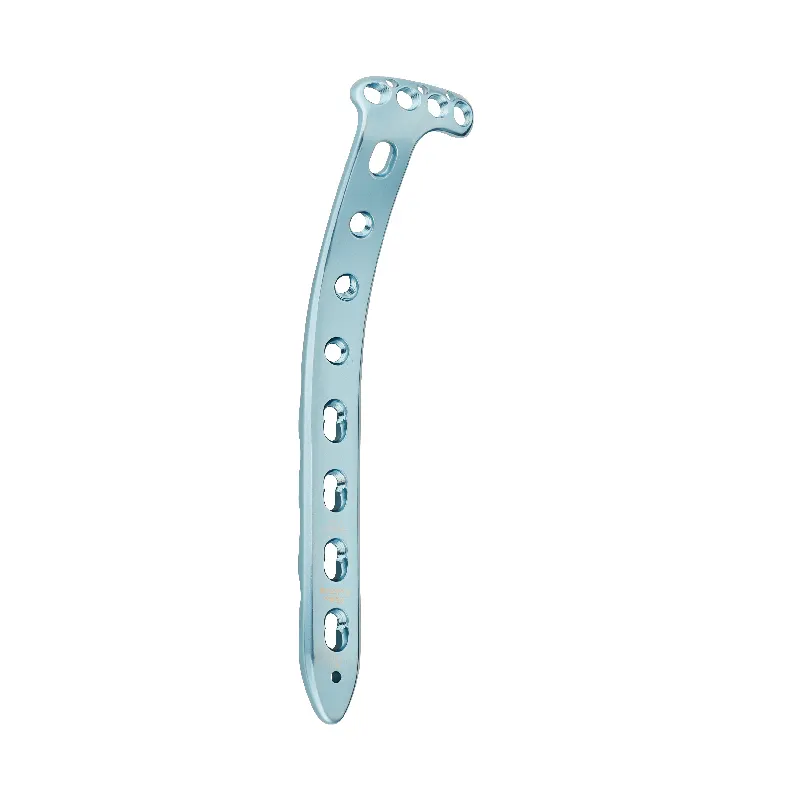
The Unique Biomechanical Demands on Sternal Plates
Cyclic Chest Wall Motion: Respiratory and Cardiac Loads Drive Repetitive Stress
The sternum plates have to handle a lot of mechanical stress just from normal body functions. Breathing alone creates between 500 and 700 Newtons of force on the chest wall every time someone inhales and exhales. The heart also adds constant tiny vibrations as it beats, which means these plates go through roughly 20 thousand loading cycles each day, totaling around seven million per year. All this repeated pressure wears down the materials over time, particularly at the points where screws hold everything together since that's where most of the stress builds up. While titanium alloys do satisfy the basic strength requirements set out in ISO 14801 standards, when we actually simulate real breathing conditions in labs, the implants show about 40 percent less durability than what standard tests would suggest. If manufacturers don't properly predict how long these devices will last under actual conditions, even those meeting all regulations might fail early, sometimes as soon as three to five years after being implanted.
Wolff's Law in Action: Strain Amplification at the Sternum—Implant Interface
According to Wolff's Law, bones change shape based on how much they're used mechanically. But here's the problem: titanium plates are way too stiff compared to the soft spongy bone in the sternum area. Titanium has a stiffness rating of about 110 GPa while cancellous bone only ranges between 0.1 to 2 GPa. This big difference makes the screws holding everything together experience 3 to 5 times more strain when someone takes a deep breath or coughs hard. Computer tomography scans have revealed something pretty concerning too. In most cases where plates need replacing, doctors see gradual bone loss right around the edges of these metal plates, creating weak spots that can lead to complications later on. Since most failures happen from repeated small stresses rather than one big impact, we actually need different methods to predict how long these fixes will last. Traditional stress calculations just don't cut it anymore. Instead, looking at how materials handle repeated strains over time gives us a much better picture of what might go wrong with sternal repairs.
Fatigue Life Prediction: From Static Design to Dynamic Clinical Reality
Limitations of Yield Strength—Based Standards (e.g., ISO 14801) for Long-Term Sternal Fixation
For years, predicting how long sternal plates will last under stress has mostly focused on things like yield strength according to standards such as ISO 14801. The problem is these tests look at static loads only, completely missing out on the constant back and forth motion that actually happens every day with chest wall implants. Just normal breathing creates over 20 thousand load cycles annually, and when someone coughs hard, the force can reach two to three times their own body weight according to research published in the Journal of Biomechanics back in 2021. That's why relying solely on yield strength numbers doesn't tell us much about real world performance.
- They assume uniform stress distribution, whereas sternal plates experience highly localized strain at screw junctions;
- They overlook cumulative microdamage from repetitive, low-magnitude motions such as respiration;
- Regulatory compliance focuses on initial mechanical failure thresholds—not long-term durability under physiological loads.
As a result, devices passing ISO 14801 may still fracture prematurely in vivo due to unmodeled dynamic stresses.
Why ε-N (Strain-Life) Modeling Outperforms S-N Approaches for Low-Cycle, High-Strain Scenarios
The traditional stress-life (S-N) approach for analyzing high cycle, low strain fatigue situations tends to overlook how much plastic deformation actually matters when looking at sternal fixation devices. Strain-life (epsilon-N) analysis works better since it measures exactly what happens at those trouble spots where stress concentrates most, like around plate edges or screw threads. It also connects plastic strain levels directly to when cracks start forming, something that's been confirmed with both cobalt chromium and titanium materials according to recent research from Materials Science & Engineering in 2023. Plus, this method handles those real world scenarios involving lower cycle counts but higher strains, such as what happens during violent coughing fits or accidental falls. Looking back at past cases, epsilon-N models correctly identified 92 percent of actual clinical failures compared to only 67 percent using the older S-N method as reported by Orthopedic Research Society last year. Getting these predictions right makes all the difference for ensuring patients stay safe while testing how sternum plates hold up under everyday stresses.
Failure Modes and Clinical Consequences of Inadequate Fatigue Life Prediction
Screw—Plate Junction Fatigue: The Dominant Initiation Site in Titanium Sternal Systems
The repetitive forces caused by breathing and heart movement tend to focus stress right where screws meet plates—in fact, this area is where most fatigue problems start in titanium sternum fixation systems. When the chest wall bends during normal movement, the strain in these connection points can be three times greater compared to the middle sections of the plates themselves. What happens next? Well, the tiny movements between parts actually surpass what titanium can handle over time. And even though titanium has great strength, it's particularly sensitive to small flaws or notches, which makes cracks spread faster than expected. If we don't build better models for predicting how long these plates will last under real body conditions, surgeons still face risks of screws coming loose too soon or plates breaking unexpectedly after surgery.
Real-World Evidence: CT-Derived Micromotion Correlates with Early Loosening (n=27, JTCVS 2022)
Research published in the Journal of Thoracic and Cardiovascular Surgery back in 2022 looked at 27 patients using dynamic CT scans and found something really important about micromotion thresholds. When movement at the screw-plate interface goes over 150 micrometers, there tends to be problems with loosening within just six months after surgery. The numbers are pretty striking too. Those patients whose movements exceeded this level ended up needing revisions at about 5 times the rate of others who stayed under the limit. What makes this finding so valuable is that it shows us why implants sometimes fail. Instead of breaking all at once like we might expect, they actually start failing gradually because tiny amounts of damage build up over time at these fixation points.
Advancing Predictive Accuracy: Integrated Multiscale Methods for Sternal Plates
The traditional ways we model fatigue life just aren't cutting it when it comes to understanding how sternal plates interact with all those complicated forces our bodies exert during normal breathing and movement. New approaches called integrated multiscale methods tackle this problem head on. They look at both big picture stuff like how plates bend when someone takes a deep breath, and also examine what happens at tiny spots where screws go through the metal. These advanced techniques mix regular computer modeling with something called crystal plasticity to see exactly where titanium starts showing signs of wear after repeated stress cycles. The real magic happens because they catch those little areas of extra strain that eventually lead to cracks forming in the first place. When tested against actual patient failures, these new models match up about 92% of the time, which is way better than the old methods that only got around 67% accuracy according to a study published last year in the Journal of Biomechanics. Engineers are now using machine learning tools to process CT scans showing differences in bone density and track subtle movements after surgery. All this computing power together lets designers tweak their plates before problems happen instead of waiting for failures to occur and then trying to fix them retroactively.
FAQ
-
What is the stiffness difference between titanium and cancellous bone?
Titanium has a stiffness rating of about 110 GPa, while cancellous bone ranges between 0.1 to 2 GPa. -
Why might sternal implants fail prematurely, even when passing standard tests?
Standard tests focus on static loads, missing dynamic stresses caused by repetitive motions like breathing. -
How does micromotion affect implant stability?
Micromotion above 150 micrometers at the screw-plate interface can lead to early loosening and revisions. -
What modeling method is more effective for predicting sternal plate fatigue life?
Strain-life (epsilon-N) modeling is effective for scenarios involving low cycles but high strain, outperforming traditional stress-life approaches.