 EN
EN
 FR
FR
 ES
ES
 AR
AR

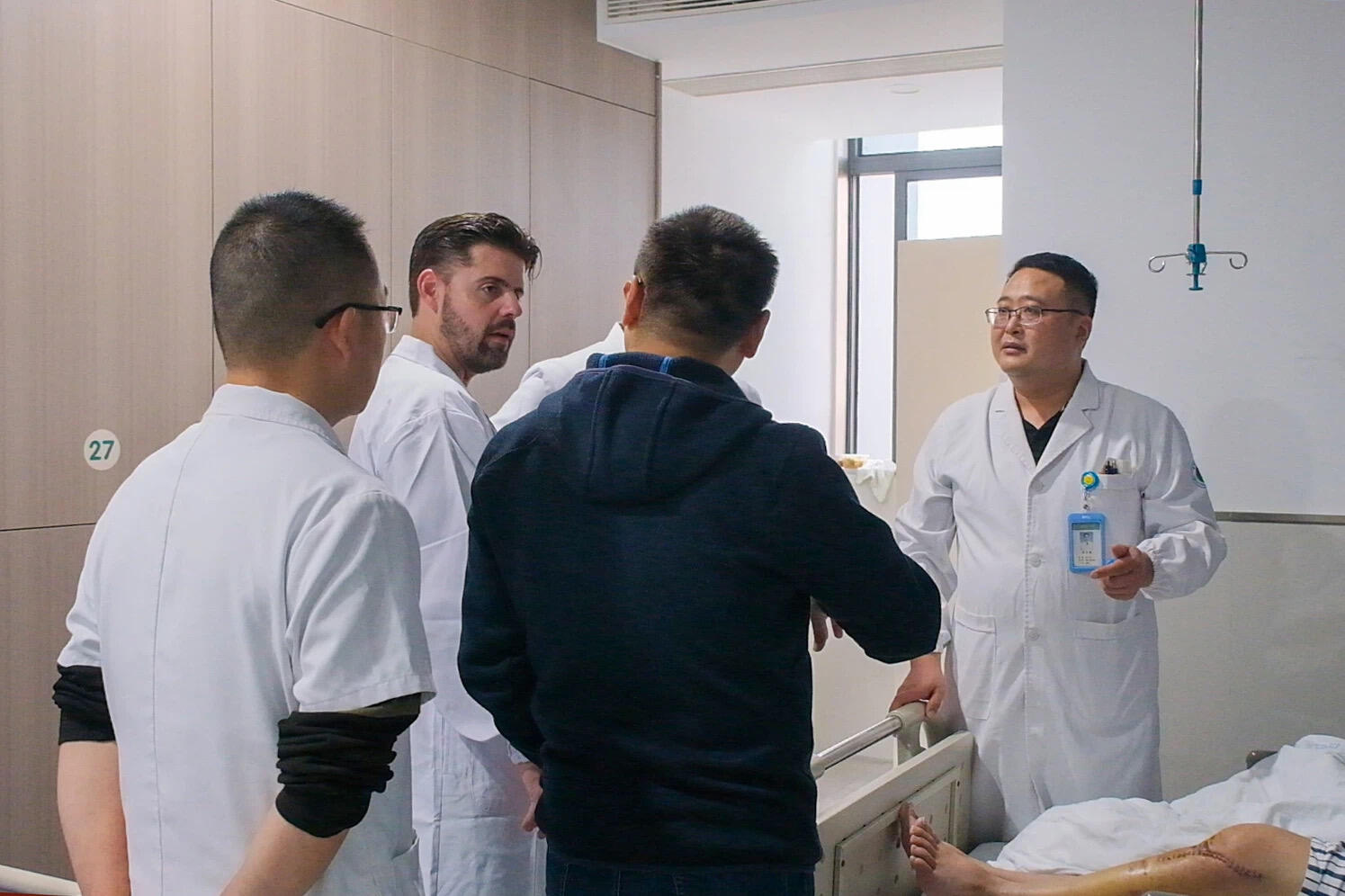
Why Advanced Neurosurgery Instruments Are Subject to Export Control Regulations
Dual-Use Nature: How Precision, AI, and Real-Time Imaging Trigger Regulatory Scrutiny
The advanced tools used in neurosurgery face tight export restrictions mainly because they can do two things at once. On one hand, these instruments save lives during delicate operations. But there's another side to them too - their military potential worries regulators. Think about it: when a device offers sub-millimeter positioning accuracy, makes decisions in real time using AI, and provides super detailed images during surgery (like MRI guidance down to 50 microns), that kind of tech is just asking for trouble if it falls into the wrong hands. Some robotic systems designed for tiny movements inside the brain could easily be repurposed to handle dangerous chemicals. The algorithms that process neural data? They might work just as well for watching people or monitoring thoughts. Because of this risk, countries have agreed through frameworks like the Wassenaar Arrangement to control who gets access to such equipment. Forty-two nations participate in this agreement, requiring special licenses before exporting any device that meets certain technical standards. For companies making these instruments, proving their products will only ever be used medically isn't easy. They need mountains of paperwork showing exactly how their designs prevent unauthorized uses.
Key Triggers: Resolution, Accuracy, Automation, and Non-Medical Adaptability
Four technical attributes most commonly trigger export classification for neurosurgical instruments:
- Resolution thresholds: Imaging systems with resolution finer than 50 microns (e.g., intraoperative MRI or optical coherence tomography)
- Positional accuracy: Robotic arms maintaining sub-0.1mm error margins during active procedures
- Autonomous operation: AI systems capable of making real-time tissue differentiation or path-planning decisions without clinician input
- Cross-industry adaptability: Modular hardware or software interfaces that simplify integration into aerospace, defense, or industrial automation platforms
The features in question trigger serious concerns according to rules like the U.S. Export Administration Regulations (EAR), especially when there are no proper protections in place such as firmware locked for medical use only or physical designs that limit functionality. Looking at recent data from a trade compliance report released in 2023, around 78 percent of neurosurgical equipment held at borders broke export rules because they either had hidden automation features or didn't come with enough paperwork showing where and how they'd be used eventually.
Jurisdiction and Classification: Navigating EAR vs. ITAR for Neurosurgery Instruments
Determining Jurisdiction: When a Neurosurgical Robot Falls Under EAR 2B352 vs. ITAR USML Category XXI
Who has authority over these devices really depends on what they're meant for and how technically adaptable they are. Surgical tools made specifically for brain operations - think those fancy robotic systems that can hit targets within less than a tenth of a millimeter and only recognize specific body landmarks through their AI - generally end up in the EAR 2B352 category. But when manufacturers build in things like optical systems capable of seeing at 5 microns, image processing that happens almost instantly (under 50 milliseconds), or designs that let them adapt to battlefield injuries, those often get labeled under ITAR's military electronics list. The line between categories isn't always clear cut. A study from last year found that nearly seven out of ten classification disputes happened because people got confused about whether the AI was just helping along the way or actually making decisions on its own. Companies need to keep thorough records showing why their products can't be used outside medicine. This includes things like locked firmware settings, restricted user interfaces, and proper testing procedures to prove they work safely in medical contexts.
Practical Classification Workflow: From Technical Specifications to ECCN or USML Assignment
Use this five-step workflow to ensure consistent, defensible classification:
- Extract objective technical parameters: motion precision, imaging resolution, AI autonomy level (e.g., human-in-the-loop vs. closed-loop decisioning), latency metrics, and interface architecture
- Cross-reference against regulatory texts: EAR Commerce Control List (CCL) Supplement No. 1 and ITAR §121.1, paying close attention to notes and exclusions
- Flag dual-use risk indicators: neural network training data sources (e.g., non-clinical datasets), open API access, or compatibility with defense-standard communication protocols
- Apply exclusions rigorously: For example, EAR 2B352 Note 3a excludes instruments âspecially designedâ for surgical useâprovided evidence shows functional, physical, or digital constraints prevent adaptation
- Request a Commodity Jurisdiction (CJ) determination from the U.S. Department of State when technical overlaps persist between EAR and ITAR scopes
Maintain auditable records showing how each specification maps to regulatory language. According to 2024 trade enforcement data, 74% of customs delays stemmed from undocumented or inconsistently applied classifications.
Compliance Essentials: Documentation, Licensing, and Exemptions for Exporting Neurosurgery Instruments
Required Documentation: DSP-5, BIS-748P, and End-Use Statements for Medical Exports
When it comes to shipping high-tech neurosurgery tools abroad, getting the paperwork right is absolutely critical. For items under ITAR control, companies must obtain a DSP-5 license from the US State Department. Meanwhile, equipment subject to EAR regulations needs a completed BIS-748P form submitted to the Bureau of Industry and Security. The foreign buyer has to sign off on detailed end use statements too. These statements must clearly state that the surgical instrument will only be used for actual neurological procedures, no modifications allowed, and definitely no unauthorized reexports or transfers. Think of these forms as legal safeguards against any kind of product diversion. Get them wrong or leave something out? Expect major headaches at customs checkpoints where shipments often get stuck for around 30 days according to Trade Compliance Digest from last year. Worse still, mistakes can lead to contract violations and serious damage to a company's reputation in international markets.
Valid Exemptions: Understanding 'Surgical Use Only' (EAR 740.12) and Its Limitations
Under the EAR 740.12 rule, certain surgical instruments can be exported without a license, but there are some pretty tight restrictions involved. To qualify, these devices need to show real technical limitations. For instance, they should have firmware that actually limits how they operate, shouldn't include any encryption stronger than what's considered standard for medical equipment around 256 bits max, and absolutely cannot support remote programming or updates to AI models when outside hospital settings. The people who receive these instruments also have to sign off on agreements stating they won't modify the equipment and agree to check every year that it remains within hospital walls. Importantly, this whole exemption falls apart if anyone tries shipping to places under sanctions like Crimea or Syria, or sends them to companies or individuals listed by either BIS or OFAC. Getting this wrong isn't just bad business practice either. Companies could face fines reaching as high as one million dollars for each mistake made, and individuals might even end up facing criminal charges if they knowingly break these rules.
FAQs
Why are neurosurgery instruments subject to export controls?
Neurosurgery instruments are subject to export controls due to their dual-use nature, having both medical and military potential. The precision and capabilities of these instruments could be leveraged for functions outside of medicine if not regulated.
What are the key technical features that trigger export classification?
Key technical features include resolution thresholds, positional accuracy, autonomous operation, and cross-industry adaptability. These attributes raise concerns when the equipment can potentially be adapted for non-medical uses.
How do companies ensure compliance with export regulations for these instruments?
Companies ensure compliance through thorough documentation, obtaining necessary licenses, and adhering to regulatory frameworks like EAR and ITAR. They must also provide proof of limited functionality to prevent unauthorized adaptations.
Are there any exemptions for exporting neurosurgery instruments?
Yes, under EAR 740.12 certain surgical instruments can be exported without a license if they meet specific technical limitations and agree to rigorous restrictions, such as no unauthorized modifications or reexports.