 EN
EN
 FR
FR
 ES
ES
 AR
AR

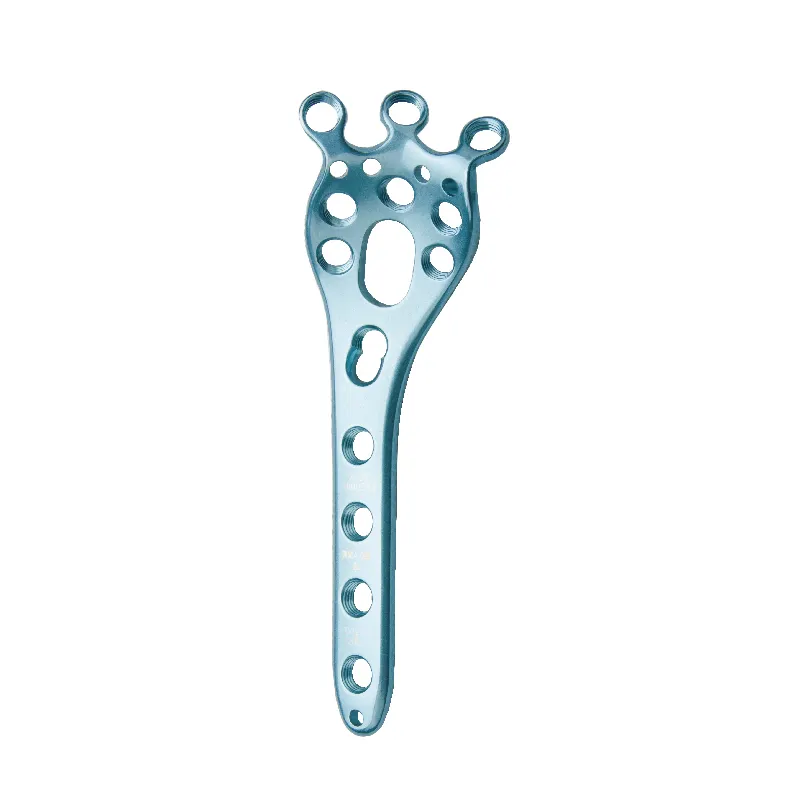
ASTM F382 as the Foundational Standard for Fibula Plate Mechanical Strength Testing
Scope, Applicability, and Why It Remains the Primary ASTM Standard for Metallic Bone Plates
The ASTM F382 standard sets out how to test the mechanical properties of metal bone plates when they're subjected to both static and dynamic forces. The standard focuses on three main factors important for fibula plates: bending strength, stiffness levels, and how well they withstand repeated stress over time. This helps ensure that different companies and research labs are measuring these properties consistently. Originally released back in 1979, this standard has stood the test of time because it contains clinical protocols that actually mimic what happens in real surgical situations. Compared to newer standards that focus on specific applications, ASTM F382 offers a broader framework recognized by the FDA. Decades worth of peer review support makes it essential for anyone submitting devices for approval or maintaining quality control in orthopedic manufacturing. Manufacturers can apply these tests to various types of metallic trauma implants including titanium alloys and stainless steel products, helping maintain consistent standards worldwide for fibula plate mechanical testing requirements.
Key Mechanical Properties Assessed: Bending Strength, Stiffness, and Yield Behavior
ASTM F382 mandates rigorous assessment of three critical mechanical properties essential for fibula plate performance:
- Bending Strength: The maximum load a plate withstands before permanent deformation or fracture–directly influencing fracture stabilization under physiological loads.
- Stiffness: A measure of resistance to bending deformation, which governs load transfer between bone fragments and helps mitigate stress shielding.
- Yield Behavior: The transition point from elastic to plastic deformation, offering predictive insight into long-term structural integrity.
These properties are evaluated using four-point bending (static) and cyclic fatigue (dynamic) tests. Yield and ultimate strength data–reported per ASTM-compliant fatigue life protocols–ensure plates maintain performance under peak physiological loads (typically 500–800 N for fibula fixation) without compromising torsional stability or fracture alignment.
Single-Cycle Bending Tests: Quantifying Structural Integrity per ASTM F382
Four-Point Bending Setup, Specimen Alignment, and Load-Deflection Curve Interpretation
According to ASTM F382 standards, four point bending has become the go to method when evaluating the mechanical strength of fibula plates. This approach creates a consistent bending moment across the inner supports which helps reduce shear forces and focuses on pure bending characteristics. When setting up the test, technicians place rollers at specific distances as outlined in the standard specifications. The plate needs to be aligned so its long axis runs straight across from the direction where force will be applied, this setup prevents any twisting during testing. Most labs use specialized materials testing equipment that controls how fast force is applied while capturing detailed load versus deflection measurements throughout the process. Getting everything perfectly aligned matters a lot in practice. Even small angle errors can throw off how stress spreads through the material, making test results less meaningful for actual clinical applications down the road.
When we look at the load deflection curve, it shows several important mechanical points. First comes the linear elastic phase where materials behave predictably, then they start showing plastic deformation once they reach their yield point. Eventually, materials hit their maximum strength before breaking apart completely. The stiffness of a material can be measured by looking at how steep the elastic part of the curve is. Meanwhile, the yield load tells us how much force is needed before permanent bending occurs. According to ASTM F382 standards, everyone must use exactly the same support span measurements for all test samples. If there are differences in these measurements, then comparisons between static and dynamic load tests on trauma implants become meaningless. This makes proper assessment of structural integrity impossible when simulating extreme conditions similar to what happens inside the human body during actual use.
Key interpretations from load-deflection curves:
- Yield Strength: Threshold beyond which deformation becomes irreversible
- Bending Stiffness: Force required per unit deflection (slope of elastic region)
- Ductility: Post-yield deformation capacity before failure
Bending Fatigue Testing and M–N Diagram Analysis for Long-Term Reliability
Cyclic Loading Protocols, Failure Definitions, and ASTM-Compliant Fatigue Life Reporting
Fatigue testing for bending essentially mimics the kind of stress our bodies put on implants over many years, all done through carefully controlled cycles of loading and unloading. According to ASTM F382 guidelines, these tests involve fully reversed bending where the stress ratio R equals negative one, applied at levels that actually matter in real clinical situations. Most labs use four point loading systems because they help spread out the stress evenly across the most important part of the implant plate. When it comes to determining if an implant has failed during testing, there are two main criteria: either when a fracture starts to show up under magnification equipment, or when there's been a permanent deformation of about 10% in size - whichever happens first basically signals the end of the test for that particular sample.
When we run tests on materials, we plot the results on what's called an M-N diagram, also known as a stress-life curve. Each dot on this graph shows how much bending force was applied (that's our M value) against how many times it can bend before breaking (the N value). Take 316L stainless steel plates for example. Most often, these will hold up until about half again their maximum strength when tested for around a million cycles. This kind of information really matters when picking implants. For parts going into areas that take a lot of weight, say the lower part of the fibula bone, doctors need plates that can survive way over ten million bends under normal body stresses. The standard ASTM tests give us good starting points for measuring strength, but let's be honest, they don't capture everything that happens inside real bodies. Things like tiny movements between surfaces, corrosion combined with repeated stress, and how living tissue actually reacts to metal are all missing from lab conditions.
Bridging the Gap: Limitations of ASTM Testing and Clinical Translation for Fibula Plates
ASTM F382 sets important standards for testing how strong fibula plates are in lab settings, but there's a big gap between those numbers and what actually happens in patients. The standard tests measure things like yield strength and stiffness through static and dynamic methods, yet none of them come close to mimicking the complex environment inside a living body. Real world factors matter too much for lab results alone to tell the whole story. Bone constantly changes shape over time, people put different kinds of stress on implants every day from walking to twisting movements, surrounding tissues affect implant stability, and materials degrade chemically over months or years. All these variables fall outside what ASTM F382 accounts for, making it difficult to predict long term outcomes based solely on standardized testing protocols.
According to a 2023 report from the Ponemon Institute, about 22 percent of problems seen after trauma implants hit the market actually come from things that regular mechanical strength tests just don't catch. What this means is pretty important really - meeting ASTM F382 standards gets products approved by regulators, but it doesn't mean they'll work well when implanted inside real people. The actual results we see in practice rely on all sorts of factors that go way beyond just how strong the materials are. Think about how bones actually grow around implants (that's called osseointegration), what kind of activities patients typically do day to day, and even the skill level of surgeons during implantation. Because of these complexities, getting good clinical results needs more than just lab tests. We need evaluation methods that bring together traditional biomechanical assessments with actual biological responses from patients and models tailored specifically to individual cases.
FAQ
What is ASTM F382?
ASTM F382 is a standard that provides guidelines on how to test the mechanical properties of metal bone plates under static and dynamic forces, focusing primarily on bending strength, stiffness, and yield behavior.
Why is ASTM F382 important?
The standard is essential for maintaining consistent testing benchmarks worldwide, aiding in the approval and quality control of orthopedic devices, and being recognized by organizations like the FDA.
What are the limitations of ASTM F382 testing?
While ASTM F382 provides valuable data on mechanical properties, it does not fully replicate the complex environment or real-world factors impacting implants in living bodies, such as osseointegration and daily stresses.
Table of Contents
- ASTM F382 as the Foundational Standard for Fibula Plate Mechanical Strength Testing
- Single-Cycle Bending Tests: Quantifying Structural Integrity per ASTM F382
- Bending Fatigue Testing and M–N Diagram Analysis for Long-Term Reliability
- Bridging the Gap: Limitations of ASTM Testing and Clinical Translation for Fibula Plates
- FAQ