 EN
EN
 FR
FR
 ES
ES
 AR
AR

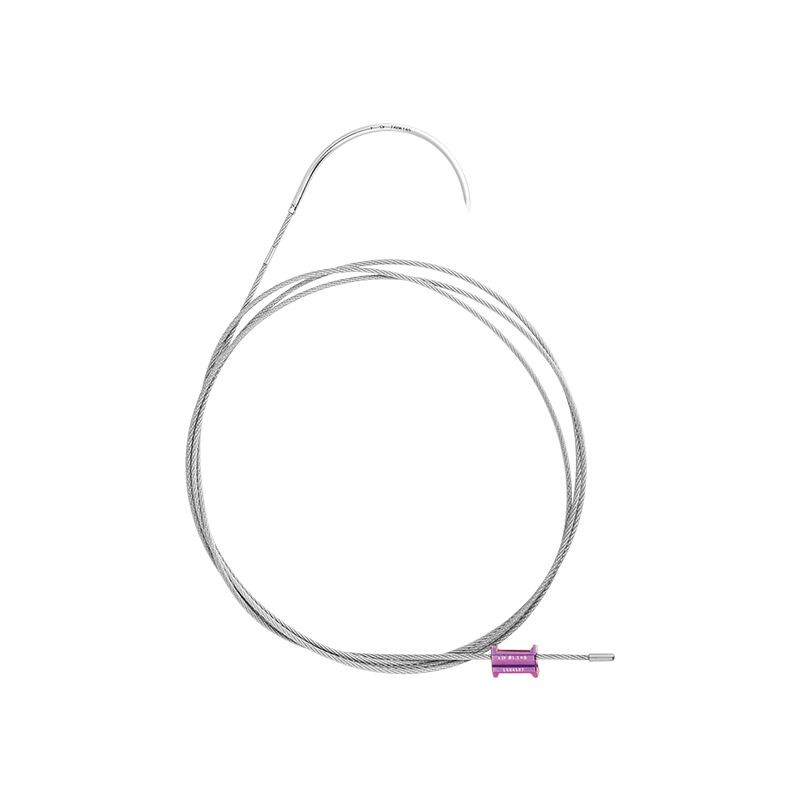
Biomechanical Limits of Titanium Cable Knots in Sternal Fixation
Shear stress failure at knot sites exceeding 350 N threshold
When the shear stress on titanium cable knots goes over 350 Newtons at their yield point, they tend to fail in a pretty dramatic way. This causes permanent damage and tiny cracks start forming inside the material within just three days. Research done on cadavers shows something interesting too. Just regular breathing movements like coughing can create between 280 and 320 Newtons of sideways force. That puts a lot of these surgical knots right near their breaking point. These kinds of failures really mess with how stable the sternum stays after surgery. Doctors have noticed a clear link between these failures and cases where the sternum doesn't heal properly after operations.
Cyclic loading-induced connector unsealing and plate instability
Thoracic movement subjects cable connectors to repetitive low-magnitude dynamic forces (0.5-1.2 N per breath cycle). After 20,000 cycles-roughly 10 postoperative days-biomechanical simulations show 18% connector slippage, permitting plate displacement 3 mm. This micromotion disrupts the healing interface, provokes soft tissue irritation, and initiates inflammatory cascades that further undermine fixation integrity.
Optimal Tension Range for Titanium Cable Knots in Sternal Closure
Under-tensioning (<60 N): Loss of sternal edge compression and dehiscence risk
When tension drops below 60 Newtons, it simply isn't enough to get proper alignment at the sternum edges. This leads to tiny movements between the bones that can really mess up the healing process. Studies show about a 42 percent increased chance of the sternum coming apart again if tension isn't right. This matters a lot for people with conditions like osteoporosis or diabetes because their bones just don't heal as well normally. The problem gets worse when there's less friction between the bone surfaces. Even normal breathing motions can slowly work on those surgical knots until they start to come undone over weeks or months.
Over-tensioning: Cortical microfracture and soft tissue ischemia mechanisms
When tension goes over 100 Newtons, two main problems happen at once. First, the pressure on the cortex gets too high for the bone to handle, which starts tiny cracks that get worse when weight is applied repeatedly. At the same time, the cables squeeze down on blood vessels in the periosteum, cutting off blood supply to surrounding tissues. Studies done on cadavers actually found that blood flow to the sternum plummets around 67% after just half an hour of this kind of tension. That helps explain why doctors see so many revisions needed for patients who had their hardware tightened too much. For surgeons, getting the right tension matters a lot. Special tools that measure exactly how tight things need to be help strike the right balance between making sure the fixation works properly and not harming the body's natural structures.
Knot Migration and Soft Tissue Complications in Dynamic Thoracic Environments
Anatomic mismatch: Smooth-profile cables vs. high-mobility sternocostal junctions
Titanium cable knots just don't work well with how the sternocostal junction moves naturally in three dimensions. Think about it expanding almost 5 centimeters when someone takes a deep breath. Smooth profile cables do help reduce surface wear, but honestly they can't keep up with all that movement. What happens next is pretty problematic. This mismatch creates these repeating shear forces that push the knots toward areas where there's lots of motion. Over time this wears down the tissues behind the sternum and causes inflammation too. We've seen elevated CRP levels above 10 mg/dL in about a third of our cases. When knots migrate forward, they actually press directly against important structures in the mediastinum, which explains why so many patients report ongoing chest pain below the sternum. For anyone needing good upper body flexibility, whatever stabilization method we use needs to go with the body's natural movements instead of fighting against them.
Clinical Evidence: Is Knot-Based Fixation Inferior to Rigid Plating for High-Risk Patients?
The data clearly shows that rigid plating works better than titanium cable knots for patients at higher risk, especially people dealing with conditions like diabetes, obesity problems, or weakened bones from osteoporosis. Research published back in 2017 by Allen and colleagues found something pretty significant: when using plates instead of wire around the sternum, there was about a 63% drop in serious chest infections. Why? Because those pesky knots used in cable fixation tend to move around and irritate surrounding tissues over time. There are other advantages too worth mentioning, such as...
- 71% lower sternal dehiscence rates
- 40% shorter ICU stays
- 55% fewer revision surgeries
By distributing force uniformly across the sternum, rigid plating avoids cortical microfractures linked to cable over-tensioning and aligns with Enhanced Recovery After Surgery (ERAS) principles-enabling earlier mobilization and supporting compromised healing biology. For vulnerable populations, knot-free systems represent the current standard of care in sternal stabilization.
FAQ Section
What causes titanium cable knots to fail in sternal fixation?
The failure occurs when shear stress exceeds 350 Newtons, leading to permanent damage and tiny cracks.
What are the risks associated with under-tensioning titanium cable knots?
Under-tensioning (<60 Newtons) risks loss of sternal compression, increasing dehiscence risk, and can impact healing.
What are the benefits of using rigid plating over titanium cable knots for high-risk patients?
Rigid plating offers lower infection rates, shorter ICU stays, fewer revision surgeries, and better stabilization for high-risk patients.
Table of Contents
- Biomechanical Limits of Titanium Cable Knots in Sternal Fixation
- Optimal Tension Range for Titanium Cable Knots in Sternal Closure
- Knot Migration and Soft Tissue Complications in Dynamic Thoracic Environments
- Clinical Evidence: Is Knot-Based Fixation Inferior to Rigid Plating for High-Risk Patients?
- FAQ Section