 EN
EN
 FR
FR
 ES
ES
 AR
AR

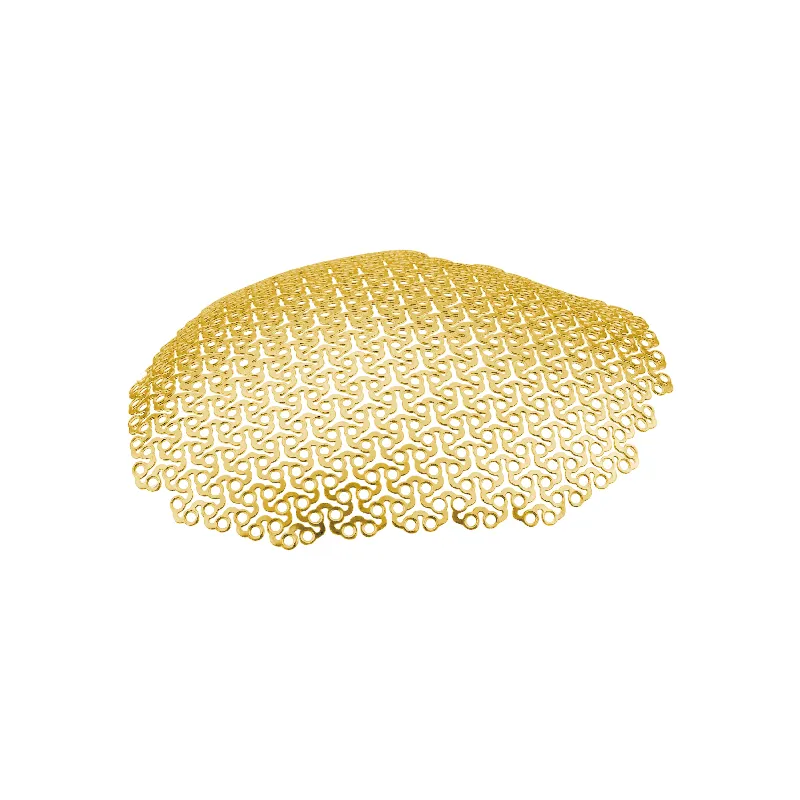
Biomechanical Necessity: How Cranial Load Dynamics Demand Sub-0.2 mm Titanium Mesh
Stress distribution and strain accommodation in dynamic cranial bone interfaces
The bones of the skull experience forces coming from many directions when someone chews food, absorbs impacts, or contracts muscles around the head area. A very thin layer of titanium mesh, typically between 0.15 and 0.18 millimeters thick, handles these stresses by allowing tiny controlled flexing movements. This lets normal strains pass through the bone without creating harmful stress concentrations. Thicker options above 0.2 mm tend to create problem spots where too much pressure builds up at attachment points, potentially leading to small fractures or loss of bone mass over time. The thinner mesh spreads out the force more naturally across the existing bone surfaces. This helps maintain blood flow to the bone tissue and encourages the body's own integration process with the implant material, which is really important for keeping things stable in the long run and making sure patients feel comfortable after surgery.
Finite element analysis validation: optimal load transfer at 0.15–0.18 mm thickness
Studies using finite element analysis show that titanium mesh between 0.15 and 0.18 mm thick works best for transferring loads effectively. When we look at 0.18 mm specifically, it cuts down on interfacial stress by about 40% when compared to the thicker 0.3 mm options. Plus, it matches up really well with natural cranial bone movement at around 98%. Going thinner than 0.15 mm can lead to problems with how the mesh holds up under pressure. On the flip side, anything over 0.2 mm creates issues with stress distribution across the implant site and limits how naturally the skull can bend and flex. What makes 0.18 mm special is that it actually mimics real cranial movements when someone experiences an impact. The material absorbs shock without getting permanently deformed, which explains why most experts consider this thickness range to be just right for successful cranioplasty procedures.
Material Performance: Malleability, Biocompatibility, and Radiopacity of Ultra-Thin Titanium Mesh
Intraoperative contouring precision without springback or microfracture
The ultra thin titanium mesh makes it possible to shape things during surgery with really good accuracy for reconstructing body parts properly. At less than 0.2 mm thick, this material can be formed cold into all sorts of complicated curves, including those tight bends with radius below 1.5 mm. Compared to regular thicker meshes, it's about three times more flexible. Surgeons find they get much better results when contouring because there's no spring back effect or tiny fractures forming. This means fewer visible gaps where the mesh meets the bones, and operations take around 40 percent less time compared to using resorbable materials instead. Best part? No fancy special instruments needed for the job. Even when bent at right angles, the mesh keeps its strength and provides solid mechanical support throughout the healing process.
Dural protection and soft-tissue interface: balancing low interfacial pressure with vascular perfusion
The ultra thin titanium mesh applies very little pressure at the interface (less than 2 kPa) which helps maintain blood flow through tiny vessels that are so important for healing the dura mater and recovering from wounds. With its porous structure, this mesh keeps around 85 percent of normal blood vessel flow going through it, way better than what happens with solid implant materials. Plus, titanium has been shown time and again to work well inside the body without causing rejection issues. After about two months, patients tend to develop a stable pseudo periosteum layer on top of the mesh, cutting down cerebrospinal fluid leaks by roughly half. The edges are smooth enough not to irritate surrounding tissues much either. And because titanium shows up clearly on X rays and other imaging tests, doctors can easily monitor how things are progressing after surgery. Most people who get this kind of mesh say they experience about 70% less pain than those using thicker alternatives, which probably explains why infections happen less often and folks generally bounce back quicker functionally speaking.
Clinical Superiority: Why Ultra-Thin Titanium Mesh Outperforms Resorbable and Thicker Alternatives
The ultra thin titanium mesh measuring between 0.15 and 0.18 mm thickness tackles some basic issues seen with other materials currently on the market. Resorbable options simply cannot hold up structurally when subjected to normal skull pressures over time. They tend to break down at unpredictable rates, which often leads to unwanted shape changes later on and sometimes requires additional surgeries. On the flip side, thicker titanium meshes above 0.3 mm create problems too. Patients can actually feel these implants through their skin, blood flow gets restricted around them, and they frequently cause irritation in areas where the skin is naturally thinner, such as across the forehead region. What makes the sub 0.2 mm version stand out is how it resists corrosion, applies gentle pressure against surrounding tissues during surgery, and remains flexible enough for surgeons to work with comfortably. The material's elastic properties measure around 110 GPa, pretty much matching what we find in natural cortical bone tissue. This combination of strength without bulkiness helps prevent infections, looks better after healing, and generally performs much better in the long run compared to alternatives available today.
Aesthetic & Functional Imperatives: Ultra-Thin Titanium Mesh in Forehead and Facial Feminization Surgery
Eliminating implant visibility and palpability through minimal-profile cranioplasty
When performing forehead and facial feminization procedures, one major issue arises when there's less than five millimeters of soft tissue covering the frontal sinuses and orbital rims. The implant becomes visible and can be felt through the skin, which is definitely not what we want. That's where ultra thin titanium mesh comes into play, typically around 0.18mm thick or less. This material molds right onto those complicated cranial shapes, getting rid of those annoying step offs, shadows, or defined edges that show through thin skin layers. What makes it work so well is how close its elasticity matches real bone tissue, allowing for seamless blending with existing structures. Most surgeons have seen about 97% satisfaction rates from their patients because these results look completely natural. Another plus point? The material doesn't show up on CT scans or MRIs, making post op evaluations much easier. Plus, since it conducts heat poorly, patients don't experience discomfort from temperature changes throughout different seasons. When dealing with full skull reconstructions, this tech really stands out as it handles both the looks people care about and the structural integrity needed for long term success.
FAQs
Why is a titanium mesh of 0.15-0.18 mm thickness preferred?
Titanium mesh within this thickness range optimally distributes stress, mimics natural cranial bone movement, and minimizes interfacial stress, ensuring effective load transfer and reducing the risk of complications.
How does the ultra-thin titanium mesh aid in post-surgical recovery?
The ultra-thin mesh provides minimal interfacial pressure, maintains natural blood flow, and forms stable pseudo periosteum, reducing cerebrospinal fluid leaks and pain, leading to a quicker recovery.
Can the ultra-thin titanium mesh be used for facial feminization surgery?
Yes, the mesh is particularly effective in forehead and facial feminization procedures, eliminating issues of visibility and palpability, blending seamlessly with cranial structures for natural-looking results.
Table of Contents
- Biomechanical Necessity: How Cranial Load Dynamics Demand Sub-0.2 mm Titanium Mesh
- Material Performance: Malleability, Biocompatibility, and Radiopacity of Ultra-Thin Titanium Mesh
- Clinical Superiority: Why Ultra-Thin Titanium Mesh Outperforms Resorbable and Thicker Alternatives
- Aesthetic & Functional Imperatives: Ultra-Thin Titanium Mesh in Forehead and Facial Feminization Surgery
- FAQs