 EN
EN
 FR
FR
 ES
ES
 AR
AR

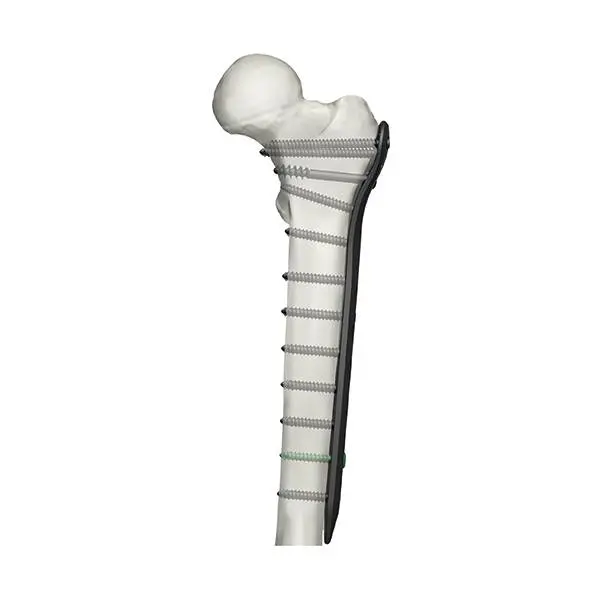
Understanding Galvanic Corrosion in Multi-Material Implants
Galvanic Corrosion Definition and Mechanism in Biomedical Contexts
When different metals come together in multi material implants inside the body, they tend to corrode faster because they form what's called an electrochemical cell in our bodily fluids. These fluids basically work like batteries, letting ions move back and forth between the less noble metal (the anode) and the more noble one (the cathode). Take those locking plate systems for example, where we often see titanium plates paired with stainless steel screws. If there's a voltage difference over about 300 millivolts between these materials, it creates continuous corrosive currents that weaken the implant over time. This is why some studies from Chen and Thouas back in 2015 warned about how this kind of corrosion can actually break down the whole implant system.
Conditions Required for Galvanic Corrosion: Dissimilar Metals, Electrolyte, and Direct Contact
Three conditions must coexist for galvanic corrosion to occur:
- Dissimilar metals with a potential difference 50 mV (e.g., titanium vs. cobalt-chromium)
- Electrolyte presence—such as blood plasma (pH 7.4) or synovial fluid—bridging components
- Electrical continuity via direct contact or conductive interfaces
Modular orthopedic implants inherently satisfy these conditions under normal physiological loading, increasing long-term failure risks.
Anode and Cathode Reactions in Metal Combinations Used in Orthopedic Implants
In titanium-stainless steel systems, characteristic redox reactions include:
- Anode (stainless steel): Fe → Fe²⁺ + 2e⁻
- Cathode (titanium): O₂ + 2H₂O + 4e⁻ → 4OH⁻
This electron flow increases stainless steel corrosion rates by 3–8 compared to isolated use (Reclaru et al., 2001). The resulting hydroxide ions elevate local pH, promoting secondary pitting and tissue reactivity near the implant site.
The Role of the Galvanic Series and Nobility of Common Engineering Metals in Implant Design
The galvanic series ranks metals by corrosion resistance in physiological conditions:
| Material | Corrosion Potential (V vs SCE) |
|---|---|
| Titanium (Grade 5) | -0.30 to +0.15 |
| Cobalt-Chromium | -0.25 to -0.15 |
| 316L Stainless Steel | -0.40 to -0.20 |
Designers minimize risk by selecting metals within 100 mV of each other and leveraging passive oxide layers. However, mechanical disruption at screw-plate junctions remains a persistent challenge in mixed-metal systems.
Material Pairing Risks in Locking Plate and Screw Systems
Common Implant Material Pairings and Their Electrochemical Compatibility
When surgeons combine titanium plates with stainless steel or cobalt chromium screws, it's pretty standard practice despite some serious electrochemical issues. Looking at the galvanic series shows there's this big voltage difference of around 400 to 550 millivolts between titanium (which acts as a cathode) and stainless steel (acting as an anode). This creates powerful electrical forces that push electrons around. Recent research published in Biomaterials Science back in 2023 showed these mixed material combinations actually release metal ions about three times quicker compared to using just one type of material throughout, when tested in lab conditions that mimic the human body. Makes sense why some hospitals are starting to reconsider their implant choices.
Impact of Surface Area Ratio (Small Anode vs. Large Cathode) on Corrosion Rate
Surface area ratio significantly influences corrosion severity:
| Configuration | Corrosion Rate (mm/year) |
|---|---|
| Titanium plate + stainless screw | 0.28 |
| Stainless plate + titanium screw | 0.07 |
When the anode has a smaller surface area than the cathode—such as steel screws in a titanium plate—current density concentrates at the anode, accelerating localized degradation. This configuration aligns with ASTM F2129 test standards showing markedly higher corrosion in small-anode/large-cathode setups.
Case Study: Galvanic Corrosion Between Stainless Steel Fasteners and Titanium Plates
A 2022 retrieval study of 137 failed spinal implants identified pitting corrosion at 89% of stainless steel screw/titanium plate interfaces. Energy-dispersive X-ray spectroscopy detected iron oxide deposits within 5 μm of titanium surfaces, indicating active steel dissolution. Key contributing factors included:
- Instability of passive oxide layers on cold-worked screw threads
- Microgap fluid ingress sustaining galvanic cells
- Cyclic loading disrupting passivation during patient movement
These findings highlight the need for strict electrochemical compatibility protocols in implant design.
Consequences of Galvanic Corrosion on Implant Performance
Effect of Galvanic Corrosion on Mechanical Strength and Fatigue Life
Galvanic interactions reduce fatigue strength by up to 40% in titanium-stainless steel systems (Hodges et al., 2021), primarily due to electrochemical degradation at screw-plate junctions. Resulting microcracks propagate under cyclic loads, often leading to mechanical failure 12–24 months post-implantation. High chloride concentrations (150 mmol/L) in synovial fluid further accelerate this process.
Crevice Corrosion in Orthopedics as a Co-Factor in Failure Sites
Crevice corrosion compounds galvanic effects, present in 28% of revision surgeries involving modular implants (Gilbert et al., 2015). Confined spaces trap bodily fluids, forming oxygen-depleted zones that lower pH to 2.5–3.8—approaching gastric acidity. Combined with micromotion, this environment drives material loss at rates up to 0.2 mm/year in cobalt-chromium alloys.
Long-Term Degradation and Ion Release Risks in Multi-Material Implants
When galvanic activity goes on for extended periods, it leads to increased movement of metal ions. Titanium implants paired with steel fasteners tend to release around 6 to 8 micrograms per square centimeter per week of nickel and chromium ions. Research from Sridhar and colleagues back in 2012 showed that at these concentrations, lymphocyte activation jumps nearly four times normal levels, which has sparked worries about possible delayed allergic reactions. Meanwhile, the ongoing corrosion process eats away at the implant's structure, causing the plate thickness to drop between 15% and 25% within just five years. This kind of degradation poses serious risks for implants used in areas where they need to bear weight, since their structural integrity becomes compromised over time.
Physiological and Mechanical Factors Accelerating Corrosion
Role of Bodily Fluids as a Persistent Electrolyte in Dissimilar Metal Implants
Blood plasma and interstitial fluid (~0.9% NaCl) provide continuous electrolytic pathways between dissimilar metals, enabling uninterrupted ionic current flow. Unlike intermittent exposure in industrial settings, this constant conductivity sustains galvanic activity 24/7, particularly in vascularized tissues surrounding implants.
How Micro-Motion and Joint Movement Exacerbate Corrosion in Fasteners and Small Metal Components
The constant stress from daily activities creates tiny movements (less than half a millimeter) where bones meet implants, particularly noticeable in joints and spine hardware. What happens next is pretty interesting: these small motions actually wear away the protective oxide layers on the implant surface. At the same time, they push oxygenated bodily fluids into those tiny gaps between components. This combination tends to speed up corrosion processes anywhere from three to seven times faster than when things are completely still. We see this effect most clearly in modular parts like the neck area of hip replacements. Studies indicate these areas release about 24 percent more metal ions compared to solid, one-piece implant designs because of this double trouble effect of wear plus corrosion working together.
Inflammatory Responses Increasing Local Acidity and Corrosion Potential
Post-surgical inflammation generates acidic microenvironments (pH 4–5) through:
- Phagocyte production of reactive oxygen species (ROS)
- Macrophage-derived lactic acid
- Hydrolysis of necrotic tissue
These changes shift corrosion potentials by -150 to -300 mV, dramatically increasing anodic dissolution. Electrochemical impedance spectroscopy shows titanium-6Al-4V alloys experience 18% faster pitting progression in inflamed tissues compared to neutral pH conditions.
Prevention and Mitigation Strategies for Multi-Material Implants
Material Selection Based on Galvanic Series and Metal Compatibility
Getting the right materials together is really important when it comes to fighting off galvanic corrosion problems. When engineers pick metals that sit close together on the electrochemical scale, like pairing titanium alloys with niobium or those modified with zirconium, they can cut down on galvanic issues by around 60%. This is way better than just throwing titanium next to stainless steel, according to research published by Bandyopadhyay and colleagues in 2023. The latest version of ISO 10993-15 requires testing these material combinations in environments that mimic what happens inside the body. Basically, manufacturers need to find pairs where the difference in nobility stays under 0.25 volts to meet standards. This makes sense because materials that are too different from each other tend to create unwanted chemical reactions over time.
Use of Insulation and Coatings to Prevent Direct Dissimilar Metal Contact
Surface engineering solutions effectively interrupt electrical continuity. Physical vapor deposition (PVD) coatings, such as titanium nitride, reduce current densities by 89% in saline environments. Zirconia-based ceramic barriers block ion migration, while polymer coatings like polyetheretherketone (PEEK) insulate screw threads with 98% electrical isolation—without sacrificing mechanical performance.
Design Optimization to Mitigate Crevice Conditions and Fluid Entrapment
Modern implant design leverages computational fluid dynamics to eliminate stagnant fluid zones. Micro-groove patterns on plate surfaces reduce crevice corrosion by 40%, and hydrophilic treatments prevent biofluid pooling (Biomedical Engineering, 2019). Rounded screw heads and tapered plate contours further suppress electrochemical hotspots by minimizing sharp edges and gaps.
Monitoring and Clinical Guidelines for High-Risk Implant Configurations
Doctors generally suggest checking synovial fluid once a year for folks who have implants made from different materials so we can keep an eye on those metal ions floating around. According to the 2020 Orthopedic Research Consensus report, it's not smart practice to combine titanium plates with cobalt chrome screws when they're going to bear weight somewhere important. There should be at least half a volt difference between any metals touching each other inside the body. And don't forget ultrasonic scans every two years or so. These help catch signs of corrosion early on in those modular joints before things get really problematic down the road.
FAQs
What is galvanic corrosion in implants?
Galvanic corrosion occurs when dissimilar metals in implants create an electrochemical cell, leading to faster corrosion due to electron transfer between less and more noble metals.
What conditions lead to galvanic corrosion in implants?
Three conditions are required: dissimilar metals with a potential difference over 50 mV, the presence of an electrolyte, and direct contact or conductive interfaces.
How can galvanic corrosion in multi-material implants be minimized?
Using compatible materials, employing insulation and coatings, optimizing design to avoid fluid entrapment, and following clinical guidelines can significantly reduce galvanic corrosion risks.
Table of Contents
-
Understanding Galvanic Corrosion in Multi-Material Implants
- Galvanic Corrosion Definition and Mechanism in Biomedical Contexts
- Conditions Required for Galvanic Corrosion: Dissimilar Metals, Electrolyte, and Direct Contact
- Anode and Cathode Reactions in Metal Combinations Used in Orthopedic Implants
- The Role of the Galvanic Series and Nobility of Common Engineering Metals in Implant Design
- Material Pairing Risks in Locking Plate and Screw Systems
- Consequences of Galvanic Corrosion on Implant Performance
- Physiological and Mechanical Factors Accelerating Corrosion
- Prevention and Mitigation Strategies for Multi-Material Implants
- FAQs